



Types of Permanent Tissues in NEET: Simple and Complex Tissues Explained
Permanent tissue is a foundational concept in plant biology and a key topic for NEET aspirants. It refers to groups of plant cells that have completed their growth and differentiation, achieving a stable form and function. Understanding permanent tissue is crucial for mastering plant anatomy and physiology, both of which are frequently tested in NEET. A strong grasp of this topic helps in building solid conceptual knowledge that supports other important chapters in biology.
“Permanent tissues are derived from meristematic tissues. They are formed when meristematic cells lose the ability to divide, become differentiated, and take on a definite shape, size, and function”.
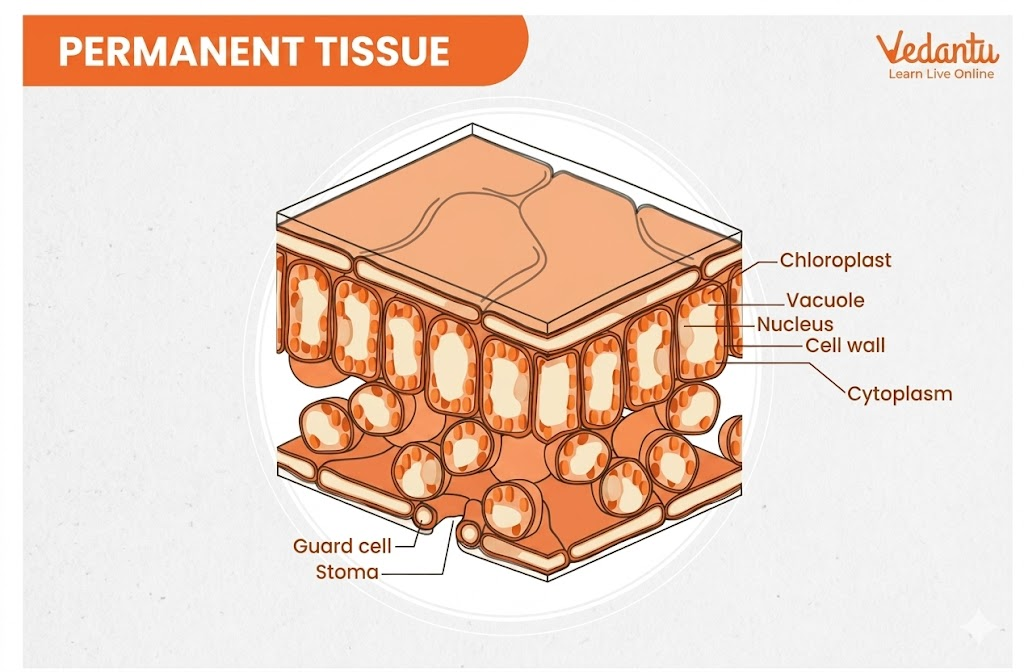
What are Permanent Tissues?
Permanent tissue in plants consists of cells that have lost the power of division. These cells result from the differentiation of meristematic tissue, after which they become structurally and functionally specialized. Permanent tissues perform specific roles such as support, storage, and protection within the plant body. Knowing the characteristics and types of permanent tissues is essential for students aiming to excel in plant anatomy questions on NEET.
Core Ideas and Fundamentals of Permanent Tissue
Basic Characteristics of Permanent Tissue
Permanent tissues are made up of mature cells that have distinct shapes, sizes, and functions. Unlike meristematic cells, these cells do not divide. They are often well-developed, with thickened walls or specialized structures suited to their role in the plant.
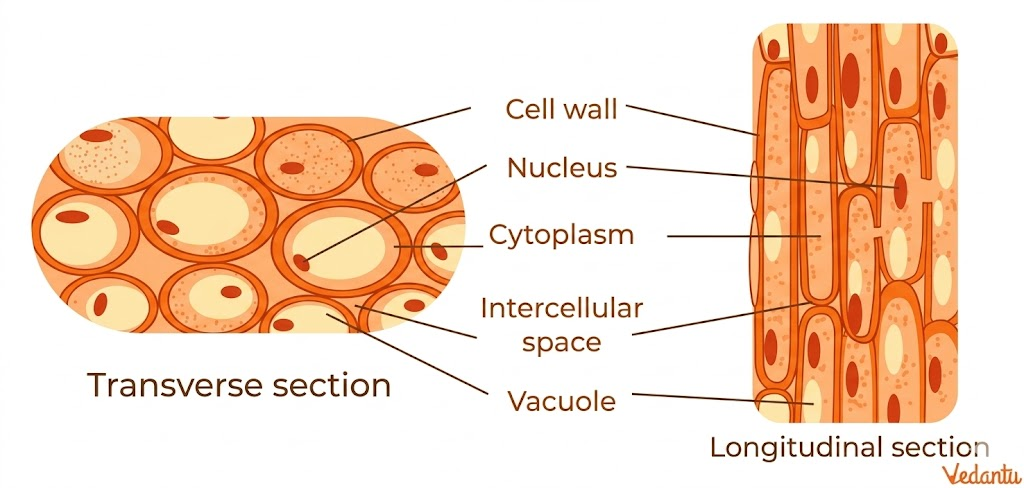
Formation of Permanent Tissue
Permanent tissues form when meristematic cells stop dividing and start differentiating. They lose their ability to divide and develop specific features, such as thickened cell walls or special deposits, depending on their future function in the plant.
Main Functions
Providing mechanical strength and support
Storing food, water, and other substances
Conduction of water, minerals, and organic substances
Protecting plant organs from injury or infection
Important Sub-Concepts Related to Permanent Tissue
Types of Permanent Tissues
Permanent tissue is broadly classified into two main categories: simple and complex permanent tissues. This classification is based on the types of cells present and their functions in the plant body.
Simple Permanent Tissue
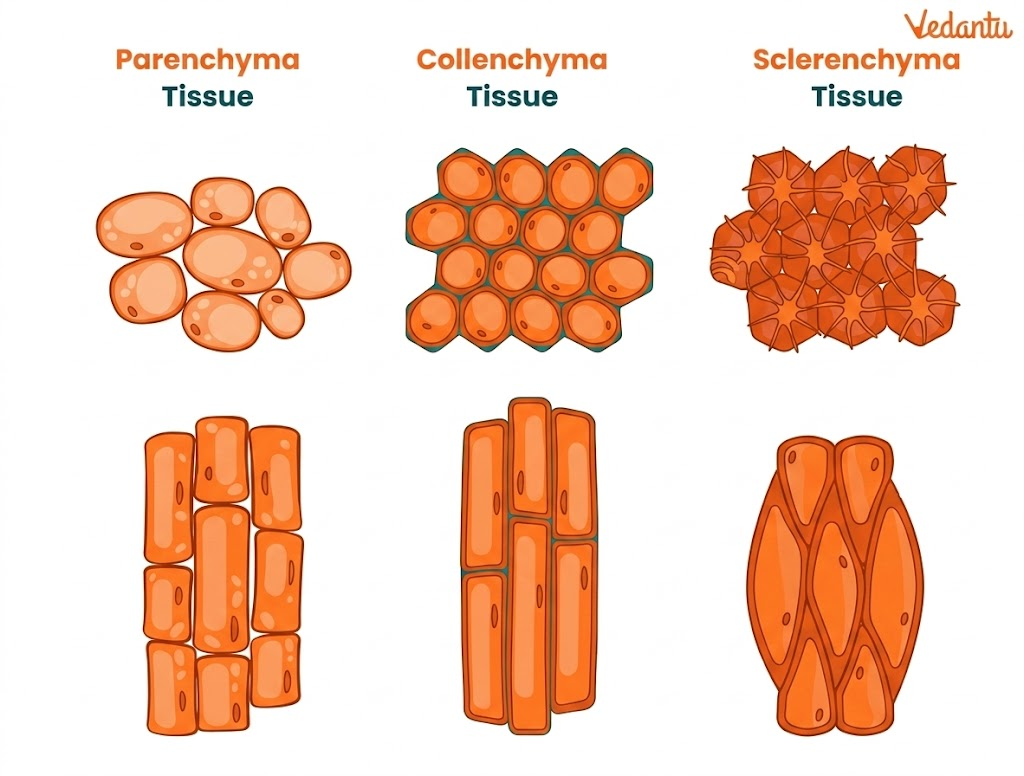
Simple permanent tissue is composed of similar types of cells that have similar structures and functions. The primary types are:
Parenchyma: Living cells with thin cell walls, mainly involved in storage and basic metabolic activities.
Collenchyma: Living cells with unevenly thickened walls, providing flexible support especially in young stems and leaves.
Sclerenchyma: Dead cells with very thick, lignified walls, giving rigid support to mature plant parts.
Complex Permanent Tissue
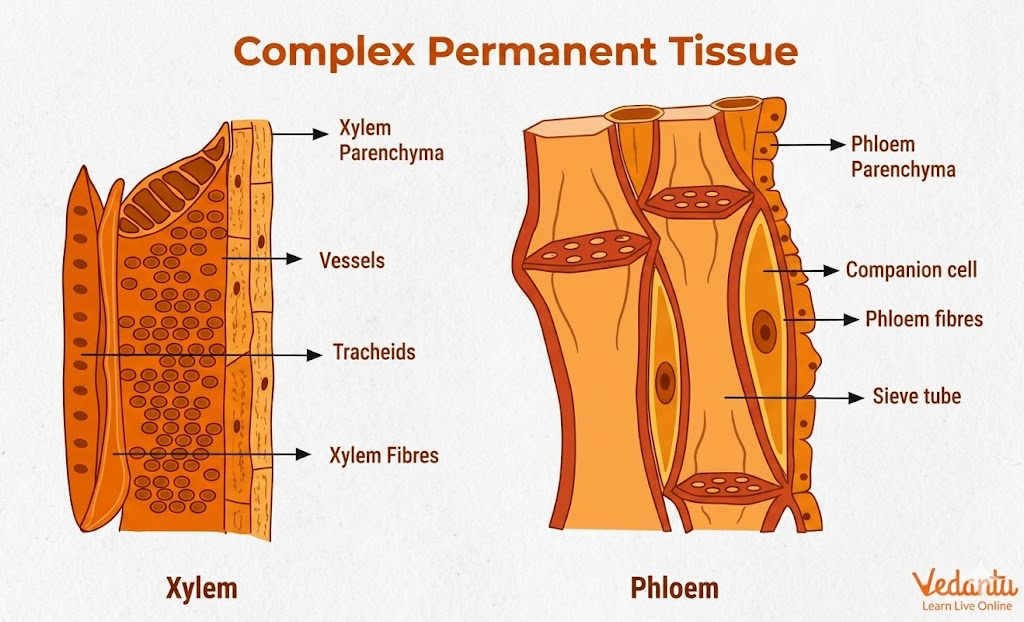
Complex permanent tissue consists of different types of cells working together as a unit to perform specialized tasks. The two main types are:
Xylem: Conducts water and minerals from roots to other parts of the plant, and also provides support.
Phloem: Transports food (mainly sucrose) produced during photosynthesis to all parts of the plant.
Visual Representation
A diagram is a helpful way to understand the arrangement and types of permanent tissue in plants:
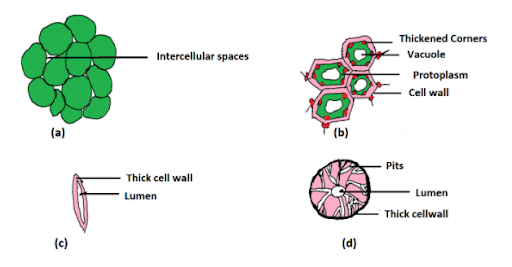
Table: Comparison of Simple and Complex Permanent Tissue
This table helps NEET students quickly differentiate between simple and complex permanent tissues, which is a common area of questioning in the exam.
Key Features and Functions of Permanent Tissue
Cells are mature, with fixed shape and size
Do not divide and are non-meristematic
Specialized for storage, support, transport, and protection
Location spans all plant organs: roots, stems, leaves, and reproductive structures
Contributes to the plant’s overall growth, structure, and survival
Difference Between Meristematic and Permanent Tissues
Why is Permanent Tissue Important for NEET?
Permanent tissue questions frequently appear in the NEET exam because they test both basic and applied knowledge of plant anatomy. This topic is essential for understanding not just the structure of plant organs, but also physiological processes like transport and storage. It also connects directly to other high-yield chapters such as meristematic tissue, plant organs, and plant growth. Solid understanding of permanent tissues supports MCQ solving and reduces confusion about functional plant anatomy, a common area of conceptual error.
How to Study Permanent Tissue Effectively for NEET UG?
Begin with textbook diagrams and labels - visualize cell types and locations.
Understand differences between simple and complex tissues using comparison tables and flowcharts.
Practice drawing and labeling diagrams for parenchyma, collenchyma, sclerenchyma, xylem, and phloem.
Solve previous years’ NEET MCQs to identify common patterns and traps.
Revise sub-concepts like cell wall features, function, and location regularly.
Use sticky notes or flashcards for last-minute revision of definitions and differences.
Discuss with peers or teachers any confusing terms or functions to avoid misunderstanding.
Common Mistakes Students Make with Permanent Tissue
Confusing simple and complex permanent tissues or mixing up their definitions
Forgetting which tissue types are living (parenchyma, collenchyma) and which are dead (sclerenchyma, most of xylem)
Neglecting the differences in function and location between xylem and phloem
Missing diagram-based questions due to unclear labeling or poor visualization practice
Overlooking the importance of wall thickness and cell specialization
Quick Revision Points for Permanent Tissue
Permanent tissue = non-dividing, specialized, mature plant cells
Simple = one cell type (parenchyma, collenchyma, sclerenchyma)
Complex = multiple cell types (xylem, phloem)
Xylem moves water/minerals; phloem moves food
Parenchyma stores food, collenchyma supports, sclerenchyma gives rigidity
Remember key differences: cell type, function, location, living/dead status
Practice neat diagrams with labels for NEET accuracy
Quickly recall that meristematic tissue differentiates to form permanent tissue


FAQs on What Are Permanent Tissues? Detailed Structure, Types, and Functions
1. What is permanent tissue in plants?
Permanent tissue in plants is a group of cells that have lost the power to divide and are specialized for specific functions.
Main features include:
- Cells are fully differentiated and maintain a fixed shape and size.
- Play key roles in support, protection, storage, and conduction of substances.
- Types of permanent tissue include simple and complex tissues.
2. What are the types of permanent tissue?
Permanent tissues are of two main types based on their structure and function.
- Simple permanent tissues – made up of similar cells; further divided into:
- Parenchyma
- Collenchyma
- Sclerenchyma
- Complex permanent tissues – made up of more than one type of cell; include:
- Xylem
- Phloem
3. What is the difference between simple and complex permanent tissue?
The main difference is that simple permanent tissue contains similar cells, while complex permanent tissue contains different types of cells.
Simple Permanent Tissue:
- Made of one type of cell.
- Examples: Parenchyma, Collenchyma, Sclerenchyma.
- Made of different types of cells working together.
- Examples: Xylem, Phloem.
4. What are the characteristics of permanent tissue?
Permanent tissues have several characteristics that distinguish them from meristematic tissues:
- Cells have lost the power of division.
- Cells are mature, differentiated, and have definite shape and size.
- Often have thickened cell walls (especially in sclerenchyma).
- Involved in support, transport, and protection.
5. Why are permanent tissues called so?
Permanent tissues are called so because their cells have permanently lost the ability to divide.
- They originate from meristematic tissue, but become mature.
- Cells are fixed in function and structure.
- This state is 'permanent' compared to dividing meristems.
6. What is the function of permanent tissue?
Permanent tissues perform specialized functions critical to plant survival and growth.
Main functions include:
- Support and mechanical strength (collenchyma, sclerenchyma).
- Storage of food and water (parenchyma).
- Transport of water and nutrients (xylem, phloem).
7. What is the difference between meristematic and permanent tissue?
Meristematic tissue consists of actively dividing cells, while permanent tissue has mature, non-dividing cells.
Key differences:
- Meristematic tissue: Continuously dividing, thin cell walls, small vacuoles.
- Permanent tissue: No division, well-developed cell walls, larger vacuoles.
8. Give the main functions of parenchyma tissue.
Parenchyma tissue is the most common simple permanent tissue with versatile functions.
Main functions:
- Storage of food, water, and nutrients.
- Photosynthesis (when containing chloroplasts, called chlorenchyma).
- Healing and repair of tissues.
9. What are sclerenchyma cells and their function?
Sclerenchyma cells are thick-walled, lignified simple permanent tissue cells providing strength.
Main features:
- Cells are dead at maturity.
- Walls are reinforced with lignin.
- Function is mechanical support and protection.
10. State the main function of xylem tissue.
Xylem is a complex permanent tissue responsible for conducting water and minerals in plants.
Its main functions:
- Transport of water and minerals from roots to all aerial parts.
- Provides structural support due to lignified cell walls.
11. What is the role of phloem tissue in plants?
Phloem is a complex permanent tissue responsible for translocating food.
Main roles:
- Transports organic nutrients (mainly sucrose) from leaves to other parts of the plant.
- Composed of different types of cells: sieve tubes, companion cells, phloem fibres, and phloem parenchyma.
