



What Is a Civet? Habitat, Diet, Behavior, and Unique Adaptations
The Civet Mammal Viverridae Family includes small to medium-sized mammals that look like a mix of cats and mongooses. Known for their sharp senses and night-time hunting skills, civets are found mainly in Asia and Africa. They play an important role in forests by spreading seeds and controlling insects and rodents. Let’s explore Civet Mammal Viverridae Family facts, habitat, diet, characteristics, life cycle, and importance in a fun and easy way!
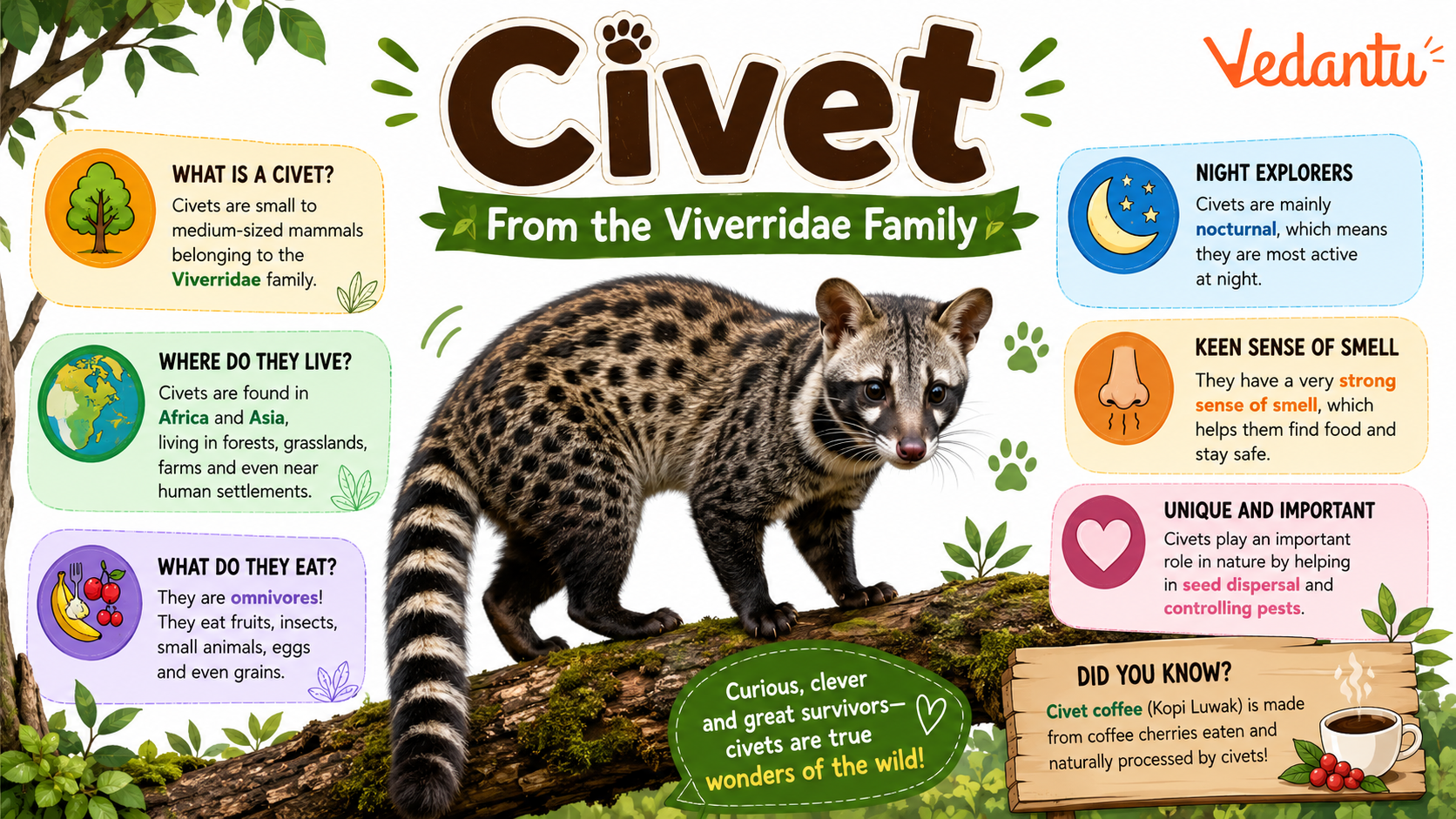
Quick Facts About Civet Mammal Viverridae Family
| Feature | Details |
|---|---|
| Common Name | Civet |
| Scientific Family | Viverridae |
| Animal Group | Mammal |
| Size | 40–85 cm (body length) |
| Weight | 1.5–14 kg (depending on species) |
| Lifespan | 15–20 years (in captivity) |
| Habitat | Forests, grasslands, and sometimes near villages |
| Diet | Fruits, insects, small animals |
| Activity Time | Mainly nocturnal (active at night) |
Appearance and Physical Characteristics
- Long, slender body similar to a cat.
- Pointed face with sharp teeth.
- Short legs and long tail.
- Thick fur, usually grey, brown, or black with spots or stripes.
- Strong claws for climbing trees.
Habitat and Distribution
The Civet Mammal Viverridae Family habitat mainly includes:
- Tropical rainforests
- Woodlands and grasslands
- Mountain forests
- Areas close to farms and villages
They are mostly found in Africa and Asia, especially in countries like India, Indonesia, and several African nations.
Diet and Feeding Habits
Civets eat both plant and animal food.
Fruits, berries, insects, small mammals, birds, and eggs.
They use their sharp smell and hearing to hunt in the dark.
They spread seeds through their droppings, helping forests grow.
Behaviour and Lifestyle
- Mostly solitary animals.
- Active during the night (nocturnal).
- Excellent climbers and sometimes rest in trees.
- Mark territory using scent glands.
- Shy and avoid human contact.
Life Cycle and Reproduction
- Birth: Female civets give birth to 1–4 babies after a pregnancy of about 2 months.
- Baby Stage: Young ones are born with closed eyes and depend on their mother.
- Growing Up: They start eating solid food within a few weeks.
- Adult Stage: Become independent after a few months and start living alone.
Types and Diversity in Viverridae Family
Found in South and Southeast Asia.
Larger species found in sub-Saharan Africa.
Native to India and nearby regions.
Close relatives in the same family.
Importance and Role in Nature
Help grow new plants by spreading seeds.
Eat insects and rodents, balancing ecosystems.
Serve as prey for larger predators.
Healthy civet populations show healthy forests.
Amazing Facts About Civet Mammal Viverridae Family
- Civets are not true cats, even though they look like them.
- Some civets can climb trees very quickly.
- They have excellent night vision.
- Their strong smell helps them communicate.
- There are more than 30 species in the Viverridae family.
- They are generally shy and avoid fights.
Fun Facts for Kids
- Civets love sweet fruits like mangoes and berries.
- They walk quietly, almost like secret agents!
- Some civets can purr or growl softly.
- They have long tails to help balance while climbing.
- Baby civets stay hidden until they grow stronger.
FAQs on Civet Mammal: A Complete Guide to the Viverridae Family
1. What is a civet in the Viverridae family?
A civet is a small, cat-like mammal that belongs to the Viverridae family.
- Civets are carnivorous mammals related to mongooses and genets.
- They belong to the animal family called Viverridae.
- They have long bodies, short legs, and pointed faces.
- Most civets are nocturnal (active at night).
- They are often confused with cats, but they are not true cats (Felidae).
2. Where do civets live?
Civets mainly live in tropical forests and warm regions of Africa and Asia.
- Found in Africa, South Asia, and Southeast Asia.
- Live in rainforests, woodlands, grasslands, and sometimes near villages.
- Prefer areas with thick bushes for hiding.
- Some species adapt to farms and urban areas.
3. What do civets eat?
Civets are omnivores, meaning they eat both plants and animals.
- Eat small animals like insects, birds, and rodents.
- Enjoy fruits and berries.
- Sometimes eat eggs and reptiles.
- The Asian palm civet is famous for eating coffee cherries.
4. Are civets dangerous to humans?
Civets are generally shy animals and are not dangerous to humans.
- They avoid people and are active mostly at night.
- May scratch or bite only if threatened.
- Rarely attack humans.
- Wild animals should always be observed from a distance.
5. Why are civets important in nature?
Civets play an important role in maintaining healthy ecosystems.
- Help control insect and rodent populations.
- Spread seeds by eating fruits and dropping seeds elsewhere.
- Support forest growth through seed dispersal.
- Are part of the natural food chain.
6. What is special about civet coffee?
Civet coffee, also called Kopi Luwak, is made from coffee beans eaten and digested by civets.
- The Asian palm civet eats ripe coffee cherries.
- Beans pass through the digestive system and are collected later.
- This process changes the flavor of the coffee.
- It is one of the most expensive coffees in the world.
7. How are civets different from cats?
Civets look like cats but belong to a different animal family.
- Civets are part of Viverridae, not the cat family Felidae.
- They have longer bodies and pointed snouts.
- Many have scent glands that produce strong smells.
- Their behavior and body structure differ from domestic cats.
8. How many species of civets are there?
There are about 15 to 20 different species of civets in the Viverridae family.
- Examples include the African civet and Asian palm civet.
- Each species has unique markings and habitats.
- They vary in size and color.
- All share similar body shapes and nocturnal habits.
9. Are civets endangered?
Some civet species are at risk due to habitat loss and hunting.
- Deforestation reduces their natural homes.
- Hunted for meat, fur, and musk.
- Some are kept in poor conditions for coffee production.
- Conservation efforts help protect wild civet populations.
10. What are the main features of the Viverridae family?
The Viverridae family includes small to medium-sized carnivorous mammals with unique scent glands.
- Includes civets, genets, and linsangs.
- Usually have long bodies and tails.
- Most are nocturnal and solitary.
- Have strong scent glands used for marking territory.
- Found mainly in Africa and Asia.
