



Where Do Muskrats Live and What Do They Eat?
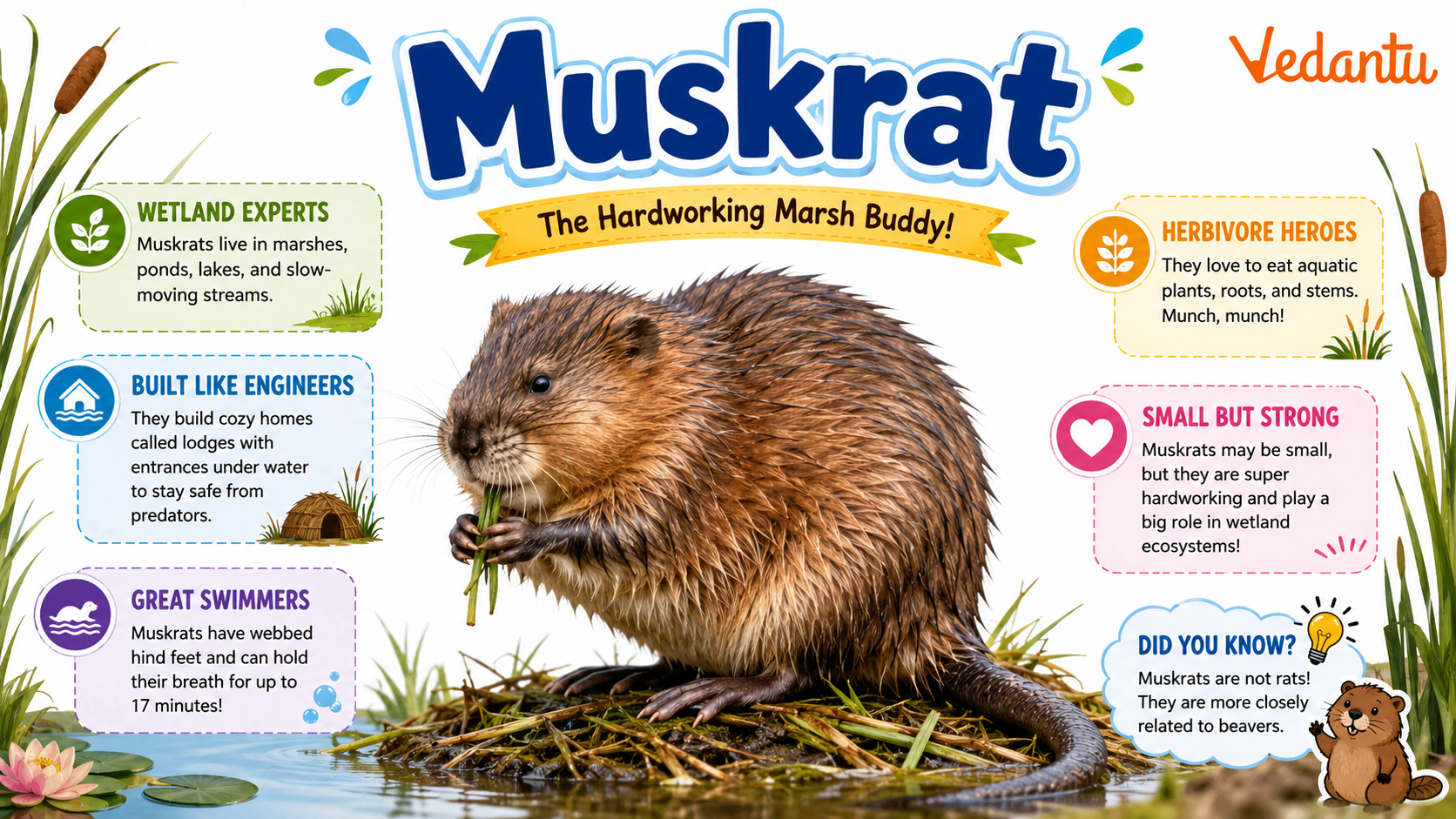
The muskrat is a semi-aquatic mammal that lives in wetlands, ponds, and marshes. It looks a little like a small beaver but is actually more closely related to mice and voles. Muskrats are excellent swimmers and expert builders. They create dome-shaped homes using plants and mud. Learning about muskrat facts, muskrat habitat, and muskrat characteristics helps us understand how these hardworking animals play an important role in wetland ecosystems.
Quick Facts About Muskrat
| Feature | Details |
|---|---|
| Common Name | Muskrat |
| Scientific Name | Ondatra zibethicus |
| Animal Group | Mammal (Rodent) |
| Size | 40–60 cm (including tail) |
| Weight | 0.6–2 kg |
| Lifespan | 3–4 years in the wild |
| Habitat | Marshes, ponds, lakes, slow-moving rivers |
| Diet | Mainly plants (Herbivore) |
| Conservation Status | Least Concern |
Appearance and Physical Characteristics
- Medium-sized rodent with a round body.
- Thick brown fur that keeps it warm in cold water.
- Long, flat, scaly tail used like a rudder while swimming.
- Small ears and eyes placed high on the head.
- Partially webbed hind feet for powerful swimming.
Muskrat Habitat and Distribution
- Freshwater marshes and swamps
- Ponds and lakes with lots of plants
- Slow-moving streams and rivers
Muskrat Diet and Feeding Habits
Behaviour and Lifestyle
- Mostly active at night (nocturnal).
- Strong swimmers and divers.
- Mark their territory using scent glands.
- Live alone or in small family groups.
- Build both lodges and burrows in riverbanks.
Muskrat Life Cycle
- Birth: Babies (called kits) are born in spring or summer.
- Early Life: Kits are born blind and helpless.
- Growth: They grow quickly and start swimming within weeks.
- Adult Stage: Become independent after about one month.
- Lifespan: Live around 3–4 years in the wild.
What Makes Muskrat Special?
Importance and Role in Nature
Amazing Muskrat Facts
- Muskrats are not true rats.
- Their tail helps them steer while swimming.
- They can swim under ice during winter.
- Muskrats sometimes store food for colder months.
- They have special lips that close behind their teeth to chew underwater.
- Their fur was once widely used in the fur trade.
Fun Facts for Kids
FAQs on Muskrat: Habitat, Diet, Behavior & Fun Facts
1. What is a muskrat?
A muskrat is a semi-aquatic rodent that lives near water and looks like a small beaver with a long tail.
- Scientific name: Ondatra zibethicus
- Belongs to the rodent family
- Lives in wetlands, marshes, ponds, and rivers
- Has thick brown fur and a long, thin tail
- Often confused with beavers and nutria
2. Where do muskrats live?
Muskrats live in freshwater habitats across North America and some parts of Europe and Asia.
- Found in marshes and swamps
- Live near ponds, lakes, and slow-moving rivers
- Build homes called lodges made of plants and mud
- Dig burrows into riverbanks
3. What do muskrats eat?
Muskrats mostly eat plants and are considered herbivores.
- Water plants like cattails and reeds
- Roots and stems of aquatic vegetation
- Sometimes small fish, frogs, or insects
4. Are muskrats dangerous to humans?
Muskrats are generally not dangerous to humans and avoid people when possible.
- They are usually shy and quiet animals
- May bite only if cornered or scared
- Can sometimes damage dams or riverbanks by burrowing
5. How are muskrats different from beavers?
Muskrats are smaller than beavers and have different tails and building habits.
- Size: Muskrats are much smaller
- Tail: Muskrats have thin, rat-like tails; beavers have wide, flat tails
- Homes: Both build lodges, but beavers build large dams
- Teeth: Both have strong front teeth for gnawing
6. How do muskrats build their homes?
Muskrats build dome-shaped homes called lodges using plants and mud.
- Gather reeds, cattails, and grasses
- Stack plants into a mound above water
- Create underwater entrances for safety
- Line the inside with soft vegetation
7. What animals eat muskrats?
Muskrats have several natural predators in the wild.
- Foxes and coyotes
- Hawks and owls
- Snapping turtles
- Large fish like northern pike
8. How long do muskrats live?
Muskrats usually live about 3 to 4 years in the wild.
- Baby muskrats are called kits
- They grow quickly and can swim at a young age
- Many do not survive long due to predators
9. Why are muskrats important to wetlands?
Muskrats play an important role in keeping wetland ecosystems healthy.
- Control overgrowth of aquatic plants
- Create open water areas for other animals
- Provide food for many predators
- Their lodges shelter insects and small animals
10. Can muskrats swim?
Yes, muskrats are excellent swimmers and spend much of their time in water.
- Use their strong hind feet for paddling
- Their long tail helps with balance and steering
- Can hold their breath underwater for about 15 minutes
- Have thick fur to stay warm in cold water
