



How to Care for a Cockatiel: Diet, Lifespan, Personality, and Training Tips
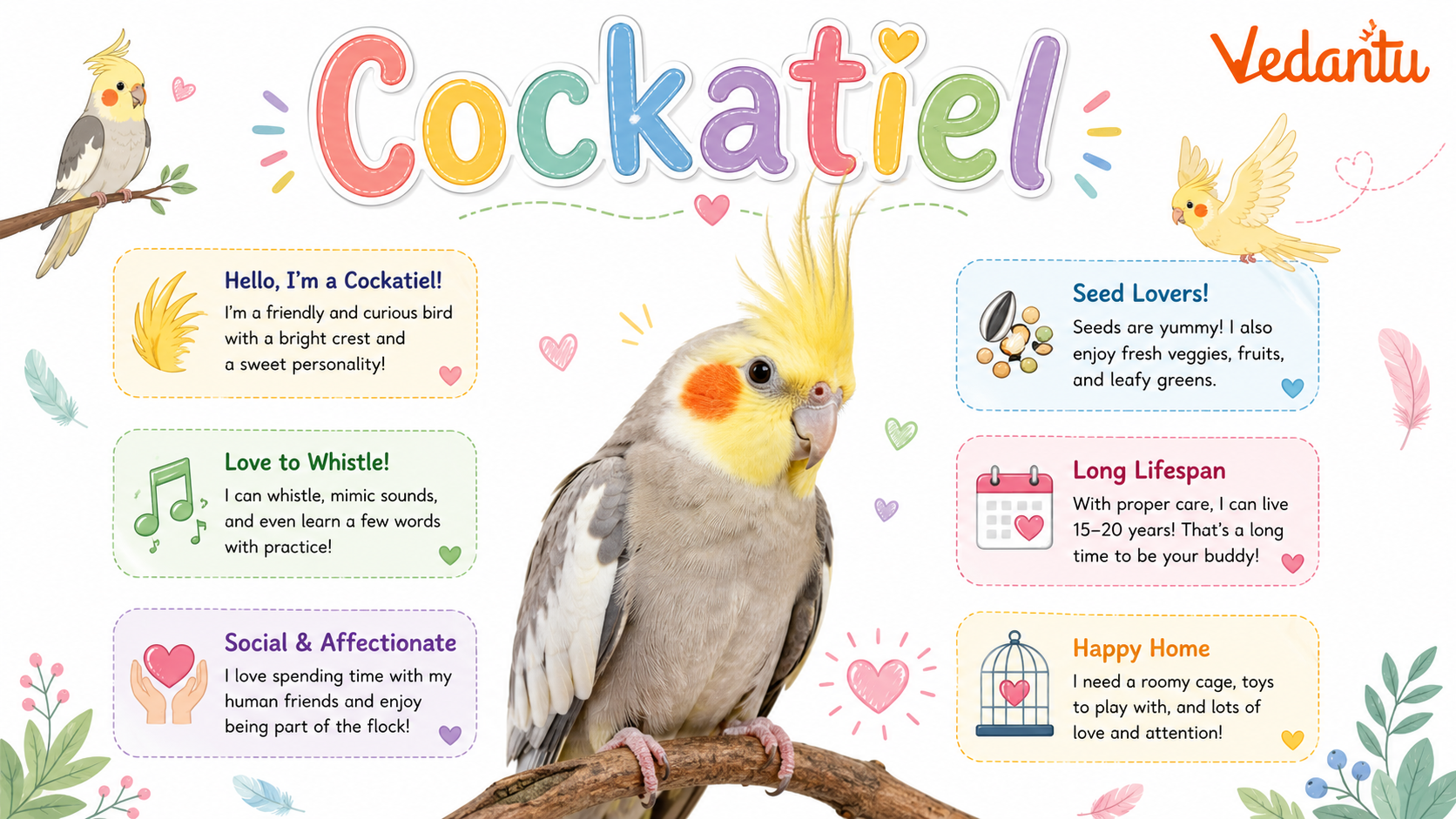
Quick Facts About Cockatiel
| Feature | Details |
|---|---|
| Common Name | Cockatiel |
| Scientific Name | Nymphicus hollandicus |
| Animal Group | Bird (Parrot family) |
| Size | 30–33 cm (including long tail) |
| Weight | 80–120 grams |
| Lifespan | 10–20 years (sometimes longer in captivity) |
| Habitat | Open woodlands, grasslands, Australia |
| Diet | Seeds, grains, fruits, vegetables |
| Sound | Whistles, chirps, mimic sounds |
Appearance and Physical Characteristics
- Slender body with a long pointed tail.
- Bright yellow face (in males) with orange cheek patches.
- Movable crest on top of the head that shows mood.
- Strong curved beak for cracking seeds.
- Grey body in wild type; many colour varieties in pets.
Cockatiel Habitat and Distribution
- Native to Australia.
- Found in open woodlands, scrublands, and grasslands.
- Prefer areas near water sources like rivers and lakes.
- Often travel in small flocks in the wild.
Cockatiel Diet and Feeding Habits
Cockatiels are mainly seed-eaters (granivores), but they also eat fruits and vegetables.
Grass seeds, grains, small plants, and sometimes insects.
Seeds, pellets, leafy greens, carrots, apples, and other safe fruits.
They use their curved beak to crack open seeds easily.
Behaviour and Lifestyle
- Very social and enjoy company.
- Active during the day (diurnal).
- Communicate through whistles and body language.
- Can learn simple tunes and mimic household sounds.
- Love to climb and explore.
Sound and Communication
Cockatiels are famous for their sweet whistling sounds. Males are usually better at learning tunes and copying simple melodies. They chirp to express happiness, call for attention, or communicate with other birds.
Cockatiel Life Cycle
- Egg Stage: Female lays 4–7 eggs in a nest cavity.
- Incubation: Both parents sit on the eggs for about 18–21 days.
- Chicks: Babies hatch blind and featherless.
- Growing Stage: Feathers grow in a few weeks.
- Adult Stage: Become independent after about 8–10 weeks.
Flight Adaptations
- Strong chest muscles for powered flight.
- Lightweight bones reduce body weight.
- Long tail helps in balance and steering.
- Wide wings allow smooth gliding.
Temperament and Domestic Life
Usually gentle and affectionate with owners.
Can learn tricks, step-up commands, and tunes.
Need a spacious cage, toys, and daily interaction.
Suitable for beginners with proper care.
What Makes Cockatiels Special?
Importance and Role in Nature
- Help in seed dispersal in the wild.
- Part of the food chain as prey for larger birds.
- Important in aviculture and pet education.
- Teach children responsibility and empathy.
Amazing Cockatiel Facts
- Cockatiels are the smallest members of the cockatoo family.
- They can recognise their owner’s voice.
- Males usually whistle more than females.
- Their tail makes up nearly half their body length.
- They can live over 20 years with good care.
- They sleep standing on one leg sometimes.
Interesting Facts About Cockatiel
Fun Facts for Kids
- Cockatiels love music and may dance to songs.
- They can learn to say a few simple words.
- Their crest pops up when they are surprised!
- They enjoy playing with small bird toys.
- They can remember routines like feeding time.
FAQs on Cockatiel Bird: Complete Guide to Care, Behavior, and Fun Facts
1. What is a Cockatiel?
A Cockatiel is a small, friendly pet bird known for its bright crest and cheerful personality.
- Scientific name: Nymphicus hollandicus
- Native to Australia
- Belongs to the parrot family
- Famous for their yellow faces and orange cheek patches
- Popular as a pet bird because they are gentle and easy to tame
2. How long do Cockatiels live?
A healthy Cockatiel can live for many years with proper care.
- Average lifespan: 10–15 years
- With excellent care, some live up to 20 years
- Good diet and clean cage improve lifespan
- Regular avian vet checkups keep them healthy
3. What do Cockatiels eat?
Cockatiels need a balanced diet to stay healthy and active.
- High-quality pellets made for cockatiels
- Fresh fruits like apples and bananas
- Vegetables such as carrots and spinach
- Seeds as a small treat (not the main food)
- Clean, fresh drinking water daily
4. Are Cockatiels good pets for kids?
Yes, Cockatiels are great pets for kids when handled gently and supervised by adults.
- They are friendly and social birds
- Easy to tame with patience
- Enjoy whistling and interacting
- Teach children about responsibility and animal care
5. Can Cockatiels talk or whistle?
Cockatiels are better at whistling than talking but can learn simple words.
- Males whistle more than females
- Can mimic simple tunes and sounds
- Some learn a few short words
- Respond well to training and repetition
6. How big do Cockatiels grow?
An adult Cockatiel is a small parrot with a long tail and slim body.
- Length: about 12–13 inches (including tail)
- Weight: around 70–120 grams
- Have a tall feather crest on their head
- Lightweight and easy to handle
7. How do you take care of a Cockatiel?
Taking care of a Cockatiel means providing food, space, and attention every day.
- Large, clean bird cage with perches
- Fresh food and water daily
- Time outside the cage for exercise
- Toys for mental stimulation
- Regular cage cleaning and grooming
8. Do Cockatiels need a companion?
Cockatiels are social birds and enjoy company from humans or other birds.
- Can live alone if given daily attention
- Enjoy interacting with their owners
- May bond closely with one person
- Another cockatiel companion can reduce loneliness
9. Why do Cockatiels raise their crest?
A Cockatiel’s crest feathers show its mood and feelings.
- Raised high: excited or surprised
- Flat back: angry or scared
- Slightly up: relaxed and happy
- Helps owners understand cockatiel behavior
10. How can you tell if a Cockatiel is healthy?
A healthy Cockatiel looks active, bright, and alert.
- Clear eyes and smooth feathers
- Strong appetite
- Active and playful behavior
- Clean beak and feet
- Regular visits to an avian veterinarian
