



What Is a Warble Fly and How Does It Affect Cattle and Humans?
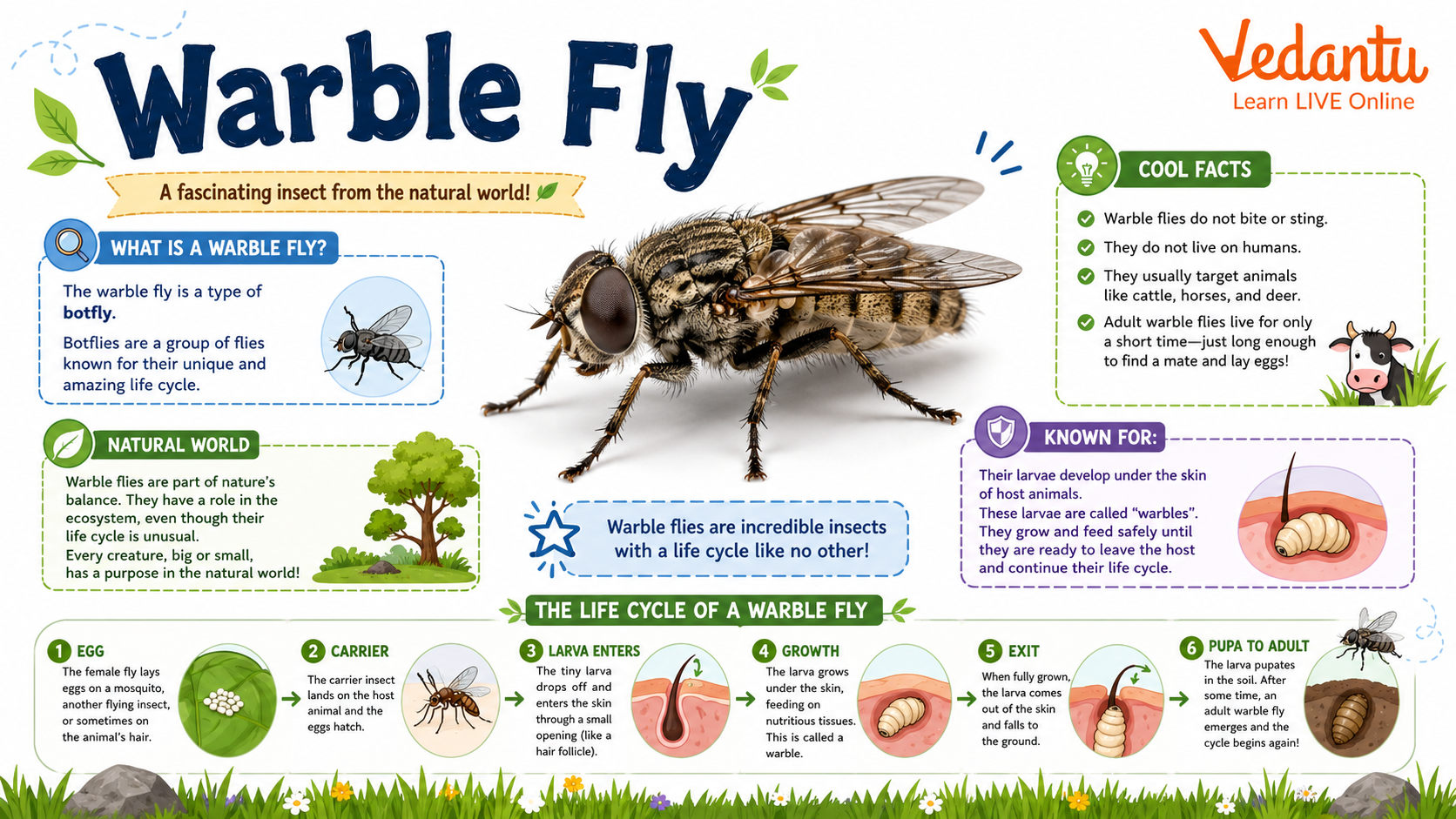
Quick Facts About Warble Fly
| Feature | Details |
|---|---|
| Common Name | Warble Fly |
| Scientific Genus | Hypoderma |
| Animal Group | Insect |
| Type | Parasitic Fly |
| Size | About 1–1.5 cm long |
| Habitat | Grasslands, farms, rural areas |
| Host Animals | Cattle, deer, and other mammals |
| Diet (Larvae) | Tissues of host animals |
| Life Cycle | Egg → Larva → Pupa → Adult |
Appearance and Physical Characteristics
- Medium-sized fly with a robust body.
- Covered with short hairs.
- Brown, black, or yellowish colour patterns.
- Small head with short antennae.
- Strong wings for fast flight.
Warble Fly Habitat and Distribution
- Common in temperate regions of Europe, North America, and Asia.
- Found mostly in grasslands and cattle-grazing areas.
- Prefers rural and farming environments.
- Active mainly during warm months.
Diet and Feeding Habits
Adult Warble Fly
- Adults do not feed much.
- Their main purpose is reproduction.
Larval Stage
- Larvae feed on tissues inside the host animal.
- They live under the skin for several months.
- They create breathing holes in the skin.
Behaviour and Lifestyle
- Adult flies are active during the day.
- Females lay eggs on the legs or body of cattle.
- Larvae migrate inside the host’s body.
- After maturity, larvae drop to the ground to pupate.
Warble Fly Life Cycle
- Egg Stage: Female lays eggs on the hair of cattle.
- Larva Stage: Eggs hatch; larvae enter the skin and migrate inside the body.
- Warble Stage: Larvae settle under the skin and form lumps.
- Pupa Stage: Mature larvae fall to the ground and form pupae.
- Adult Stage: Adult fly emerges and repeats the cycle.
What Makes Warble Fly Special?
Importance and Role in Nature
Amazing Warble Fly Facts
- Warble Flies belong to the genus Hypoderma.
- They mainly target cattle but can affect deer and other mammals.
- Their larvae create breathing holes in the host’s skin.
- Adult flies live only for a short time.
- Heavy infections can reduce milk production in cattle.
- Modern veterinary medicine has greatly reduced infections in many countries.
Interesting Facts About Warble Fly
Fun Facts for Kids
FAQs on Warble Fly: Identification, Life Cycle, and Risks
1. What is a Warble Fly?
A Warble Fly is a type of parasitic fly whose larvae grow under the skin of animals like cows and deer.
- It belongs to the genus Hypoderma.
- It is also called a botfly or cattle grub.
- The word “warble” means a lump or swelling on the animal’s back.
- Common in farms and grasslands.
2. Why is it called a Warble Fly?
It is called a Warble Fly because it causes round swellings called warbles on animals’ skin.
- Female flies lay eggs on animal hair.
- Larvae move under the skin and form painful lumps.
- Each lump has a small breathing hole.
- These lumps are known as warbles.
3. Where do Warble Flies live?
Warble Flies live mostly in cool and temperate regions where farm animals are raised.
- Found in North America, Europe, and parts of Asia.
- Common around cattle farms and grassy fields.
- Prefer areas with cows, deer, and other mammals.
- Active mainly in warmer months.
4. How does the Warble Fly life cycle work?
The Warble Fly life cycle includes egg, larva, pupa, and adult stages.
- Female lays eggs on animal hair.
- Larvae hatch and burrow under the skin.
- They grow inside warbles for weeks.
- Larvae drop to the ground to pupate.
- Adult flies emerge and repeat the cycle.
5. Are Warble Flies harmful to humans?
Warble Flies rarely infect humans, but it can happen in unusual cases.
- Human infection is called myiasis.
- Causes small skin lumps.
- More common in animals than people.
- Doctors can safely remove larvae if needed.
6. How do Warble Flies affect cattle and farm animals?
Warble Flies can harm cattle by causing pain and reducing health and milk production.
- Cause skin damage and holes in hides.
- Lead to weight loss in cows.
- Reduce milk yield.
- May cause infections if untreated.
7. How can farmers prevent Warble Fly infestations?
Farmers prevent Warble Fly infestations by treating animals and keeping farms clean.
- Use approved anti-parasitic medicines.
- Check cattle regularly for lumps.
- Maintain clean barns and fields.
- Follow veterinary advice for parasite control.
8. What do Warble Fly larvae look like?
Warble Fly larvae look like small, white or cream-colored grubs.
- They are thick and segmented.
- Grow up to about 2–3 cm long.
- Live inside skin swellings.
- Have tiny spines to help them move.
9. When are Warble Flies most active?
Warble Flies are most active during warm seasons like spring and summer.
- Adult flies lay eggs in warm weather.
- Larvae develop during late summer and winter.
- Warbles are often seen in colder months.
- Life cycle timing depends on climate.
10. Why are Warble Flies important to study?
Studying Warble Flies helps scientists protect farm animals and understand parasites.
- Improves animal health care.
- Reduces economic losses in farming.
- Teaches about parasites and ecosystems.
- Helps prevent spread of livestock diseases.
