



How Sled Dogs Survive in Freezing Weather and Work as a Team
A Sled Dog is a strong and hardworking dog specially trained to pull sleds across snow and ice. These dogs are famous for their speed, stamina, and teamwork. For hundreds of years, sled dogs have helped people travel in Arctic and snowy regions. Today, they are also known for exciting sled dog races. Let’s explore amazing Sled Dog facts, their habitat, diet, characteristics, and why they are so special.
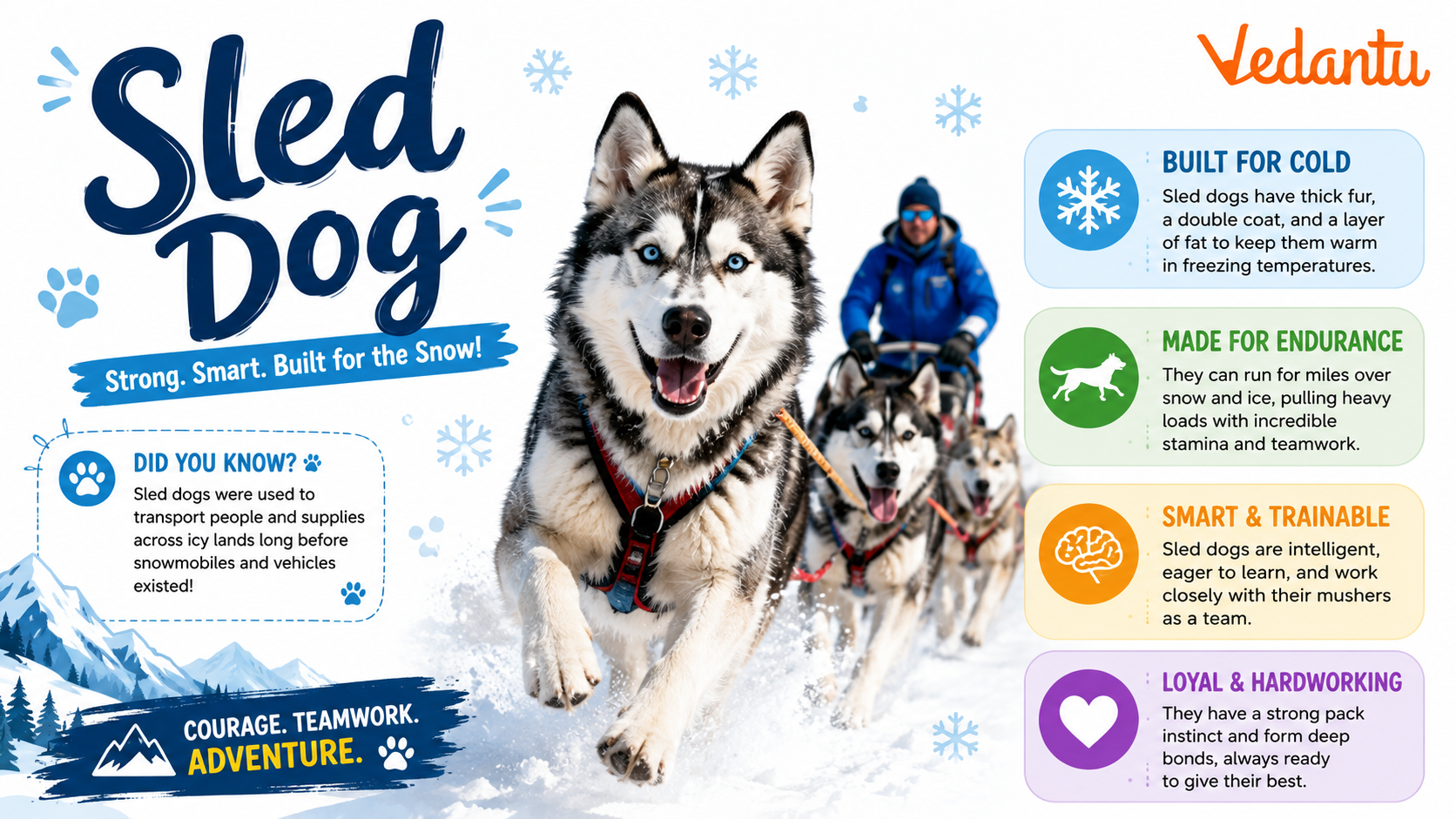
Quick Facts About Sled Dog
| Feature | Details |
|---|---|
| Common Name | Sled Dog |
| Animal Group | Mammal |
| Popular Breeds | Siberian Husky, Alaskan Malamute, Samoyed |
| Habitat | Arctic and snowy regions |
| Diet | Omnivore (mostly high-protein diet) |
| Lifespan | 10–14 years |
| Speed | Up to 30–40 km/h (during races) |
| Special Skill | Pulling sleds over long icy distances |
Appearance and Physical Characteristics
- Strong, muscular body built for pulling heavy loads.
- Thick double coat that keeps them warm in extreme cold.
- Pointed ears and alert eyes.
- Bushy tail that helps them stay warm while resting.
- Wide, furry paws that act like natural snow boots.
Sled Dog Habitat
The natural Sled Dog habitat includes cold and snowy regions of the world.
- Arctic areas of Alaska, Canada, Greenland, and Siberia.
- Snow-covered mountains and tundra regions.
- Cold climates with long winters.
Sled Dog Diet and Feeding Habits
- High-protein meat like fish, chicken, and beef.
- High-fat food for energy.
- Special dog food designed for working dogs.
- Plenty of fresh water.
During races or heavy work, sled dogs may eat up to 10,000 calories per day to maintain their strength and stamina.
Behaviour and Lifestyle
Sled dogs communicate through barking, howling, and body movements. They are intelligent and respond well to training.
Sled Dog Life Cycle
- Puppy Stage: Born in litters and cared for by the mother.
- Training Stage: Basic training begins at a young age.
- Working Adult: Fully trained to pull sleds and follow commands.
- Senior Stage: Retire from racing and live as companion dogs.
The Sled Dog life cycle is similar to other domestic dogs, but working dogs receive special training and care.
Temperament and Domestic Life
- Friendly and social.
- Good with families if properly trained.
- Need lots of physical activity.
- May not suit small apartments.
- Enjoy cold weather and outdoor play.
What Makes Sled Dog Special?
Importance of Sled Dogs
- Helped humans travel across snowy lands before modern vehicles.
- Delivered medicine and supplies in emergencies.
- Used in rescue operations.
- Participate in famous races like the Iditarod.
Amazing Sled Dog Facts
Interesting Facts About Sled Dogs
- Not all sled dogs are pure breeds.
- Some sled dogs have bright blue eyes.
- They sleep curled up to conserve body heat.
- They enjoy howling like wolves.
Fun Facts for Kids
- Sled dogs love running more than resting!
- The lead dog is the smartest and most trained.
- Their paws work like natural snowshoes.
- They can pull loads heavier than their own body weight.
- They wag their tails even in freezing snow.
FAQs on Sled Dog Facts, Breeds, and Life in the Arctic
1. What is a sled dog?
A sled dog is a specially trained working dog that pulls a sled over snow and ice in cold regions.
- Sled dogs are used in Arctic and snowy areas.
- They help transport people, food, and supplies.
- Common sled dog breeds include the Siberian Husky, Alaskan Malamute, and Samoyed.
- They are known for strength, endurance, and teamwork.
2. What breeds are commonly used as sled dogs?
The most common sled dog breeds are strong, cold-weather dogs built for endurance and speed.
- Siberian Husky – fast and energetic
- Alaskan Malamute – powerful and strong
- Alaskan Husky – bred for racing
- Samoyed – fluffy and hardworking
- Greenland Dog – used in Arctic travel
3. Where do sled dogs live?
Sled dogs usually live in cold climates where snow and ice are common.
- Arctic regions like Alaska, Canada, and Greenland
- Snowy parts of Russia and Scandinavia
- They can also live in other places if properly cared for.
4. What do sled dogs eat?
Sled dogs eat high-energy food to stay strong and healthy in cold weather.
- Protein-rich foods like meat and fish
- High-fat diets for energy and warmth
- Special working dog food for racing and heavy work
- Plenty of fresh water
5. How fast can sled dogs run?
Sled dogs can run very fast, especially during races and short distances.
- Average speed: 10–14 miles per hour
- Racing speeds can reach up to 20 miles per hour
- They can travel over 100 miles in a single day
6. What is dog sledding?
Dog sledding is a winter activity where a team of sled dogs pulls a sled across snow.
- Led by a person called a musher
- Used for travel, sport, and fun
- Popular races include the Iditarod Trail Sled Dog Race
- Requires teamwork between dogs and musher
7. What is the Iditarod?
The Iditarod is a famous long-distance sled dog race held in Alaska each year.
- Covers about 1,000 miles
- Runs from Anchorage to Nome
- Takes about 8–15 days to finish
- Tests endurance, teamwork, and survival skills
8. How are sled dogs trained?
Sled dogs are trained from a young age to work as a team and follow commands.
- Start with basic obedience training
- Learn voice commands like "gee" (right) and "haw" (left)
- Practice pulling light loads before heavier sleds
- Build endurance through regular exercise
9. Are sled dogs friendly?
Yes, most sled dogs are friendly, social, and enjoy being around people and other dogs.
- They are used to living in packs.
- Many love attention and playtime.
- They are energetic and need lots of exercise.
- Some breeds, like the Siberian Husky, are known for being playful.
10. Why are sled dogs important in history?
Sled dogs played an important role in Arctic exploration and survival.
- Helped explorers travel across icy lands.
- Delivered mail and medicine in remote areas.
- Famous for the 1925 Serum Run to Nome.
- Supported Indigenous Arctic communities for centuries.
