



Where Do Sea Fans Live and How Do They Survive in Coral Reefs?
A Sea Fan may look like a colourful underwater plant, but it is actually a living marine animal. These beautiful, fan-shaped corals gently sway with ocean currents and create magical scenes on coral reefs. Sea Fan facts show that they play a very important role in marine ecosystems by providing shelter and food for many sea creatures. Let’s explore Sea Fan habitat, characteristics, diet, life cycle, and why they are so important to our oceans.
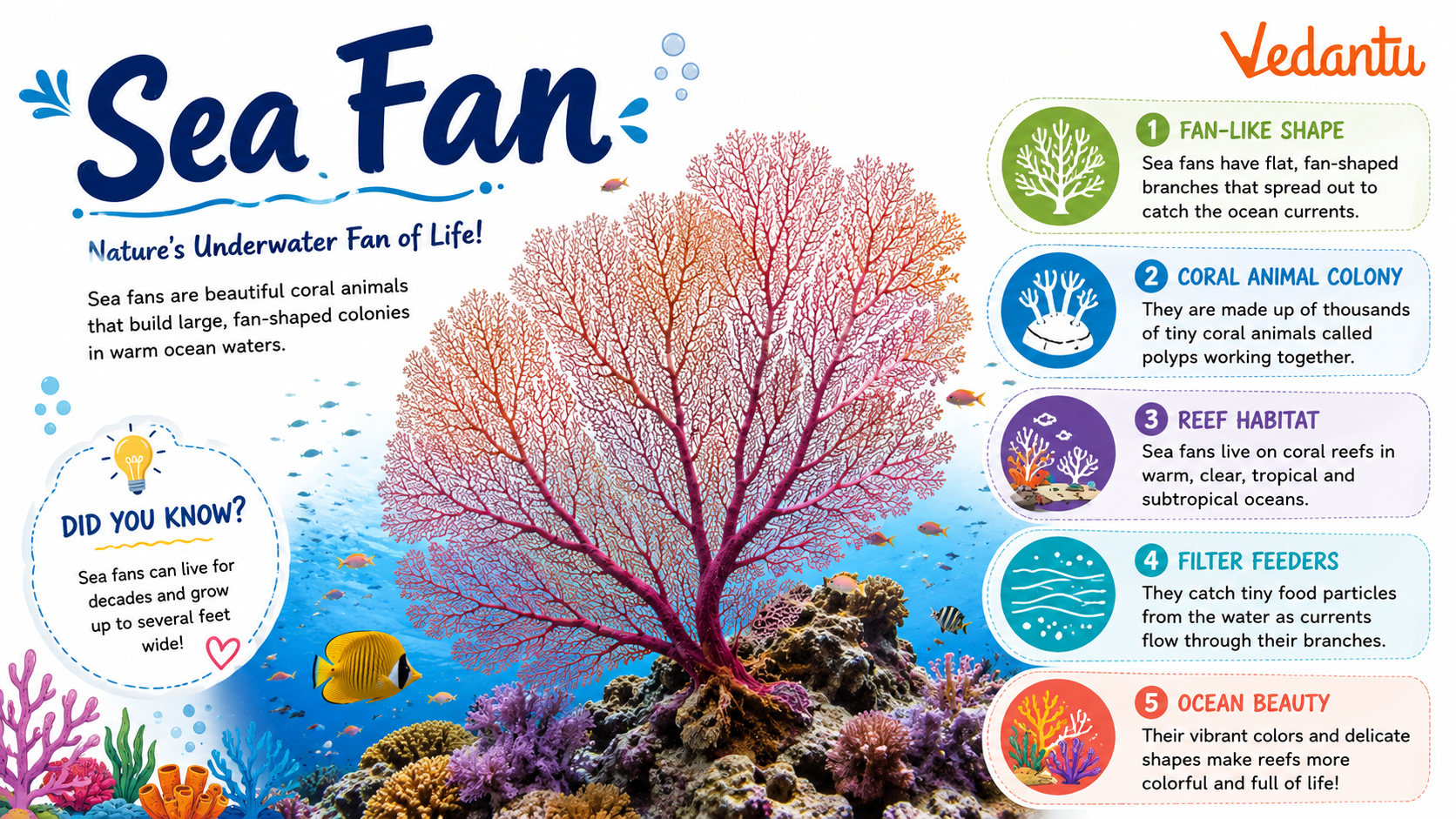
Quick Facts About Sea Fan
| Feature | Details |
|---|---|
| Common Name | Sea Fan |
| Scientific Group | Gorgonians (Order: Alcyonacea) |
| Animal Group | Invertebrate (Cnidarian) |
| Habitat | Warm tropical and subtropical oceans |
| Diet | Plankton and tiny floating particles |
| Size | Up to 1–2 meters wide |
| Lifespan | Several decades |
| Conservation Status | Some species threatened due to reef damage |
Appearance and Physical Characteristics
Sea Fan characteristics make them look like delicate underwater trees or fans.
- Flat, fan-shaped body with many branches.
- Bright colours such as purple, red, orange, or yellow.
- Made up of thousands of tiny animals called polyps.
- Soft outer tissue but supported by a flexible internal skeleton.
- Tiny tentacles used to catch food from water.
Sea Fan Habitat and Distribution
The Sea Fan habitat is mainly found in warm, clear ocean waters.
- Tropical coral reefs
- Shallow coastal waters
- Caribbean Sea
- Indian Ocean
- Pacific Ocean
Diet and Feeding Habits
The Sea Fan diet mainly includes tiny organisms floating in water.
- Plankton
- Microscopic algae
- Organic particles
How Do They Eat?
- Polyps extend their tentacles into the water.
- Stinging cells catch tiny prey.
- Food is passed to the mouth of each polyp.
Behaviour and Lifestyle
- Fixed in one place (do not move around).
- Sway gently with ocean currents.
- Live in large colonies.
- Provide shelter to small fish and shrimp.
Though they seem simple, Sea Fans are very important members of coral reef communities.
Sea Fan Life Cycle
- Spawning: Adults release eggs and sperm into the water.
- Larva Stage: Fertilised eggs develop into tiny swimming larvae.
- Attachment: Larva attaches to a hard surface like rock or reef.
- Polyp Growth: It grows into a polyp and forms branches.
- Colony Formation: Many polyps grow together to form a large Sea Fan.
The Sea Fan life cycle allows reefs to slowly expand over many years.
What Makes Sea Fan Special?
Importance and Role in Nature
Amazing Sea Fan Facts
- Sea Fans can grow several feet wide.
- They grow very slowly, only a few centimetres each year.
- Some species glow under special underwater lighting.
- They can live for decades if undisturbed.
- Storms can sometimes break their branches.
- They are related to corals, jellyfish, and sea anemones.
Fun Facts for Kids
FAQs on Sea Fan Coral: Fascinating Facts About This Ocean Beauty
1. What is a Sea Fan?
A Sea Fan is a soft coral that looks like a colorful underwater fan or tree.
- Sea Fan belongs to a group of corals called gorgonians.
- It has a flat, branching shape that spreads out like a fan.
- Sea fans are found in warm coral reef ecosystems.
- They are made up of many tiny animals called polyps.
- They come in bright colors like purple, red, yellow, and orange.
2. Where do Sea Fans live?
Sea Fans live in warm, shallow ocean waters around the world.
- They grow mainly in tropical and subtropical seas.
- Common locations include the Caribbean Sea and Indo-Pacific Ocean.
- They attach to rocks or coral reefs on the ocean floor.
- They prefer areas with strong water currents to catch food.
3. Is a Sea Fan a plant or an animal?
A Sea Fan is an animal, not a plant.
- It belongs to the animal kingdom.
- Each branch has tiny living creatures called coral polyps.
- Polyps use small tentacles to catch food from the water.
- They may look like plants, but they cannot make their own food like plants do.
4. What do Sea Fans eat?
Sea Fans eat tiny floating organisms from the water.
- They feed on plankton and microscopic sea creatures.
- Their tentacles catch food carried by ocean currents.
- Some sea fans also get nutrients from symbiotic algae living inside them.
5. How do Sea Fans grow?
Sea Fans grow slowly by adding new branches and polyps.
- They attach firmly to rocks on the seafloor.
- New coral polyps grow and expand the fan shape.
- Their skeleton is made of a flexible protein called gorgonin.
- Growth can take many years in a healthy coral reef.
6. Why are Sea Fans shaped like a fan?
Sea Fans are shaped like a fan to catch food easily from moving water.
- The flat shape faces the current.
- This helps them trap more plankton.
- The design also reduces damage from strong waves.
- It helps them survive in busy reef environments.
7. Are Sea Fans important to coral reefs?
Yes, Sea Fans are important because they support reef life and biodiversity.
- They provide shelter for small fish and sea creatures.
- They add beauty and structure to coral reef ecosystems.
- They help maintain marine biodiversity.
- They are indicators of ocean health.
8. What are the threats to Sea Fans?
Sea Fans face threats from pollution, climate change, and human activities.
- Ocean warming can damage coral tissues.
- Water pollution harms reef ecosystems.
- Storms and strong waves can break their branches.
- Overfishing and reef damage affect their habitat.
9. Can Sea Fans move?
Sea Fans cannot move from place to place.
- They are fixed to rocks on the ocean floor.
- Their branches can sway with water currents.
- This movement helps them catch food.
10. How long do Sea Fans live?
Sea Fans can live for many years, sometimes decades.
- They grow slowly in healthy coral reefs.
- Some species can live over 20–50 years.
- Their lifespan depends on water quality and environment.
