



What Is a Leaf Insect? Habitat, Diet, Lifespan, and Camouflage Explained
The Leaf Insect is one of the most fascinating examples of camouflage in the insect world. It looks almost exactly like a green leaf, complete with veins and natural leaf-like shapes. These amazing insects are experts at hiding from predators by blending into trees and plants. Found mainly in tropical forests, Leaf Insects are gentle plant-eaters with unique body structures. Let’s explore Leaf Insect facts, habitat, diet, life cycle, characteristics, and why they are so special.
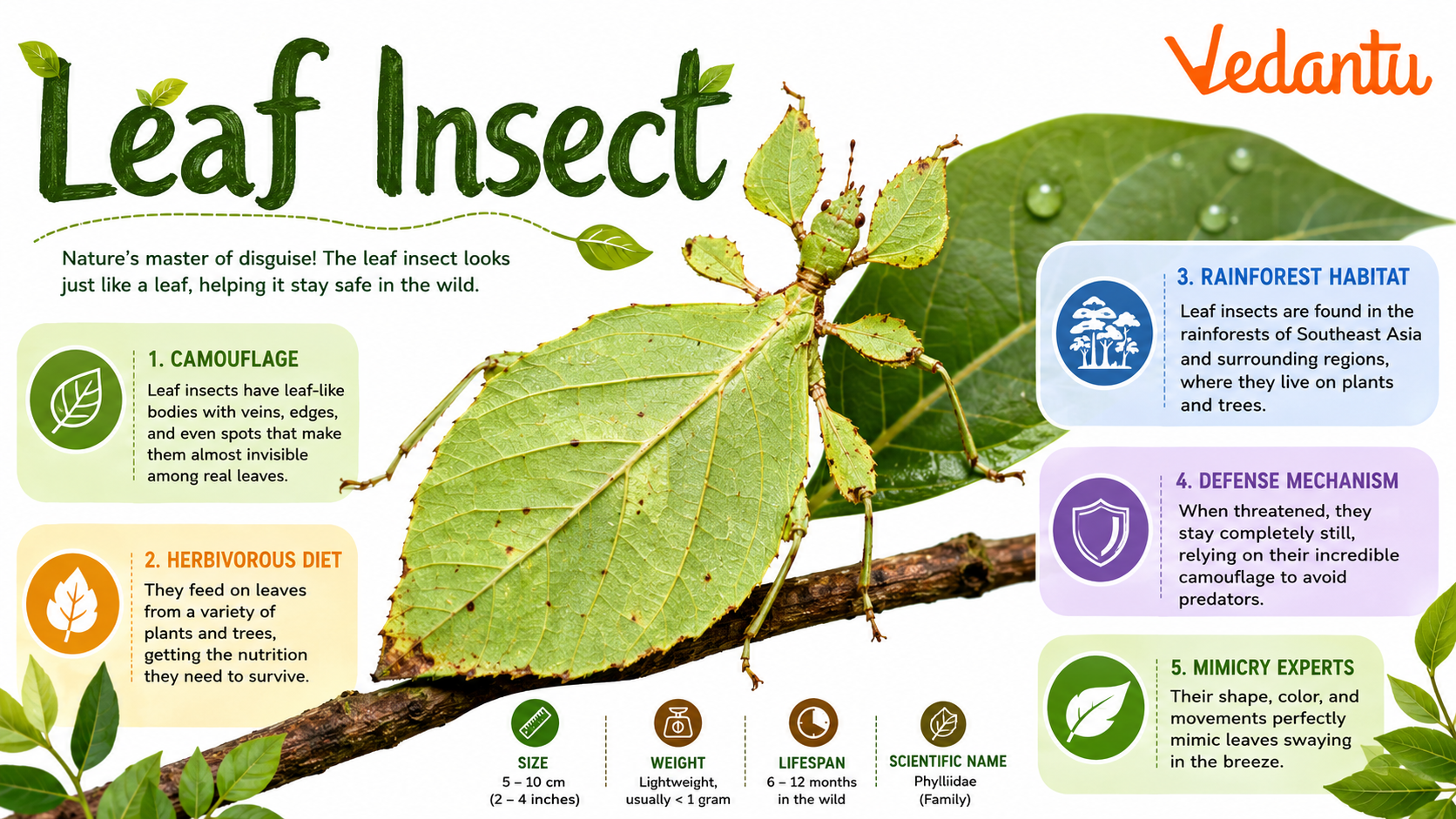
Quick Facts About Leaf Insect
| Feature | Details |
|---|---|
| Common Name | Leaf Insect |
| Scientific Name | Phylliidae (Family) |
| Animal Group | Insect |
| Size | 5–12 cm long (depending on species) |
| Habitat | Tropical forests and dense vegetation |
| Diet | Leaves (Herbivore) |
| Life Cycle | Egg → Nymph → Adult |
| Special Feature | Leaf-like body for camouflage |
Appearance and Physical Characteristics
- Flat, broad body shaped like a leaf.
- Green or brown colour, depending on surroundings.
- Wings have vein-like patterns similar to leaf veins.
- Some species have markings that look like holes or damaged leaf spots.
- Long antennae for sensing surroundings.
- Six legs, often shaped like small leaf edges.
Habitat and Distribution
- Found in Southeast Asia, Australia, and nearby tropical regions.
- Live in rainforests and dense bushes.
- Prefer areas with lots of green leaves for hiding.
- Stay mostly on trees and shrubs.
Their leaf-like appearance helps them blend perfectly into forest environments, protecting them from birds and reptiles.
Diet and Feeding Habits
- Leaf Insect diet mainly consists of fresh leaves.
- They are herbivores.
- Commonly eat guava, mango, rose, and oak leaves.
- Feed mostly at night to avoid predators.
Behaviour and Lifestyle
Leaf Insect Life Cycle
- Egg Stage: Female lays eggs that look like plant seeds.
- Nymph Stage: Baby insects hatch and may look like tiny ants at first.
- Growth: Nymphs shed their skin several times as they grow.
- Adult Stage: Develop full leaf-shaped wings and reproductive ability.
The complete Leaf Insect life cycle can take several months to a year depending on the species and climate.
What Makes Leaf Insect Special?
Importance and Role in Nature
Amazing Leaf Insect Facts
- Some species can change slightly in colour.
- Females are usually larger than males.
- Many females can reproduce without males (parthenogenesis).
- Their wings may look torn like real leaves.
- They are harmless to humans.
- They are close relatives of stick insects.
Fun Facts for Kids
FAQs on Leaf Insect: Nature’s Master of Leaf Mimicry
1. What is a leaf insect?
A leaf insect is a master of disguise that looks almost exactly like a real leaf.
- It belongs to the insect order Phasmatodea, which also includes stick insects.
- Its body is flat, wide, and shaped like a leaf.
- It has leaf-like veins and even brown spots that look like damage.
- This camouflage helps it hide from predators like birds and reptiles.
2. Where do leaf insects live?
Leaf insects mainly live in warm, tropical forests where they blend in with plants.
- They are commonly found in Southeast Asia, Australia, and nearby islands.
- They prefer rainforests with lots of trees and leaves.
- They stay high in trees to avoid ground predators.
- Their green color matches the forest environment perfectly.
3. Why do leaf insects look like leaves?
Leaf insects look like leaves to protect themselves from danger using camouflage.
- Their bodies mimic leaf shapes, veins, and edges.
- Some even sway like leaves in the wind.
- This trick helps them avoid predators such as birds.
- This type of protection is called mimicry and protective coloration.
4. What do leaf insects eat?
Leaf insects are plant-eaters that feed mainly on fresh leaves.
- They love leaves from guava, bramble, and oak trees.
- They chew leaves slowly, usually at night.
- They are herbivores, meaning they only eat plants.
- They get water from the leaves they eat.
5. Are leaf insects dangerous to humans?
Leaf insects are completely harmless and safe for humans.
- They do not bite or sting.
- They do not carry harmful venom.
- They are gentle and slow-moving insects.
- Some people even keep them as exotic pets.
6. How big can a leaf insect grow?
Leaf insects can grow quite large compared to many other insects.
- Most species grow between 3 to 5 inches long.
- Females are usually bigger and wider than males.
- Their large size helps them look like full-grown leaves.
- Size may vary depending on the species.
7. How do leaf insects reproduce?
Leaf insects can reproduce in a unique way called parthenogenesis.
- Females can lay eggs without a male.
- The eggs look like tiny plant seeds.
- After hatching, young leaf insects look like small brown leaves.
- They grow and molt several times before becoming adults.
8. How long do leaf insects live?
Leaf insects usually live for about one year.
- The egg stage can last several months.
- Nymphs (young insects) grow for a few months.
- Adult leaf insects may live 5 to 9 months.
- Lifespan depends on species and environment.
9. What are the predators of leaf insects?
Leaf insects have natural predators despite their excellent camouflage.
- Birds are their main predators.
- Reptiles and small mammals may also eat them.
- Spiders sometimes catch young leaf insects.
- Their leaf-like disguise helps them stay hidden from these threats.
10. What makes leaf insects special compared to other insects?
Leaf insects are special because they are among the best camouflaged insects in the world.
- Their body shape copies real leaves almost perfectly.
- They show advanced adaptation and evolution.
- They can change slightly in color to match their environment.
- Their unique appearance makes them popular in nature studies and insect research.
