






How Computers Improve Patient Care Management and Hospital Administration
Computers play a vital role in modern healthcare systems. From storing patient records to assisting in medical research and telemedicine, the uses of computers in hospitals have transformed the way medical services are delivered. In computer science, hospital information systems integrate hardware, software, databases, and networks to manage clinical and administrative tasks efficiently. Computers improve accuracy, speed, communication, and data security in hospitals. Understanding how computers are used in healthcare helps students see the real-world applications of technology in saving lives and improving patient care.
Definition and Meaning
Uses of Computers in Hospitals refers to the application of computer systems, software, and digital technologies to manage medical, administrative, research, and communication tasks within healthcare institutions.
- Electronic Health Records (EHR) - Digital storage of patient information.
- Hospital Information System (HIS) - Integrated system managing hospital operations.
- Medical Imaging Systems - Computerized tools for X-ray, MRI, CT scan analysis.
- Telemedicine - Remote healthcare services using computer networks.
How It Works - Working Principle
The uses of computers in hospitals working is based on data collection, processing, storage, and communication. Hospitals use interconnected computer systems to handle various tasks securely and efficiently.
- Patient data is entered into the system through computers or tablets.
- The data is stored in centralized databases or cloud servers.
- Doctors access records using secure login credentials.
- Medical devices send real-time monitoring data to computer systems.
- Reports, prescriptions, and bills are generated automatically.
- Data is shared securely for research, diagnosis, and teleconsultation.
Types and Classification
Computers in hospitals are used in different areas based on their purpose and functionality.
Types of Computer Uses in Hospitals
| Type | Purpose | Example |
|---|---|---|
| Clinical Systems | Manage patient diagnosis and treatment | EHR, Lab systems |
| Administrative Systems | Handle billing and scheduling | Hospital management software |
| Diagnostic Systems | Analyze medical images and reports | CT scan software |
| Communication Systems | Enable internal and remote communication | Email, Telemedicine platforms |
Each system works together to create a complete digital healthcare environment.
Components and Structure
The computer infrastructure in hospitals consists of several interconnected components.
- Hardware - Computers, servers, printers, scanners, medical devices.
- Software - Hospital management systems, diagnostic applications.
- Database Systems - Store patient and administrative data.
- Networking Infrastructure - LAN, WAN, cloud systems for connectivity.
- Security Systems - Firewalls, encryption, authentication tools.
Features and Characteristics
- Real-time data processing for patient monitoring.
- Secure data storage with encryption.
- Automated reporting and billing systems.
- Remote accessibility via telemedicine.
- Integration with laboratory and pharmacy systems.
Advantages
- Improves accuracy in diagnosis and treatment.
- Reduces paperwork and manual errors.
- Speeds up communication between departments.
- Enhances patient data security.
- Supports advanced medical research.
Disadvantages / Limitations
- High installation and maintenance costs.
- Risk of cyber attacks and data breaches.
- Requires technical training for staff.
- System failures may disrupt hospital operations.
Applications and Use Cases
1. Patient Records in Hospital

Computers store and manage electronic health records including patient history, test reports, and prescriptions.
2. Monitoring Patients in Hospital
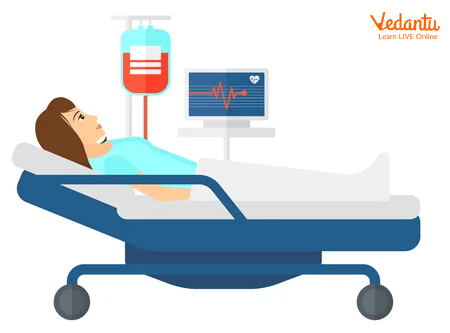
Computer systems monitor vital signs such as heart rate and blood pressure in real time.
3. Medical Research in Hospital

Hospitals use computers for analyzing clinical data and conducting research studies.
4. Inventory in Hospital

Inventory management systems track medicines, equipment, and supplies.
5. Use of Computer in a Hospital
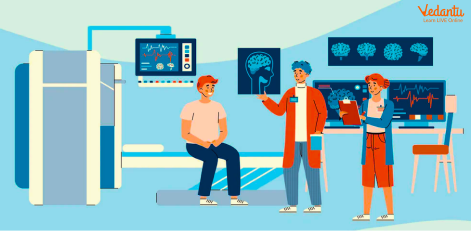
Computers are used at reception, laboratories, pharmacies, and operation theaters.
6. Computer Imaging in Hospital
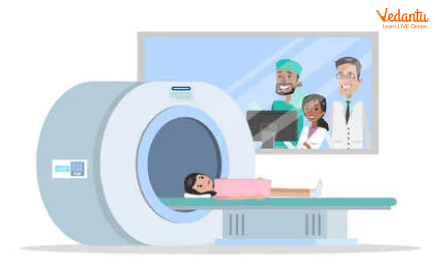
Advanced imaging systems help doctors analyze X-rays, MRI, and CT scans.
7. Communication in Hospital

Email, messaging systems, and video conferencing enable fast communication.
8. Telemedicine in Hospital

Doctors provide remote consultations using internet based platforms.
9. Customer Services on a Computer in Hospital

Reception systems manage appointments and patient inquiries.
10. Online Payments in Hospital

Billing software allows secure online payments and digital invoices.
Quick Facts About Uses of Computers in Hospitals
| Category | Details |
|---|---|
| Field | Healthcare Technology |
| Main Systems | HIS, EHR, Telemedicine |
| Used For | Patient care, Billing, Research |
| Technology Involved | Databases, Networks, Cloud Computing |
These systems combine computer science principles with healthcare services to improve efficiency and patient outcomes.
Interesting Facts About Uses Of Computers In Hospitals
- Electronic records reduce medical errors significantly.
- AI powered systems assist doctors in disease prediction.
- Robotic surgery uses computer controlled instruments.
- Cloud storage enables remote data access worldwide.
- Wearable devices send health data directly to hospital computers.
- Big data analytics helps track disease outbreaks.
Conclusion
The uses of computers in hospitals demonstrate how computer science improves healthcare delivery and management. From maintaining electronic records to enabling telemedicine and advanced imaging, computers enhance efficiency, accuracy, and patient safety. Despite certain limitations such as cost and security risks, their benefits outweigh the challenges. Understanding this topic helps students appreciate the powerful role of technology in modern medicine and its growing importance in the healthcare industry.
FAQs on Uses Of Computers In Hospitals and Healthcare Systems
1. What are the uses of computers in hospitals?
Computers in hospitals are used to manage patient data, automate medical processes, and improve healthcare services through digital systems.
- Electronic Health Records (EHR) management
- Medical billing and accounting systems
- Laboratory and diagnostic reports processing
- Hospital management software for administration
- Telemedicine and remote patient monitoring
2. What is Hospital Management System (HMS) in Computer Science?
A Hospital Management System (HMS) is a software application that automates and manages hospital operations using databases and network systems.
- Stores patient records in a database management system (DBMS)
- Manages appointments and scheduling
- Handles billing, pharmacy, and inventory
- Improves data accuracy and reduces paperwork
3. How do computers help in maintaining Electronic Health Records (EHR)?
Computers store and manage Electronic Health Records (EHR) digitally, making patient information easily accessible and secure.
- Uses cloud computing for secure storage
- Enables fast retrieval using database queries
- Supports data sharing over hospital networks
- Improves accuracy compared to manual records
4. What are the main components of computer systems used in hospitals?
Hospital computer systems consist of hardware, software, networking, and database components that work together to deliver healthcare services.
- Hardware: servers, desktops, medical devices
- Software: HMS, EHR, billing applications
- Database systems: patient data storage
- Network infrastructure: LAN, Wi-Fi, cloud access
5. How are computers used in medical diagnostics and laboratory systems?
Computers process and analyze diagnostic data from medical equipment using specialized software and algorithms.
- Integration with X-ray, MRI, CT scan machines
- Automated lab report generation
- Image processing using medical imaging software
- Data analysis using artificial intelligence (AI)
6. What is the role of Artificial Intelligence in hospitals?
Artificial Intelligence (AI) in hospitals helps in disease prediction, medical image analysis, and decision support systems.
- Machine learning algorithms for diagnosis prediction
- Chatbots for patient interaction
- Data analytics for treatment planning
- Improves accuracy and reduces human error
7. What are the advantages of using computers in hospitals?
Computers improve efficiency, accuracy, and data management in hospitals through automation and digital systems.
- Fast data processing and retrieval
- Secure storage using cybersecurity techniques
- Reduced paperwork and operational cost
- Better communication through network systems
8. Are there any disadvantages of computers in hospitals?
While computers improve healthcare services, they also have certain limitations related to security and technical dependency.
- Risk of cybersecurity attacks and data breaches
- High installation and maintenance cost
- System failure or server downtime issues
- Requires trained IT professionals
9. How do computers support telemedicine and remote healthcare?
Computers enable telemedicine by connecting doctors and patients through internet-based communication and cloud platforms.
- Video consultation using web applications
- Remote monitoring with IoT medical devices
- Cloud-based data sharing
- Secure communication using encryption protocols
10. Why are uses of computers in hospitals important for exams and interviews?
The uses of computers in hospitals are important for understanding real-world applications of Computer Science concepts in healthcare systems.
- Common topic in school and college Computer Science exams
- Asked in interviews related to IT, healthcare IT, and software development
- Demonstrates practical use of databases, networks, AI, and cloud computing
- Helps in competitive exam preparation
