



 Watch Video





Basis of Animal Kingdom Classification for NEET Revision
The animal kingdom includes all multicellular, eukaryotic, heterotrophic organisms placed under the Kingdom Animalia. Animal kingdom classification is based on features such as body organisation, symmetry, digestive and circulatory systems, and the presence or absence of a backbone.
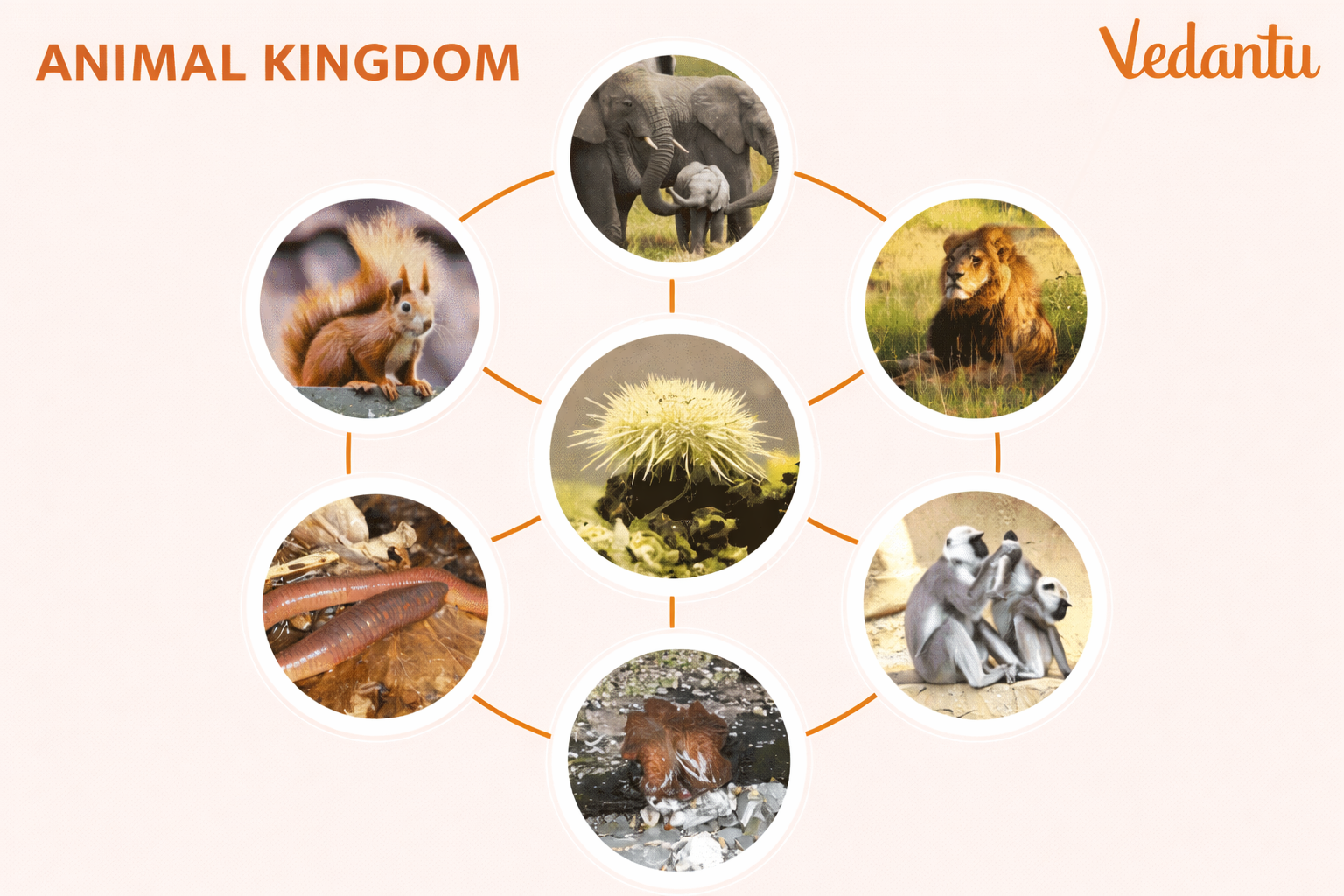
Basis of Animal Kingdom Classification
Animals are classified based on several structural and functional features. These criteria are important in school biology and competitive exam preparation.
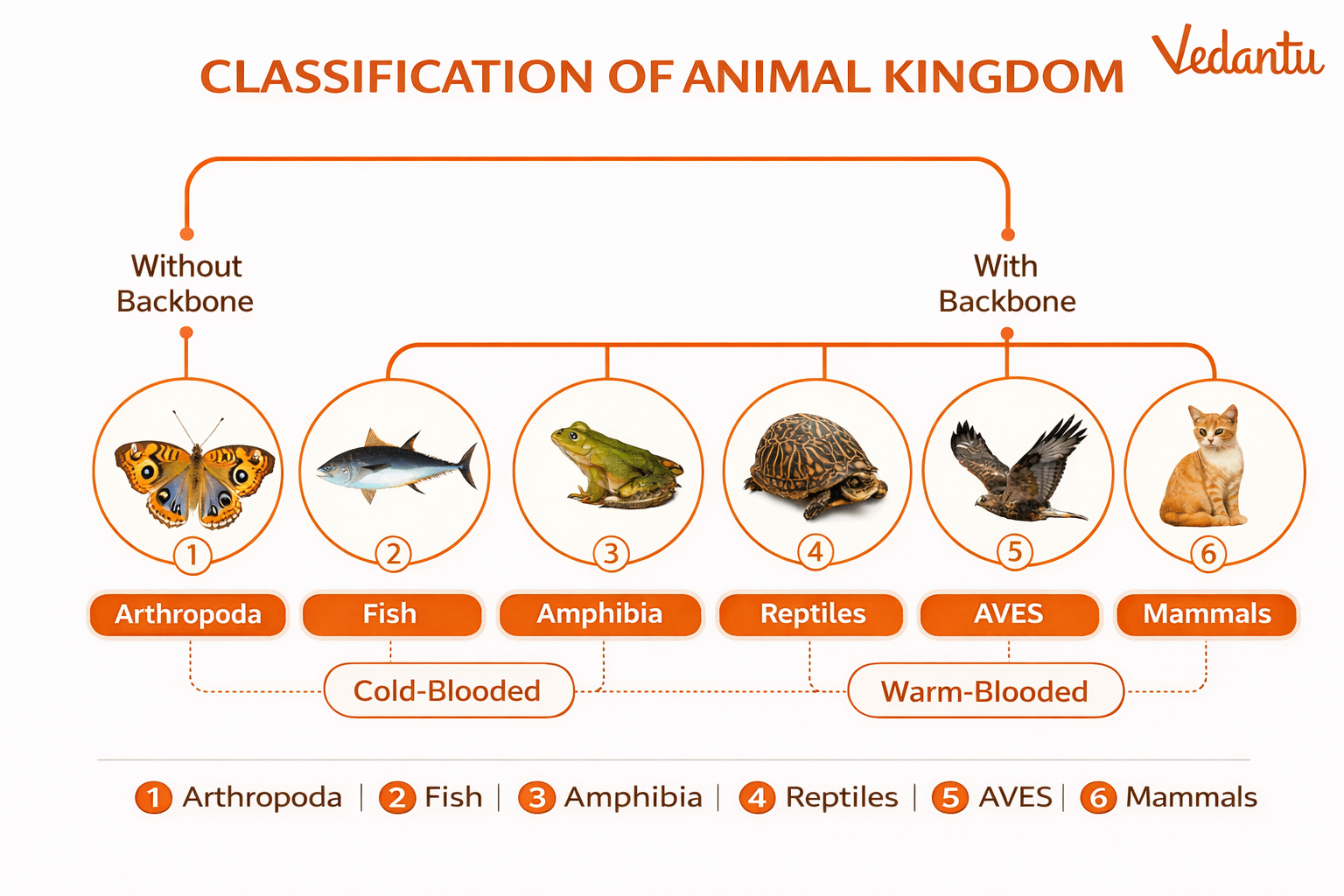
Major Criteria Used for Classification
level of organisation
body symmetry
type of digestive system
type of circulatory system
nature of the body cavity
segmentation
notochord
backbone or vertebral column
These criteria help divide animals into non-chordates and chordates, and further into many phyla and classes.
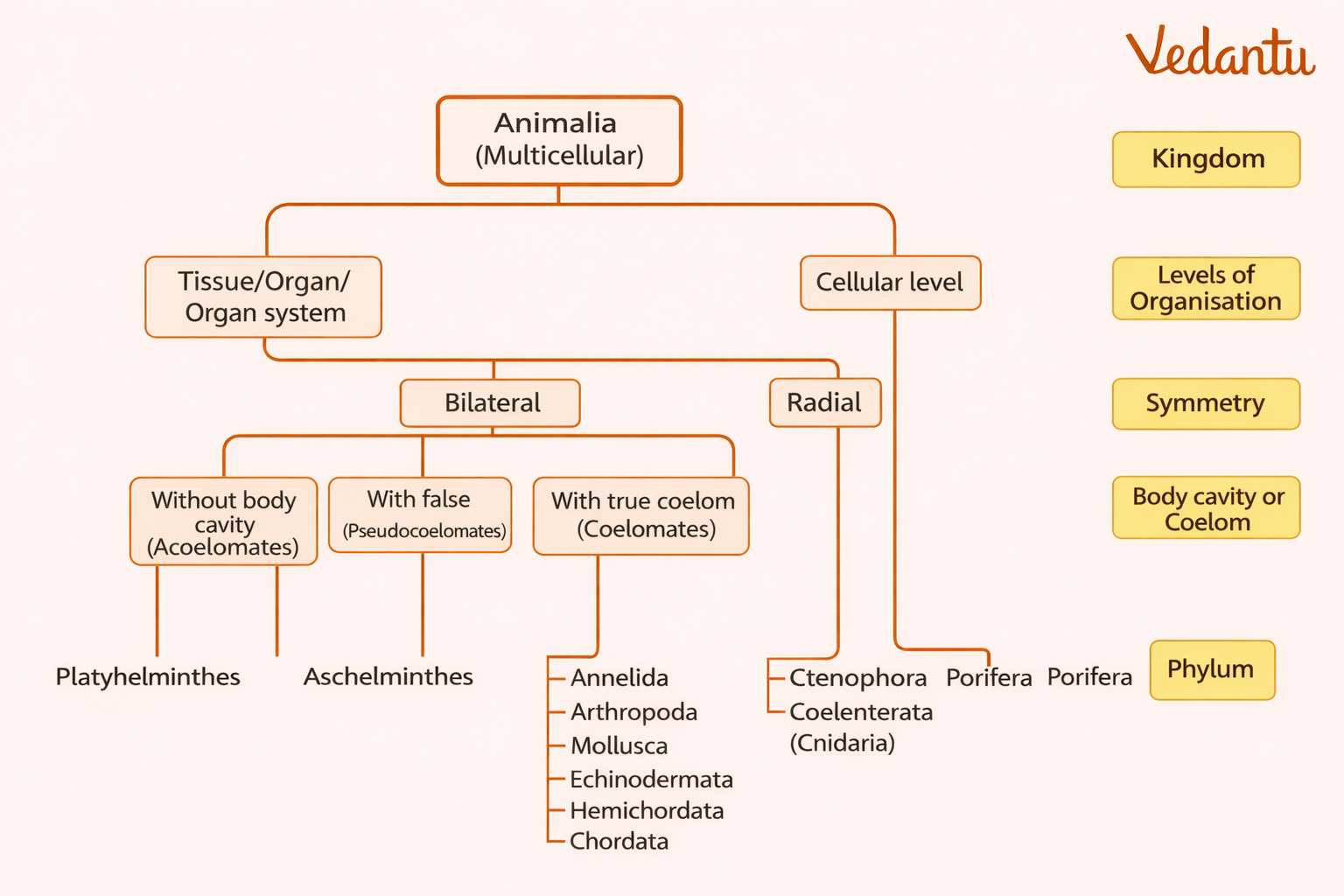
Levels of Organisation in the Animal Kingdom
One important basis of classification is the level of organisation.
Cellular Level of Organisation
In this level, the body is made of loosely arranged cells. Cells may perform different functions, but they do not form proper tissues.
Tissue Level of Organisation
In this type, similar cells group together to form tissues. Each tissue performs a particular function.
Organ Level of Organisation
At this level, tissues combine to form organs. Each organ has a specific role in the body.
Organ System Level of Organisation
In more advanced animals, different organs work together to form organ systems. Each system performs a distinct physiological function.
Body Symmetry in the Animal Kingdom
Another major basis of classification is body symmetry.
Asymmetrical Animals
These animals cannot be divided into equal halves by any plane. A common example is a sponge.
Radial Symmetry
In these animals, the body can be divided into similar parts through many planes passing through the central axis. This type of symmetry is seen in groups like cnidarians and adult echinoderms.
Bilateral Symmetry
In bilaterally symmetrical animals, the body can be divided into equal left and right halves by only one plane. Most higher animals show bilateral symmetry.
Organ System Patterns in the Animal Kingdom
The body systems of animals are also used as classification criteria.
Digestive system
Animals may show either a complete or an incomplete digestive system.
A complete digestive system has two openings, a mouth and an anus. This is found in arthropods and chordates.
An incomplete digestive system has only one opening, which acts as both the mouth and the anus. This is seen in simpler groups such as platyhelminthes.
Circulatory system
There are two main types of circulatory systems.
An open circulatory system is one in which blood is pumped out of the heart and is not always confined to blood vessels. This is found in molluscs and arthropods.
A closed circulatory system is one in which blood flows through arteries, veins, and capillaries. This is found in annelids, vertebrates, and some other advanced groups.
Animal Kingdom Classification
The broad classification of the animal kingdom can be understood by dividing animals into major groups based on body complexity and the presence of a backbone.
At a broad level, animals may be discussed under:
Protozoa
Bryozoans
Non-chordates
Vertebrates
Standard phylum-wise classification
The animal kingdom is commonly studied under the following major phyla:
Porifera
Cnidaria or Coelenterata
Ctenophora
Platyhelminthes
Aschelminthes or Nematoda
Annelida
Arthropoda
Mollusca
Echinodermata
Hemichordata
Chordata
Simple Flow Chart for a Better Understanding
Protozoa
Protozoa are unicellular eukaryotic organisms that show some animal-like features, such as movement and ingestion of food. Although they are single-celled, they were traditionally studied along with animals because of their motility and predatory behaviour.
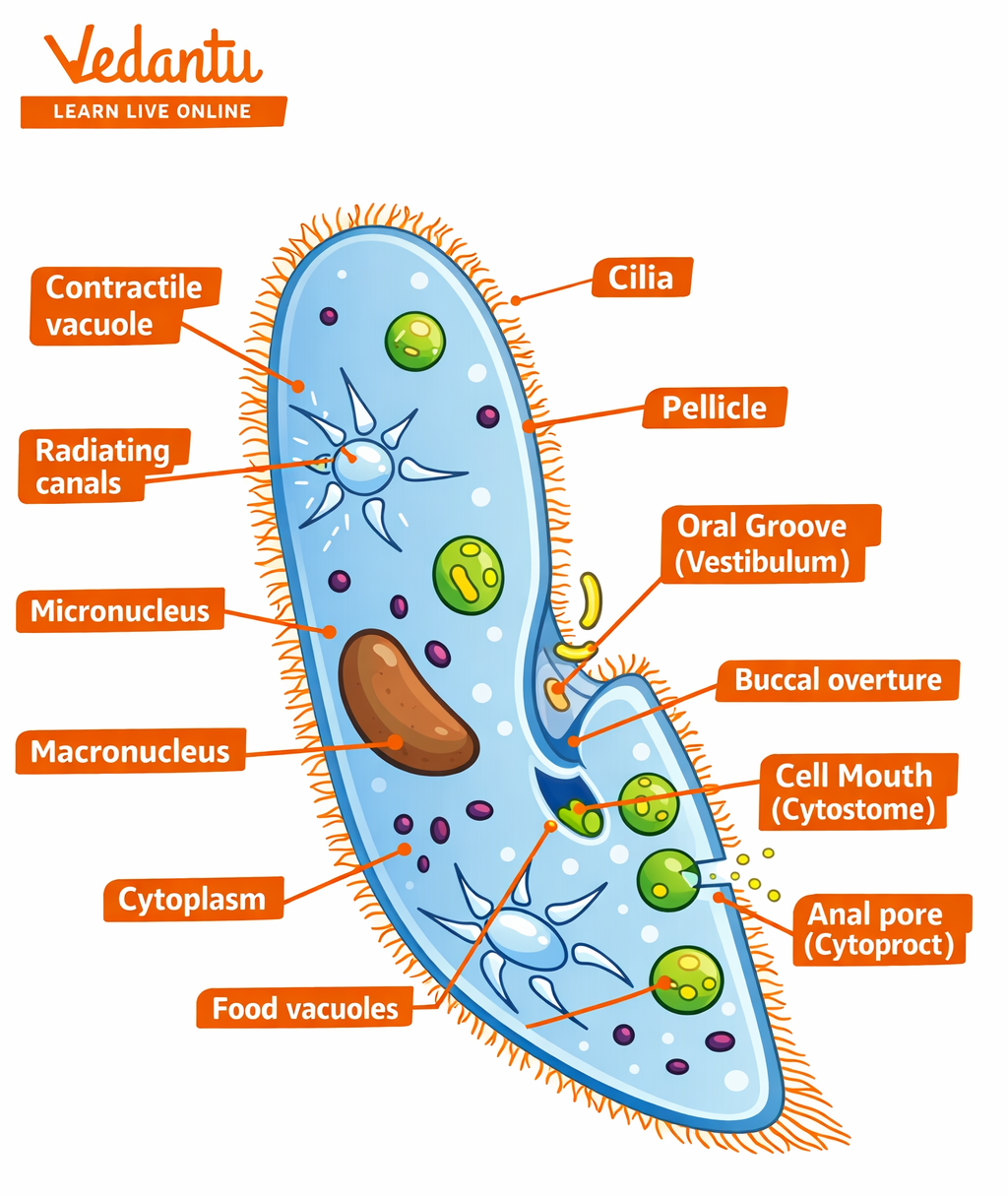
Protozoa obtain food in two major ways:
by absorbing nutrients through the cell membrane
by engulfing food particles through phagocytosis, often using pseudopodia
Protozoa represent the simplest form of animal-like life and are important in understanding the early stages of biological organisation.
Bryozoans
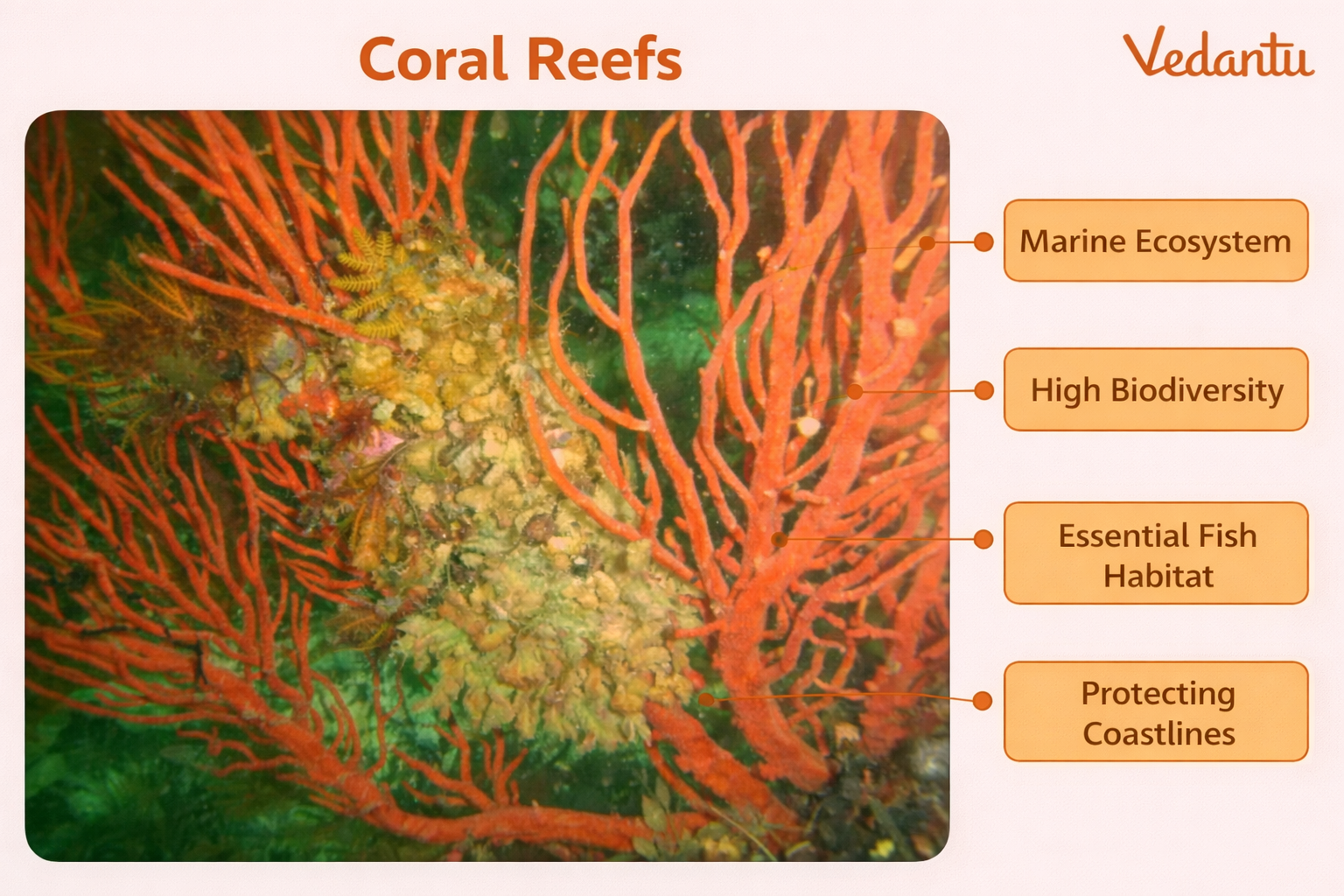
Bryozoans are commonly called moss animals. They are filter feeders that use a crown of ciliated tentacles to collect food particles from water. Most of them live in aquatic habitats, especially marine waters, though some may be found in freshwater and cold environments.
Most bryozoans are colonial. The individual units in a colony are called zooids. These zooids are not completely independent. In a colony, some zooids are mainly responsible for feeding and excretion.
Bryozoans are useful as examples of colonial animal organisation.
Vertebrates
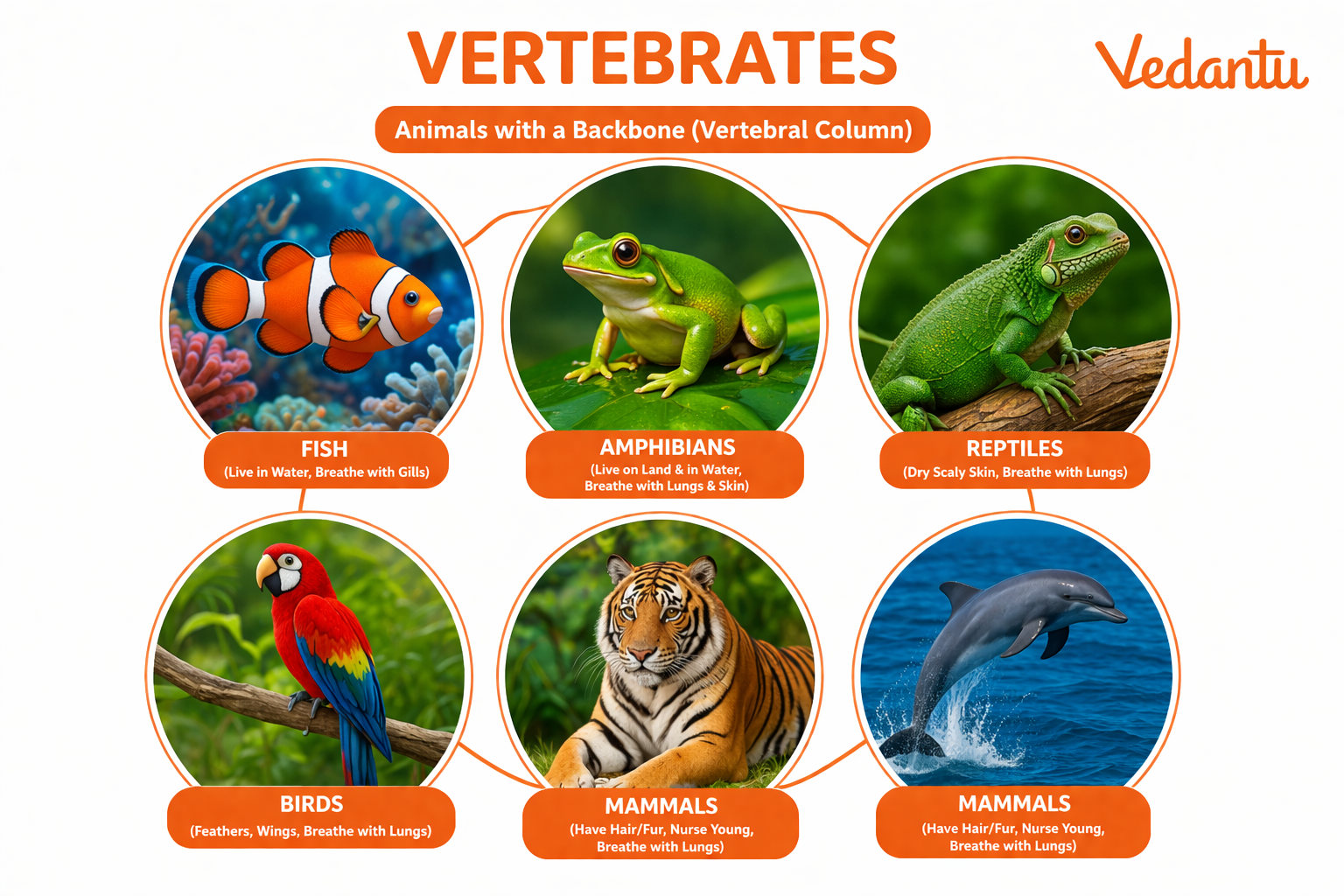
Vertebrates are animals that possess a backbone or vertebral column. They are the most advanced members of the animal kingdom and show an organ-system level of organisation.
The vertebrates include:
fishes
amphibians
reptiles
birds
mammals
Important Features of Vertebrates
Vertebrates have a well-developed nervous system, a closed circulatory system, and advanced organ systems. They vary greatly in size, habitat, and structure.
Major Groups of Vertebrates
1. Fishes
These include jawless fish, cartilaginous fish, and bony fish. They are mainly aquatic and use gills for respiration.
2. Amphibians
These animals live both on land and in water. They usually return to the water to breed.
3. Reptiles
Reptiles are generally covered with scales or scutes. Most are terrestrial and breathe through lungs.
4. Birds
Birds are covered with feathers and have streamlined bodies adapted for flight, though not all birds fly.
5. Mammals
Mammals may be terrestrial, aquatic, or aerial. The presence of mammary glands and hair characterises them.
Why is the Classification of the Animal Kingdom Important?
The number of known animal species is extremely large. Some animals share close similarities, while others differ greatly in body plan, habitat, and physiology. Classification helps organise this vast diversity into meaningful groups.
makes the study of animals systematic
helps identify similarities and differences
shows evolutionary relationships
makes exam revision easier
helps build concept clarity for NEET and board exams
Difference Between Non-Chordates and Chordates
Major Classification Criteria at a Glance
Why is the Animal Kingdom Important in Biology?
The topic of the animal kingdom is important because it helps students understand:
diversity of animal life
evolutionary progression
structural complexity
Basic body plan differences
classification principles used in zoology
Also Read Related Topics
Animal Kingdom Classification: General Characteristics, Body Symmetry, Level of Organisation, and More

 Share
ShareFAQs on Animal Kingdom Classification: General Characteristics, Body Symmetry, Level of Organisation, and More
1. What is the animal kingdom?
The animal kingdom includes all multicellular, eukaryotic, heterotrophic organisms that belong to the Kingdom Animalia.
2. What is animal kingdom classification?
Animal kingdom classification is the grouping of animals based on characteristics such as body organisation, symmetry, digestive system, circulatory system, and the presence of a notochord.
3. How many phyla are in the animal kingdom?
The animal kingdom is divided into 11 major phyla.
4. What are protozoa?
Protozoa are unicellular eukaryotic organisms that show animal-like features such as motility and predation.
5. What are bryozoans?
Bryozoans are moss animals that are mostly colonial and feed by filtering food particles from water.
6. What are vertebrates?
Vertebrates are animals that possess a backbone and include fish, amphibians, reptiles, birds, and mammals.
7. What is bilateral symmetry?
Bilateral symmetry means the body can be divided into equal right and left halves by one plane.
8. What is the difference between an open and a closed circulatory system?
In an open circulatory system, blood is not always confined to vessels, while in a closed circulatory system, blood flows through arteries, veins, and capillaries.
