



What are Bryophytes?
Bryophytes are simple, non-vascular, seedless plants that occupy an important position in plant evolution. They include mosses, liverworts, and hornworts, and are considered the earliest land plants. These plants lack true roots, stems, and leaves, and instead possess simplified structures adapted for survival in moist environments.
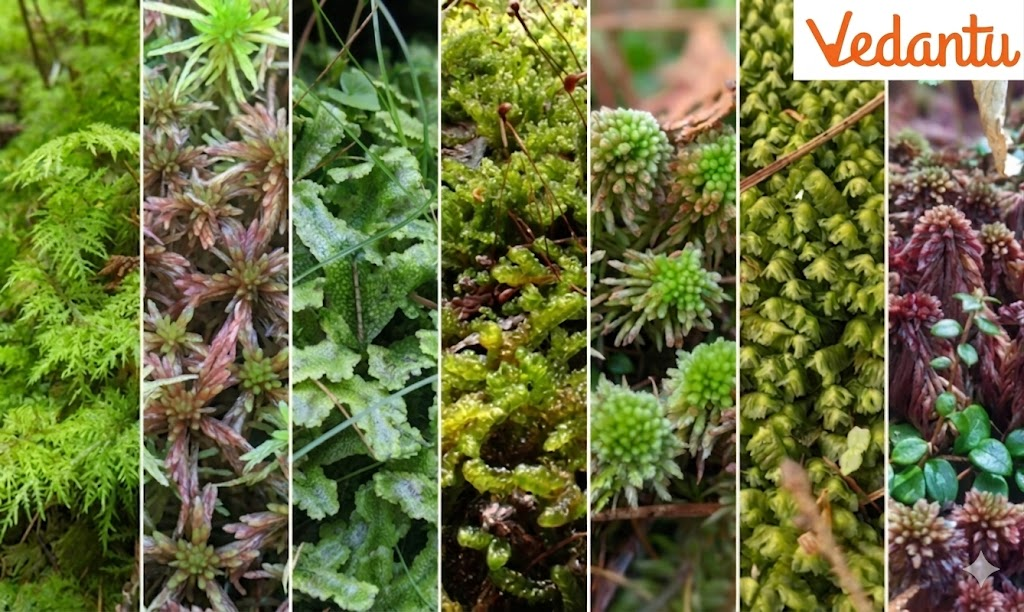
Bryophytes are widely distributed across the world and are usually found in damp and shady places such as forests, rocks, and wetlands. They are relatively small in size but show remarkable diversity in structure and habitat.
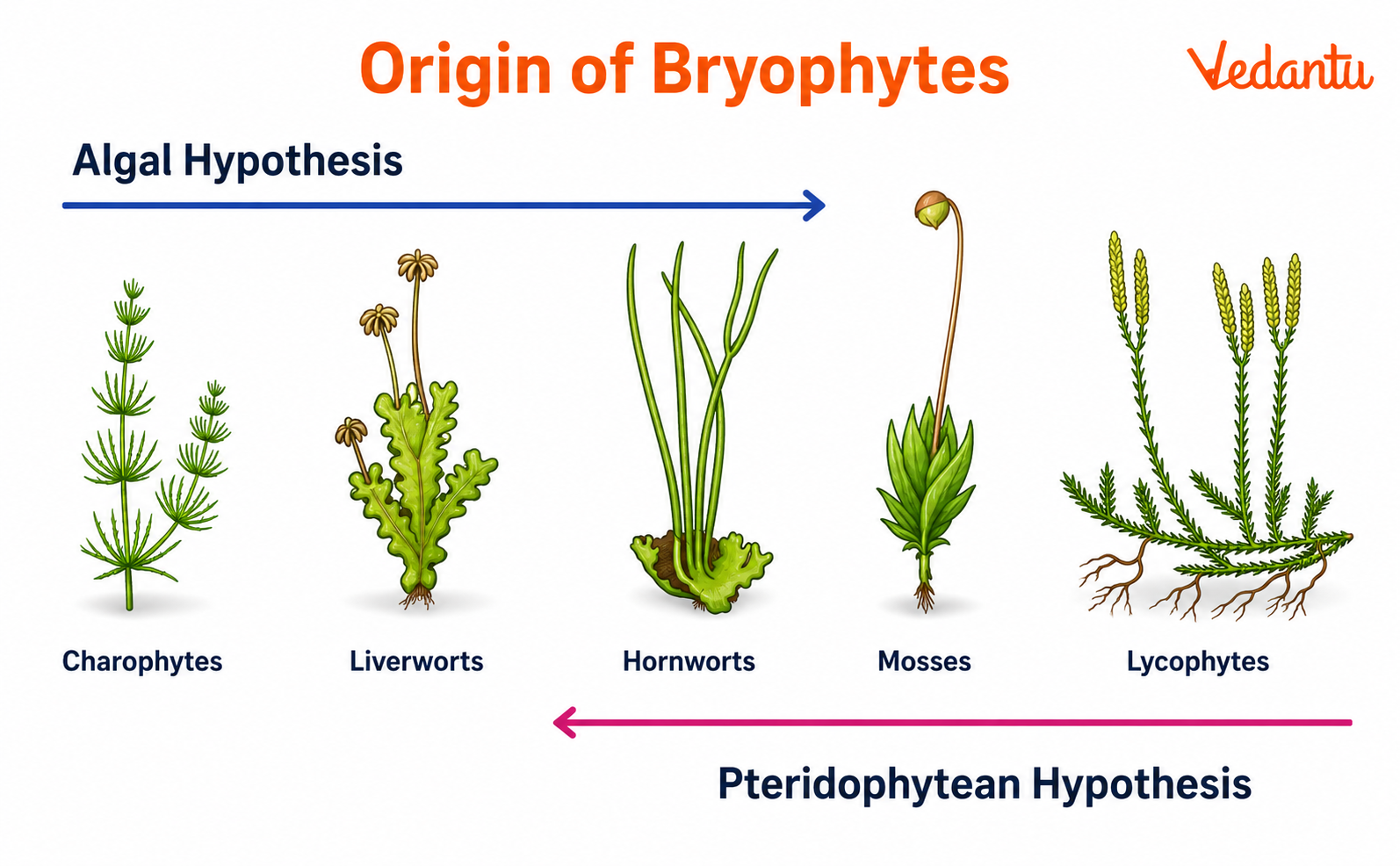
General Characteristics of Bryophytes
Understanding the general characteristics of bryophytes is essential for NEET preparation:
Dominant gametophyte stage: The green, photosynthetic gametophyte is the main plant body.
Presence of rhizoids: Instead of true roots, they have rhizoids for attachment and absorption.
Dependence on water: Water is essential for fertilization as sperm need a medium to swim.
Small size: Most bryophytes are only a few centimeters tall.
No true seeds or flowers: Reproduction occurs via spores.
Alternation of generations: Life cycle includes gametophyte and sporophyte phases.
Chlorophyll present: They perform photosynthesis.
These features explain their evolutionary significance as a transitional group between algae and higher vascular plants.
Why are Bryophytes Called Amphibians of the Plant Kingdom?
Bryophytes are termed “amphibians of the plant kingdom” because they can live on land but require water for sexual reproduction.
The plant body grows on soil or rocks (terrestrial habit).
Fertilization occurs only in the presence of water.
Motile sperm swim through water to reach the egg.
This dual dependency-living on land but needing water-gives them this unique title.
Classification of Bryophytes
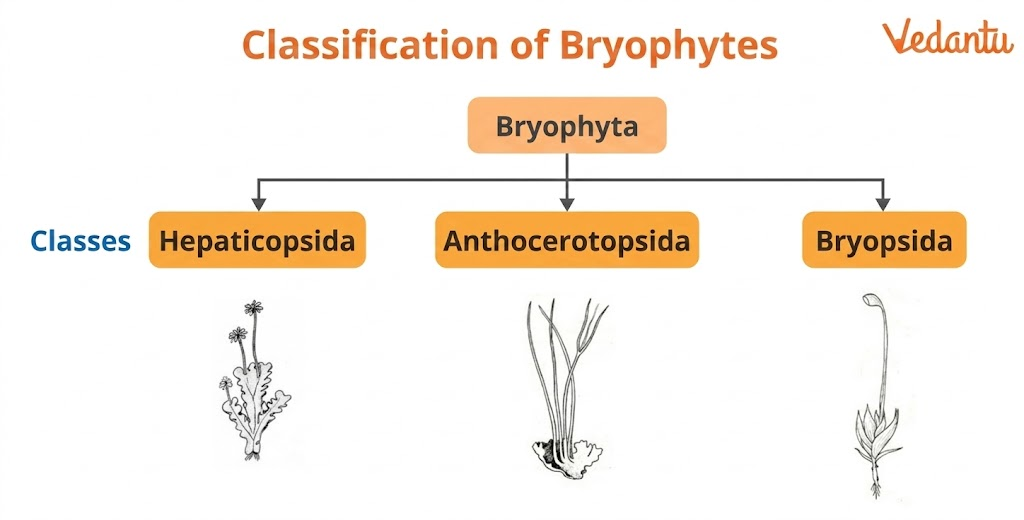
Bryophytes are classified into three main groups based on structure and reproduction:
1. Liverworts (Marchantiophyta)
The body is thalloid or leafy.
Rhizoids are unicellular.
Example: Marchantia
2. Mosses (Bryophyta)
Most common bryophytes.
Possess leafy gametophyte.
Rhizoids are multicellular.
Example: Funaria, Sphagnum
3. Hornworts (Anthocerotophyta)
Thalloid body.
The sporophyte is elongated and horn-like.
Example: Anthoceros
This classification is important for NEET as it highlights evolutionary diversity.
Life Cycle of Bryophytes
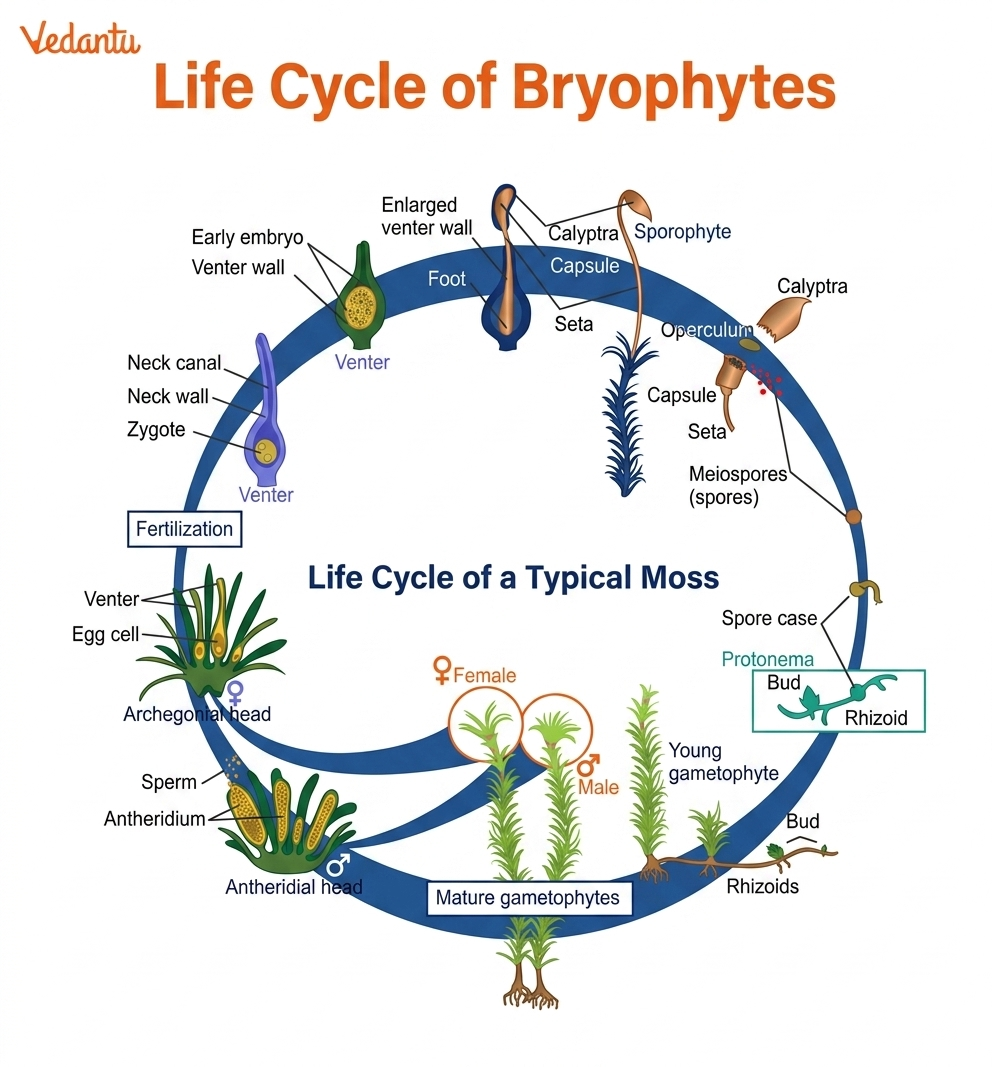
The life cycle of bryophytes shows alternation of generations, consisting of two phases:
1. Gametophyte Phase (Haploid)
Dominant and photosynthetic.
Produces:
Antheridia (male sex organs) → sperm
Archegonia (female sex organs) → egg
2. Fertilization
Requires water.
Sperm swims to fertilize the egg → forms zygote.
3. Sporophyte Phase (Diploid)
Developed from zygote.
Remains attached to gametophyte.
Produces spores inside a capsule.
4. Spore Formation
Spores germinate into protonema.
Protonema develops into a new gametophyte.
This cycle ensures continuity and adaptation in moist environments.
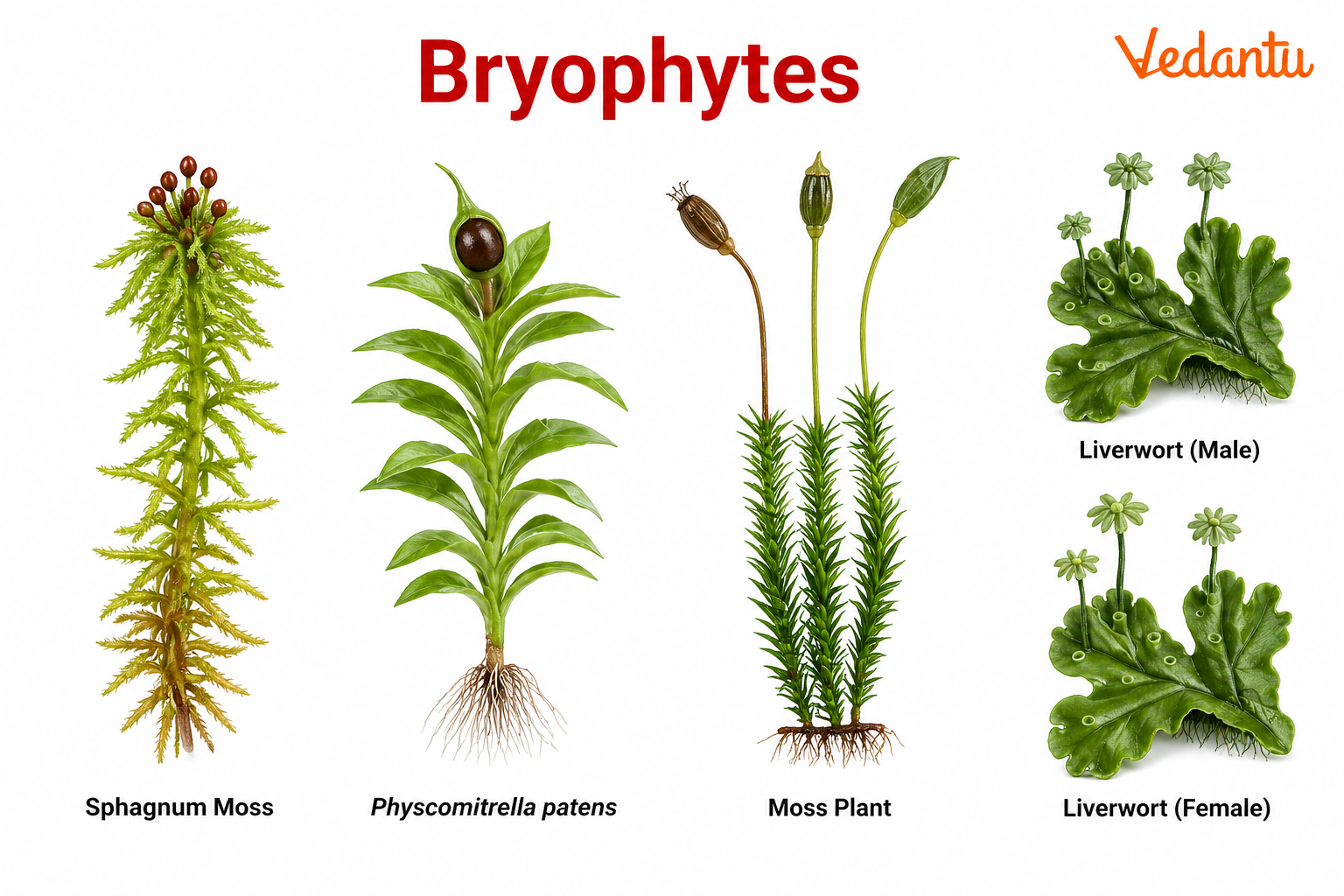
Bryophytes Examples
Common examples of bryophytes include:
Mosses: Funaria, Sphagnum, Polytrichum
Liverworts: Marchantia, Riccia
Hornworts: Anthoceros
These examples are frequently asked in NEET exams.
Economic Importance of Bryophytes
Bryophytes play a significant role in ecology and human use:
1. Soil Formation
Pioneer species that grow on bare rocks.
Help in breaking rocks and forming soil.
2. Water Retention
Mosses absorb and retain water like a sponge.
Maintain moisture in ecosystems.
3. Peat Formation
Sphagnum moss forms peat.
Used as fuel and soil conditioner.
4. Ecological Indicators
Indicate environmental conditions like humidity and pollution.
5. Medicinal Uses
Some bryophytes have antimicrobial properties.
6. Horticulture
Used in gardening to improve soil quality.
Habitat and Distribution of Bryophytes
Bryophytes are found in:
Moist forests
Riverbanks
Wetlands and peatlands
Shaded rocks and tree trunks
They are most abundant in humid regions but can also survive extreme conditions like cold and dryness by becoming dormant.
Key NEET Concepts on Bryophytes
First land plants
Non-vascular
Dominant gametophyte
Require water for fertilization
Reproduce by spores
Show alternation of generations
What Experts Have to Say?
Bryophytes are simple yet highly important plants that bridge the gap between aquatic algae and advanced vascular plants. Their unique life cycle, ecological importance, and evolutionary significance make them a crucial topic for NEET Biology. Understanding their structure, classification, and reproduction helps build a strong foundation in plant biology.
FAQs on Bryophytes : Structure, Classification, Life Cycle and Economic Importance
1. What are the 4 groups of plants?
The four main groups of plants are bryophytes, pteridophytes, gymnosperms, and angiosperms.
2. What are the five characteristics of Bryophyta?
The five main characteristics of Bryophyta are:
They lack vascular tissues like xylem and phloem.
Their sex organs are multicellular and protected by a jacket.
The archegonium is flask-shaped with a neck and swollen base.
Sexual reproduction is oogamous.
The sporophyte remains attached to and dependent on the gametophyte.
3. What are bryophytes also called?
Bryophytes are also called the amphibians of the plant kingdom because they live on land but need water for reproduction.
4. What does Bryophyta mean?
Bryophyta means a group of small, non-vascular, spore-producing plants such as mosses, liverworts, and hornworts.
5. What are three types of bryophytes?
The three main types of bryophytes are:
Liverworts
Hornworts
Mosses
6. What is an example of Bryophyta?
Yes, moss, liverwort, and hornwort are all examples of Bryophyta.
7. What is the smallest bryophyte name?
The smallest bryophyte is commonly considered to be Zoopsis argentea.
