



How to Identify a Toad: Diet, Behavior, and Differences from Frogs
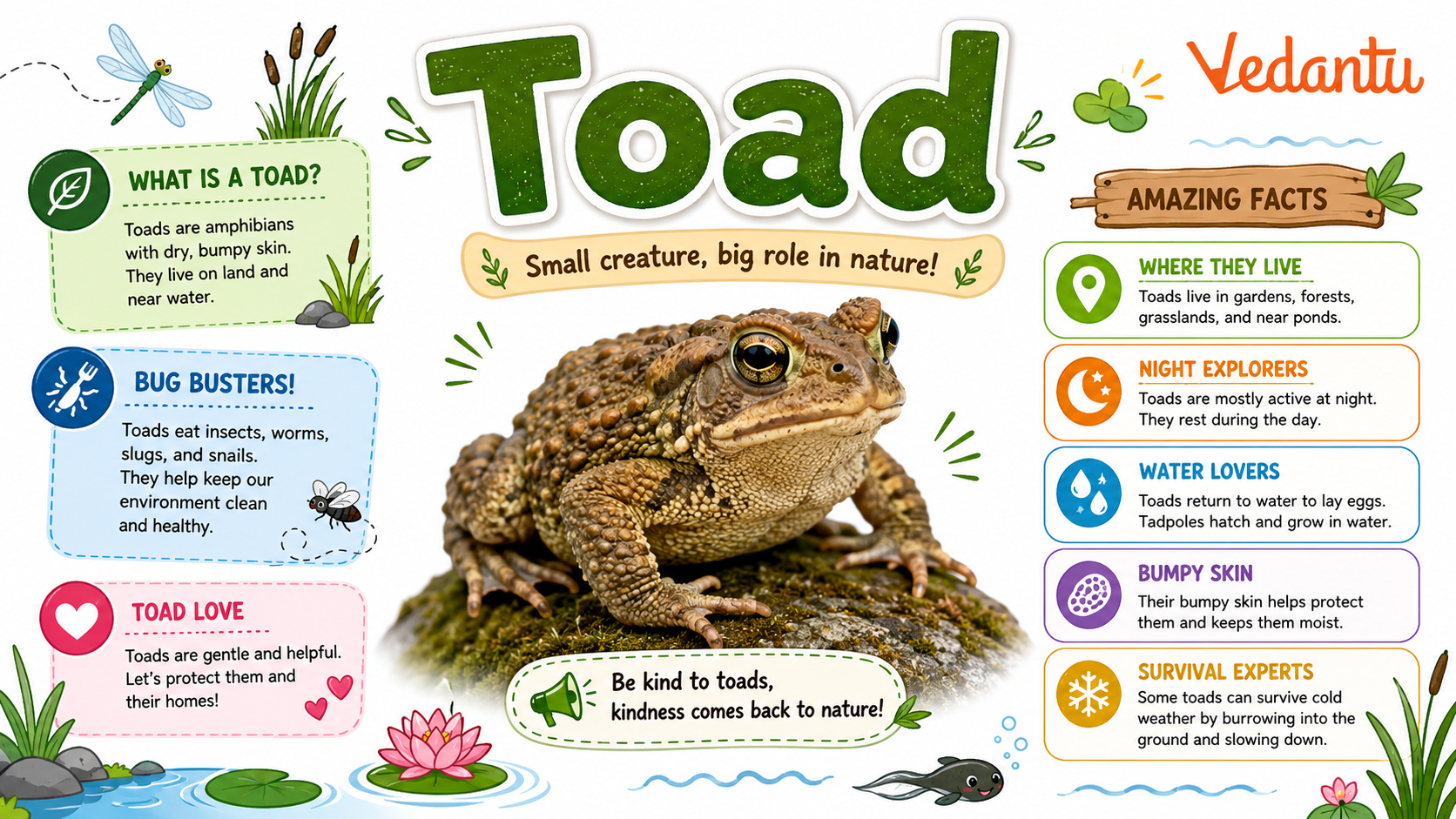
Quick Facts About Toad
| Feature | Details |
|---|---|
| Common Name | Toad |
| Animal Group | Amphibian |
| Scientific Family | Bufonidae |
| Size | 2 to 6 inches (varies by species) |
| Lifespan | 5 to 15 years |
| Habitat | Forests, grasslands, gardens, wetlands |
| Diet | Insects, worms, small invertebrates |
| Young One | Tadpole |
| Sound | Croak or trill |
Appearance and Physical Characteristics
- Dry, rough, and bumpy skin.
- Shorter back legs compared to frogs.
- Stocky and wide body shape.
- Earthy colours like brown, grey, or green for camouflage.
- Large glands behind the eyes called parotoid glands.
Toad Habitat and Distribution
The toad habitat is very flexible. Unlike frogs, toads can live farther away from water.
- Found on every continent except Antarctica.
- Live in forests, gardens, grasslands, and even deserts.
- Prefer moist areas but can survive in drier places.
- Hide under rocks, logs, or in burrows during the day.
Diet and Feeding Habits
The toad diet mainly includes small moving animals.
- Insects like beetles, ants, and flies.
- Worms and spiders.
- Slugs and small snails.
Behaviour and Lifestyle
- Mostly nocturnal (active at night).
- Move by short hops or slow walks.
- Stay still to avoid predators.
- Hibernate during very cold winters.
Sound or Call
Male toads make croaking or trilling sounds during the breeding season to attract females. These calls are usually heard near ponds at night.
Toad Life Cycle
- Egg Stage: Female lays long strings of eggs in water.
- Tadpole Stage: Eggs hatch into tadpoles with tails and gills.
- Metamorphosis: Tadpoles grow legs and lungs.
- Adult Toad: Tail disappears and the toad lives on land.
What Makes Toad Special?
Importance and Role in Nature
Amazing Toad Facts
- Some toads can puff up their bodies to look bigger.
- They can live both in water and on land.
- Many species can survive dry seasons by burrowing underground.
- Toads swallow food whole.
- They blink their eyes to help push food down their throat.
- There are more than 500 species of toads worldwide.
Fun Facts for Kids
FAQs on Toad Facts, Habitat, and Life Cycle Explained
1. What is a toad?
A toad is a small, land‑living amphibian that belongs to the frog family.
- Toads are a type of amphibian, just like frogs.
- They usually have dry, bumpy skin.
- Most toads live on land but lay eggs in water.
- They are part of the Bufonidae family in animal classification.
- People often search: “Are toads frogs?” and the answer is yes—they are a kind of frog.
2. What is the difference between a toad and a frog?
The main difference between a toad and a frog is their skin and habitat.
- Toads have dry, rough, bumpy skin.
- Frogs usually have smooth, moist skin.
- Toads prefer walking or short hops.
- Frogs are strong jumpers and stay near water.
- Both are amphibians and lay eggs in water.
3. Where do toads live?
Toads live in many habitats around the world except Antarctica.
- They are found in forests, gardens, grasslands, and wetlands.
- Most toads hide under rocks or logs during the day.
- They return to ponds or lakes to lay eggs.
- Common examples include the American toad and cane toad.
4. What do toads eat?
Toads are carnivores that eat insects and small animals.
- They feed on insects like ants, beetles, and flies.
- Some eat worms, spiders, and small slugs.
- Toads catch food with their sticky tongues.
- This makes them helpful for gardens and farms because they control pests.
5. Are toads poisonous?
Many toads have mild toxins to protect themselves from predators.
- They have special glands called parotoid glands.
- These glands release a poisonous substance when threatened.
- The toxin can irritate animals but is rarely dangerous to humans.
- It is safe to look at toads, but always wash your hands after touching them.
6. How do toads grow and develop?
Toads go through a life cycle called metamorphosis.
- They begin as eggs laid in water.
- Eggs hatch into tadpoles with tails and gills.
- Tadpoles grow legs and lungs over time.
- They become adult toads that live mostly on land.
7. Why do toads croak?
Toads croak to communicate, especially during mating season.
- Male toads make loud croaking sounds to attract females.
- Each species has a unique call or trill.
- Croaking is most common at night near water.
- This is why people often ask, “Why do toads make noise at night?”
8. Do toads hibernate?
Yes, many toads hibernate during cold weather to survive winter.
- They dig into soil or mud to stay warm.
- Their body slows down to save energy.
- This winter sleep is called hibernation.
- In hot, dry places, some toads also rest during summer in a process called estivation.
9. Are toads good for the environment?
Toads are important for a healthy ecosystem because they control insect populations.
- They eat harmful pests in gardens and farms.
- They are food for birds, snakes, and mammals.
- Toads help maintain the balance of nature.
- Scientists study amphibians like toads to monitor environmental health.
10. Can you keep a toad as a pet?
Yes, some people keep toads as pets, but they need special care.
- They require a clean terrarium with moist soil.
- Toads need live food like insects.
- Fresh water must always be available.
- It is important to check local laws before keeping a pet toad.
