




How to Answer EVS Chapter 6 Questions for Full Marks (Stepwise Guide)
Find Out (Page 95)
Look at the map for the southernmost point of India.
Answer:
Students should do it by themselves.
Find Out (Page 95)
Question 1.
In which sea are the Andaman and Nicobar Islands located?
Answer:
The Andaman and Nicobar Islands lie in the Bay of Bengal.
Question 2.
Name the other islands you know.
Answer:
Other nearby islands include the Lakshadweep Islands and the country of Sri Lanka.
Activity 1 (Page 96)
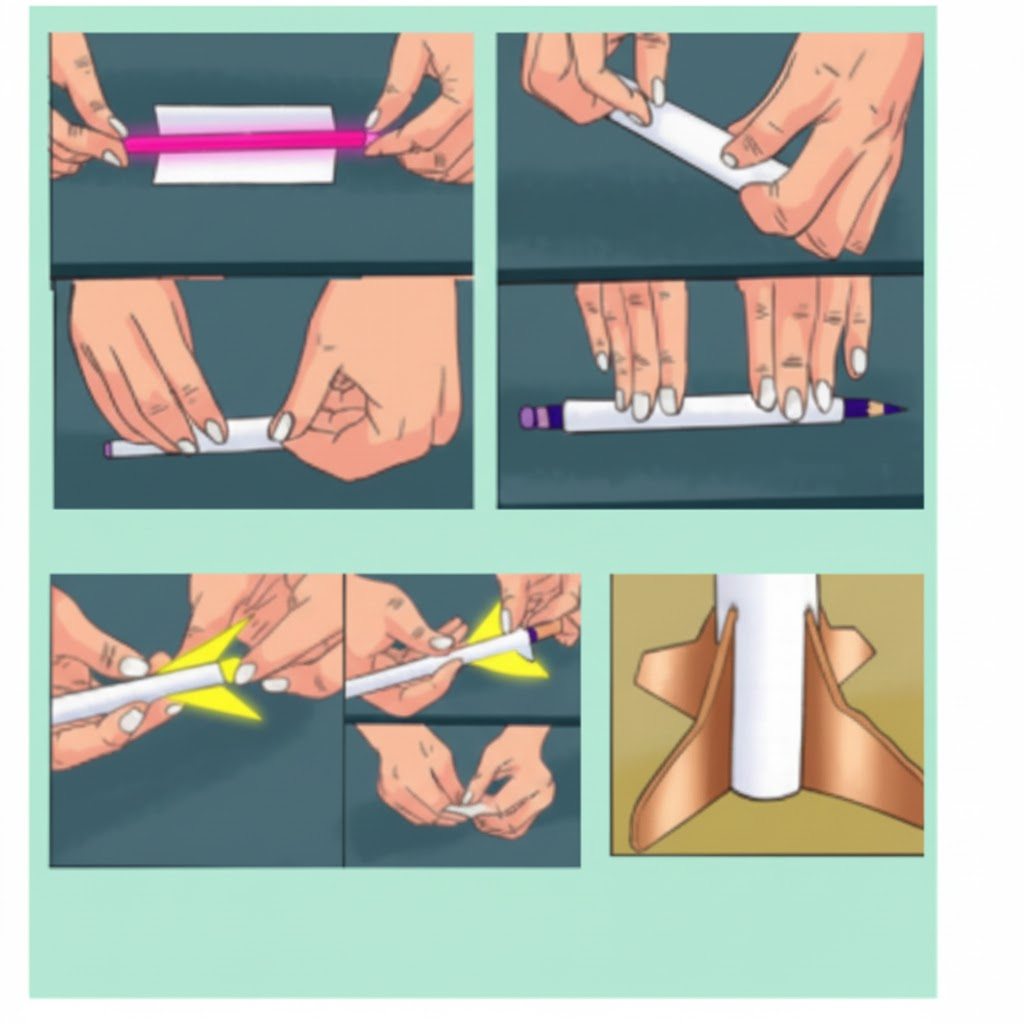
Take a rectangular piece of newspaper or used paper, and roll it into a thin tube. Glue the edges so it does not open. Then, make it stand it up on a flat surface. Does it stay up? Now, cut 3-4 small triangles from thick paper. Stick the triangles evenly around the bottom of the roll. Rest the paper on a flat surface again. Does it stay upright now? The base supports the roll like the roots support the tree to stand upright.
Answer:
Students should do it by themselves.
Intext (Page 97)
Question
Why do you think some birds and animals are found only on these islands?
Answer:
Certain birds and animals are found only on islands such as the Andaman and Nicobar Islands because these places are far away from other land areas. Over many years, the animals living there gradually change and adapt to the island environment. Since they do not interact with species from other regions, they become unique and exist only on these islands.
Write (Pages 97-98)
Question 1.
Draw or write about your favourite fish or other sea animal.
Answer:
My favourite sea creature is the sea turtle. Sea turtles have strong shells that protect their bodies and flippers that help them swim. They live in the ocean but come ashore to lay their eggs on the beach. (You may draw your favourite sea animal on your own.)
Question 2.
List at least three living things found in the sea.
Answer:
Jellyfish, Crab and Coral.
Discuss (Page 98)
Question 1.
Why do you think life under the sea is just as important as life in the forests?
Answer:
Life beneath the sea is equally important because many plants and animals live there, just as they do in forests. The ocean helps keep our planet healthy by providing oxygen and food for us.
Question 2.
How do you think the coral reef helps the fish and other sea creatures?
Answer:
Coral reefs serve as homes and feeding areas for many fish and sea creatures. They offer protection to smaller animals from larger predators and create a safe environment for them to live and develop.
Discuss (Page 98)
Question 1.
How do you think their knowledge might have helped the people of North Sentinel Island stay safe?
Answer:
The people living on North Sentinel Island stay closely connected to nature and observe it very attentively. Before the tsunami, they may have noticed changes in the wind, the movement of the sea, and the behaviour of animals. These signs warned them that something harmful might occur. Their deep understanding of nature allowed them to move to a safe place in time and protect themselves.
Write (Page 99)
Question 1.
What do you see in the mangrove forest? List three things that live there.
Answer:
In mangrove forests, the soil is muddy and filled with salt. Only special mangrove trees can grow in such wet and salty conditions. Their roots rise above the water, allowing the trees to breathe even in muddy, salty surroundings. Mangrove trees, various animals, and the people who rely on the forest for their livelihood all live in this habitat.
Question 2.
What do you think makes this place different from other forests?
Answer: This forest is unique because it grows in muddy, salty water at the place where the Ganga River meets the sea. The mangrove trees here have special roots that rise above the ground, allowing them to breathe even in salty, waterlogged soil.
Write (Page 100)
Question 1.
In what ways do people in Sundarbans depend on the mangrove forests?
Answer:
People living in the Sundarbans rely on the mangrove forests for many aspects of their everyday life. These forests give them wood for cooking and construction, as well as food such as fish and honey. The sturdy roots of the mangrove trees keep the soil firm and help shield their land from floods and sea waves.
Discuss (Page 101)
Question 1.
Why do you think it is important to take care of places like the Sundarbans?
Answer:
Caring for places like the Sundarbans is essential because they support a wide variety of plants, animals, and human communities. In the Sundarbans, land, water, and wildlife exist together in balance. The mangrove trees safeguard the land from floods and powerful waves.
These forests also provide people with food, wood, and other necessary resources. Protecting the Sundarbans helps preserve nature and supports the lives of those who depend on it.
Find Out (Page 101)
Question 1.
Look around yourself. Do you see any living thing that has something special to help it live there? What is it?
Answer:
Students should do it by themselves.
Intext (Page 101)
Question 1.
Can you name the seven Northeastern states?
Answer:
Manipur, Nagaland, Assam, Meghalaya, Arunachal Pradesh, Mizoram, and Tripura.
Write (Page 102)
Question 1.
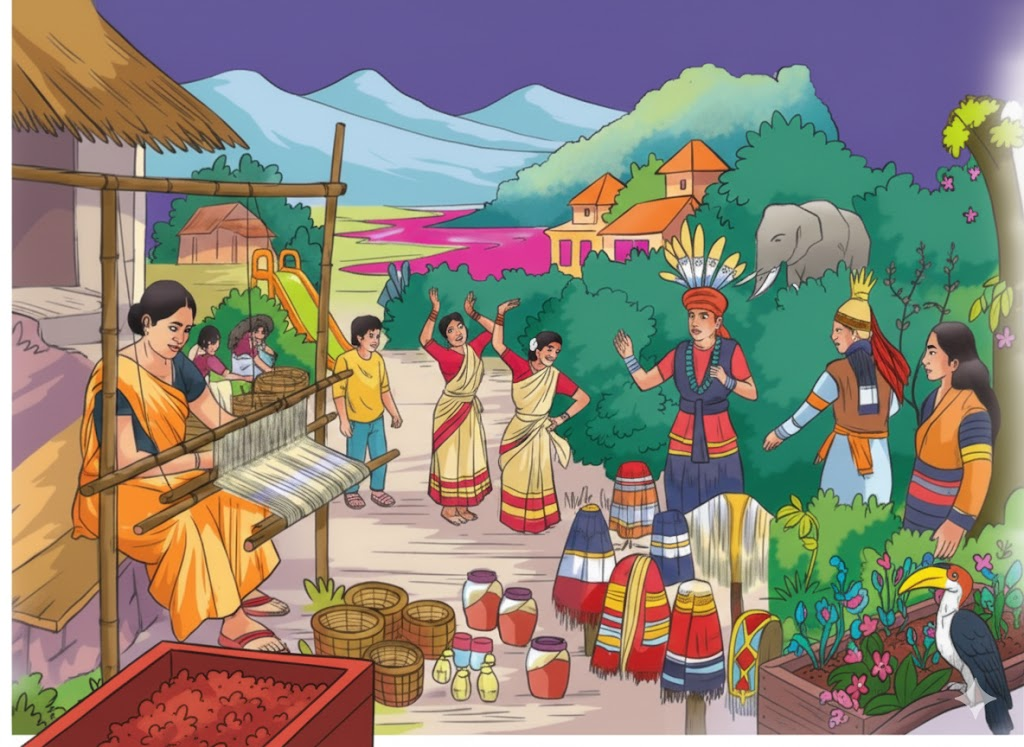
Look at the picture. Can you spot three things being sold in the market?
Answer:
Toys, handmade baskets and clothes.
Question 2.
Can you identify the festival from the above picture?
Answer:
Yes, the festival shown is Bihu, a well-known celebration in the state of Assam.
Question 3.
Why do you think the houses are built on bamboo structures?
Answer: The houses are constructed on bamboo stilts to protect them from heavy rain and flooding, which are common in this region.
Question 4.
What animals can you see in the picture?
Answer:
Hornbill and elephant.
Question 5.
What does this picture tell you about the people who live with nature in the Northeast of India?
Answer: The picture shows that the people of Northeast India live in harmony with nature. They cultivate their own food and use natural materials like bamboo to build houses, make baskets, and create other useful items. They also weave lovely garments using natural fibres such as cotton and silk. Their festivals are celebrated with great joy and unity. Their lifestyle reflects a strong bond with nature and a rich sense of creativity.
Discuss (Page 104)
Question 1.
In small groups, choose an animal or bird near you that needs protection. What can you do to help? Create a protection plan and share it with the class.
Answer:
(Answers may differ)
Chosen bird: Sparrow
Protection Plan:
Build safe shelters: We will create small birdhouses from cardboard or wood and place them in gardens, balconies, or on trees so sparrows have a safe place to live.
Offer food and water: We will keep bowls filled with grains like rice or millet, along with clean water, in open areas where sparrows can easily find them.
Increase greenery: We will plant more small trees and flowering plants at school and at home, as sparrows prefer to stay close to green spaces.
Raise awareness: We will design posters and talk to others about why sparrows are important and how we can help protect them.
Activity 2 (Page 104)
Question.
In small groups, collect twigs, leaves and soft materials like cotton or paper available around you. Create a small bird’s nest using the materials. What makes a good nest? What does the nest need to keep the eggs safe?
Answer:
A small bird’s nest – Make it yourself. A proper nest should be sturdy yet soft, and can be created using materials such as twigs, leaves, grass, cotton, or pieces of paper. To keep the eggs safe, the nest should have these features:
It must be well-hidden from people and animals.
It should be strong enough so the eggs do not fall out.
It needs to be warm and cushioned to protect the eggs until they hatch.
It should shield the eggs from different weather conditions.
Activity 3 (Page 105)
Question.
Try a ‘Root bridge challenge’ in class. Can you connect two chairs using string or sticks in a way that will hold a small toy?
Answer:
Students should do it by themselves.
Write (Pages 105-106)
Question 1.
Look at the map, locate the Western Ghats and name the six states it passes through.
Answer:
Students should do it by themselves.
The Western Ghats stretch across six states—Gujarat, Maharashtra, Goa, Karnataka, Kerala, and Tamil Nadu.
Question 2.
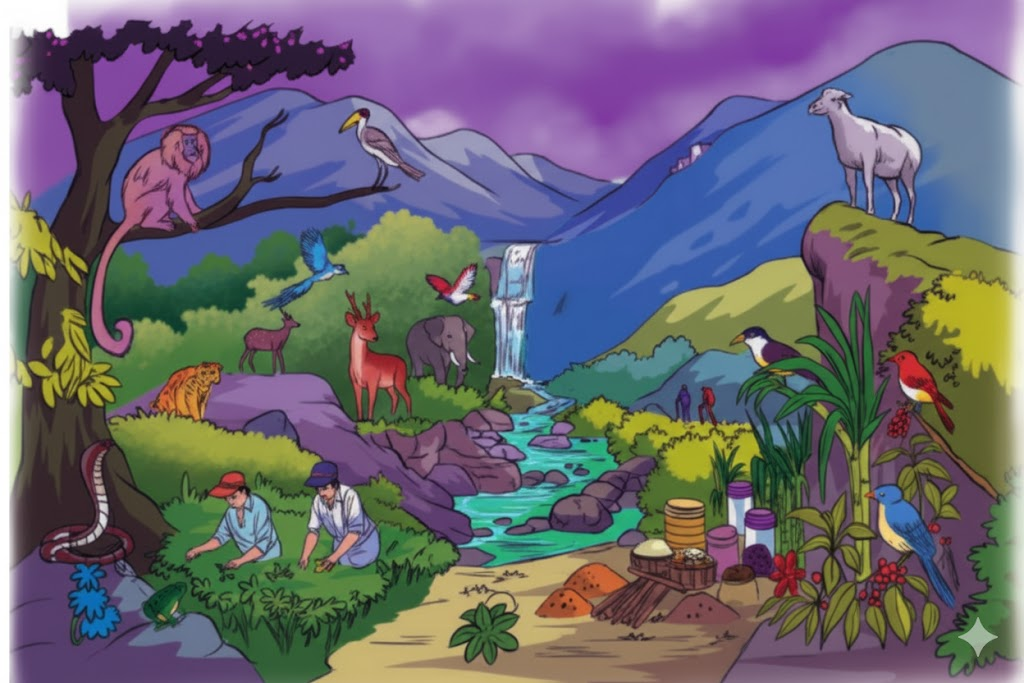
What animals can you spot in the forest?
Answer: Birds, lion-tailed macaques, elephants, leopards, goats, deer, snakes, and frogs.
Question 3.
What are the people doing in the picture given below?
Answer:
The people are collecting tea leaves from the tea gardens.
Question 4.
Why do you think forts were built on hilltops instead of flat land?
Answer: Forts were constructed on hilltops so that rulers could keep an eye on approaching enemies and remain protected from attacks.
Write (Page 106)
Question.
Give the names of three rivers that start from the Western Ghats.
Answer:
The Godavari, Krishna, and Kaveri are three major rivers that originate in the Western Ghats.
Activity 4 (Page 107)
Question.
Pick a fruit or vegetable that grows in your state. It may have varieties. With the help of your teacher or elders make a list of how many types and varieties of fruits and vegetables are locally known.
Answer:
Students should do it by themselves.
Write (Page 109)
Question.
List three protected areas in the Western Ghats.
Answer:
Three protected areas located in the Western Ghats include:
Silent Valley National Park in Kerala
Periyar Wildlife Sanctuary in Kerala
Bandipur National Park in Karnataka
Let Us Reflect (Pages 109-111)
Question 1.
What surprised you the most about the places visited in this journey across India? Why?
Answer:
The most fascinating thing I learned was about the living root bridges in the Northeast. These bridges are formed by guiding the roots of trees to grow in a way that people can walk across them. It is incredible to see how humans and nature work together to create something so strong and helpful without harming the trees. This truly shows how people can live in harmony with the natural world.
Question 2.
Which place would you like to visit the most and what would you do there?
Answer: I would most like to visit the Sundarbans. I want to see the unique mangrove trees with their roots rising above the water and observe how animals like tigers and birds survive in this habitat. I am also eager to explore the forest and learn how people and nature coexist in such a special environment.
Question 3.
How is your region similar or different from one of the places in the story?
Answer: My region is similar to the Western Ghats because we also have hills and forests rich in plants and animals. Like the people living there, many people here rely on the forest for food and medicinal resources.
However, it is different because we do not have living root bridges like those in the Northeast, and our forests may not contain some of the unique animals found in the Western Ghats.
Question 4.
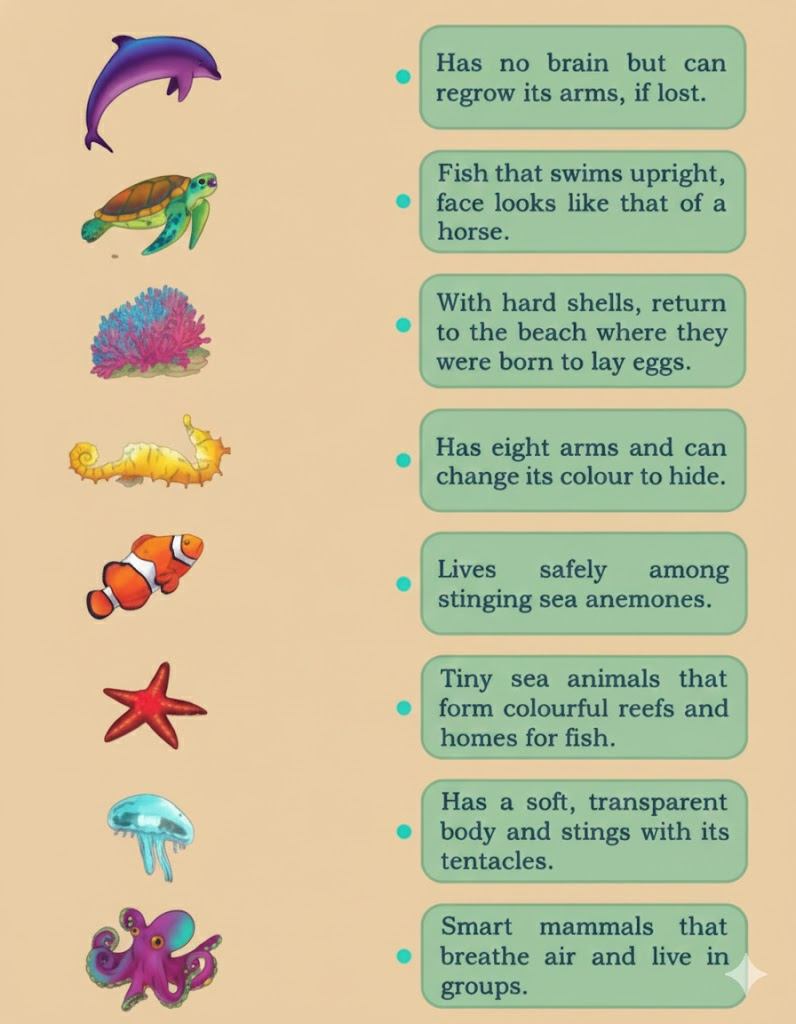
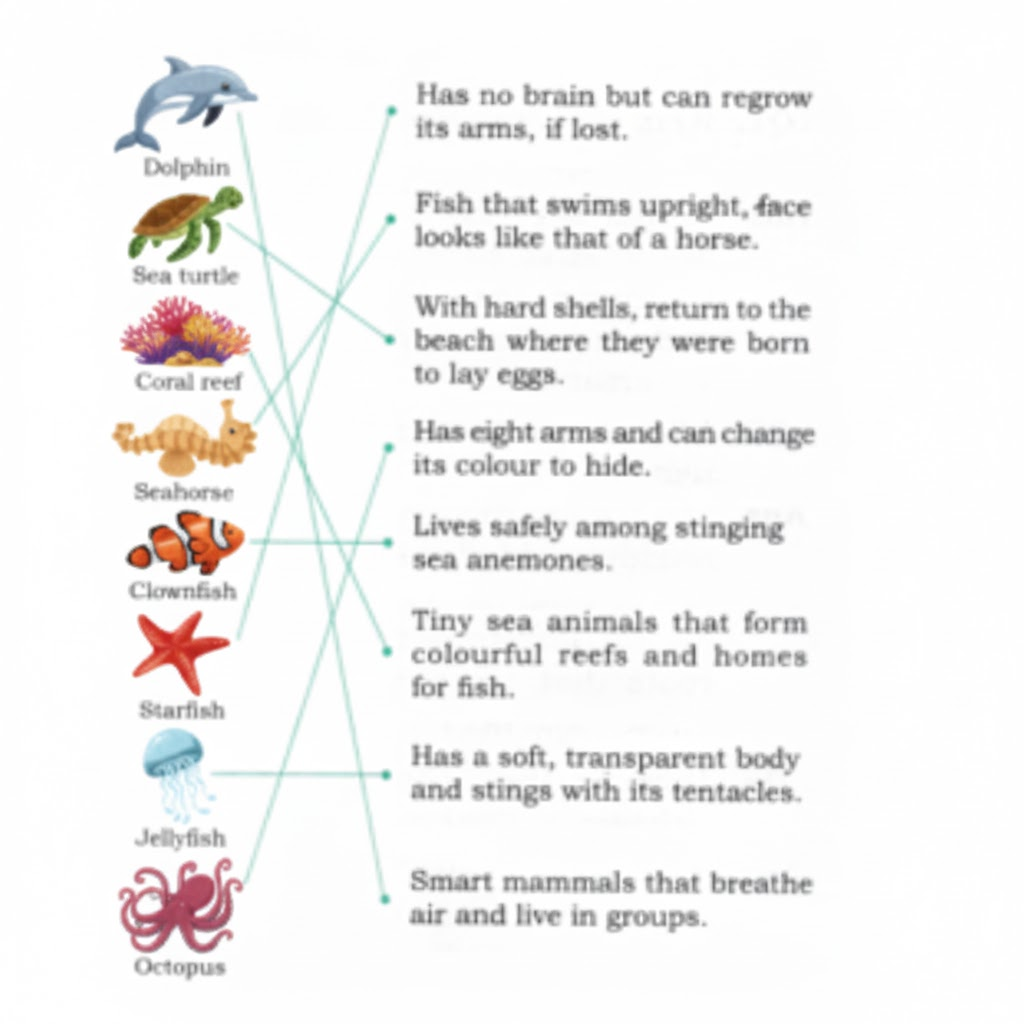
Match the following aquatic animals with their features.
Answer:
Question 5.
What is special about mangroves?
Answer:
Mangroves are unique because their roots allow them to breathe even in muddy, salty water. These roots also keep the soil firm and protect the land from being washed away by waves. Mangrove forests offer shelter to many animals and supply food, wood, and other resources to the people living nearby.
Question 6.
How do people in different regions live in harmony with the nature?
Answer: People in various regions live closely and respectfully with nature in different ways:
In the Andaman Islands, they safeguard unique animals and forests.
In the Sundarbans, they rely on mangrove forests for their daily needs while ensuring they are not damaged.
In the Northeast, people use natural materials like bamboo to make many useful items and help protect birds such as the Hargila.
In the Western Ghats, tribal communities carefully use plants for food and medicine.
Question 7.
Make a collage by pasting pictures depicting vibrant India.
Answer:
Students should do it by themselves.
Explore the Wonders of India: NCERT Solutions Class 5 EVS Chapter 6 Some Unique Places
Journey through unique places of India with NCERT Solutions for Class 5 Our Wondrous World Chapter 6. This chapter introduces students to diverse landscapes, rare wildlife, and vibrant traditions, helping you develop a deep appreciation for India’s natural heritage.
Mastering the main concepts in Some Unique Places Class 5 EVS is easy with well-explained answers and real-life examples. Focus on keywords like islands, mangroves, Western Ghats, and Northeast India for clear understanding and improved exam preparation.
Regularly revising chapter-wise solutions ensures you understand how people interact with nature across India. Use these NCERT Solutions (2026-27) to boost your conceptual clarity and score better in your upcoming exams!
FAQs on NCERT Solutions For Class 5 Our Wonderous World Chapter 6 Some Unique Places - 2026-27 Free PDF Download (Sign-in Required)
1. What are NCERT Solutions for Class 5 Our Wondrous World Chapter 6: Some Unique Places?
NCERT Solutions for Class 5 Our Wondrous World Chapter 6: Some Unique Places provide detailed, stepwise answers to all textbook questions to help students score full marks in EVS.
- Covers both intext and back exercise questions from the CBSE 2026–27 syllabus.
- Includes key definitions, diagrams, and teacher-reviewed content.
- Follows CBSE marking scheme for Class 5 EVS.
2. How do stepwise NCERT answers help in scoring maximum marks?
Stepwise NCERT answers ensure you earn marks for each logical part of the answer as per the CBSE marking scheme.
- Each step covers an essential point, increasing your total marks even if one part is missed.
- Breaks complex answers into simple steps, making answers clear and complete.
- Helps avoid losing marks for incomplete explanations.
3. Which types of questions are important for exams from Chapter 6 Some Unique Places in Class 5 EVS?
Focus on the following important question types from Chapter 6 Some Unique Places for Class 5 EVS exams:
- Short answer questions and intext exercises.
- Definitions and explanation of key terms or unique places.
- Long answer questions about features or importance of different places.
- Diagram/map labelling questions.
- Fill in the blanks and multiple-choice questions.
4. Are diagrams and definitions mandatory in EVS Class 5 Chapter 6 exam answers?
Including diagrams and correct definitions in EVS answers is important for scoring full marks in CBSE exams.
- Diagrams (with neat labelling) often carry separate marks.
- Definitions help in demonstrating clear understanding of terms.
- Both elements follow NCERT and CBSE guidelines for answer structure.
5. How should I structure long answers from Chapter 6 for better marks?
To score well in long answers from Chapter 6 Some Unique Places, structure your answer as follows:
- Start with an introduction line mentioning the place or concept.
- Divide main points into bullet points or paragraphs.
- Include one or two examples or facts from the chapter.
- Add a diagram or map if relevant.
- Summarise with a concluding sentence.
6. Where can I download the free PDF of Class 5 EVS Chapter 6 NCERT Solutions?
You can download the free PDF of Class 5 EVS Chapter 6 NCERT Solutions from trusted educational websites offering CBSE-aligned resources.
- Look for platforms providing chapterwise NCERT Solutions PDF for offline study.
- Ensure the solutions are updated for the 2026–27 syllabus.
7. What are the key definitions and terms covered in Class 5 EVS Chapter 6 Some Unique Places?
Key definitions and terms from Chapter 6 Some Unique Places include unique natural and man-made places, important landmarks, and environmental concepts.
- Focus definitions on the special features of each place discussed.
- Memorise terms related to map work and place identification.
8. How can I practice and revise diagrams or map labelling for Chapter 6?
To revise diagrams and map labelling from Chapter 6 effectively, follow these steps:
- Practice drawing neat diagrams with correct labels as shown in the textbook.
- Use flashcards or printouts for repeated practice.
- Review commonly asked map/diagram-based questions from NCERT Solutions and sample papers.
9. Are NCERT Solutions enough for scoring full marks in Class 5 EVS Chapter 6?
NCERT Solutions are usually sufficient for scoring full marks in Class 5 EVS Chapter 6 when used effectively.
- They provide CBSE exam-aligned, stepwise answers for each question.
- Regular revision and practice from solutions, along with definitions and diagrams, improve your scores.
10. What are some common mistakes to avoid when answering Chapter 6 questions?
To avoid losing marks in Class 5 EVS Chapter 6 Some Unique Places, watch out for these mistakes:
- Missing important steps in your answer or skipping diagrams.
- Not following correct labelling or spelling in maps and terms.
- Leaving out examples or explanations for unique places.
- Writing answers that are too short or vague for long answer questions.
11. Do examiners award partial marks for correct steps even if the final answer is wrong?
CBSE examiners usually award partial marks for correct steps or methods shown in your answer, even if the final answer is incorrect.
- Mentioning all relevant steps and keywords helps you score even with small mistakes.
12. What is the benefit of using revision planners and quick notes for this chapter?
Revision planners and quick notes help you review the key points of Chapter 6 quickly before the exam.
- They summarise essential facts, definitions, and diagrams in one place.
- Help save time and improve retention of important information for Class 5 EVS.
