




How to Write Stepwise Answers for Class 5 EVS Clothes—How Things are Made
Discuss (Page 133)
Question.
Have you seen products woven out of natural material at home or elsewhere? What are they?
Answer:
Yes, I have seen many items made by weaving natural materials. At home, we have rugs and mats created from jute, coir, or seagrass. People also craft bamboo baskets and jute bags. I have seen hand fans made of palm leaves and mats woven from coconut fibres. These products are sturdy and very practical. Lampshades made of bamboo or palm leaves, as well as shawls woven from cotton, silk, or wool, are also quite common.
Activity 1 (Page 133)
Students should do itby themselves.
Think (Page 134)
Question.
What can you find in your classroom that is woven? If we weave with threads instead of paper strips, it becomes cloth.
Answer:
In my classroom, I can see woven items such as baskets and mats. The material used for school bags, tablecloths, and some decorative items is also woven. When weaving is done with threads instead of paper strips, it forms cloth, which is then used to make different types of fabrics.
Activity 2 (Page 134)
Question.
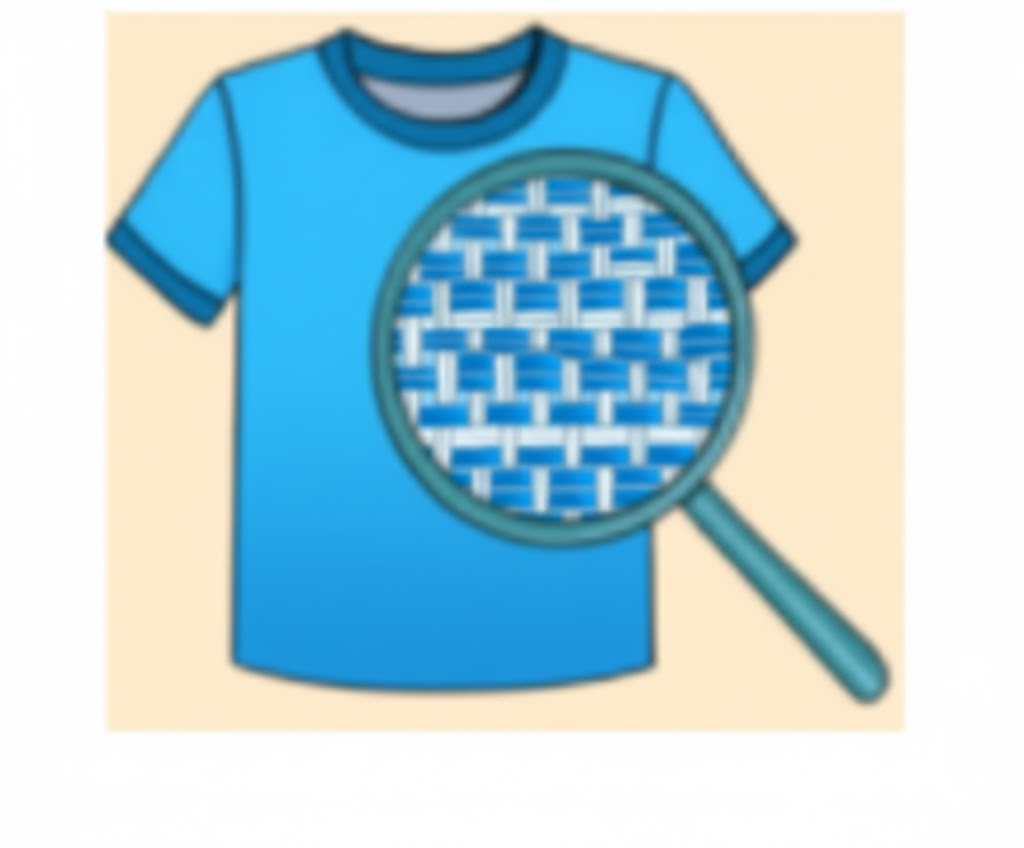
Look at a piece of cloth through a magnifying glass or by using zoom on a mobile phone camera. It could be a shirt or something you are wearing. Can you see the amazing criss-cross pattern?
Answer:
If we observe a piece of cloth closely using a magnifying glass or by zooming in with a phone camera, we can notice a criss-cross design. This design is formed by threads woven over and under one another to create the fabric. It looks like a small grid that keeps the cloth strong and held together.
Intext (Page 135)
Question.
We have seen how threads can be woven together to form a cloth. But how are threads made?
Answer:
Fibres are spun together to form long threads. The process of twisting these fibres creates strong, usable threads.
Activity 3 (Page 135)
Students should do it by themselves.
Activity 4 (Page 138)
Question.
Look at some clothes, bags or other things you use every day. List some of the materials that you have used. Are they made from natural or synthetic fibres? Then, write one thing you like about it in the table below.
Answer:
Activity 5 (page 139)
Students should do it by themselves.
Activity 6 (page 139)
Question.
Have you ever tried stitching? You will need a needle and thread to stitch a piece of fabric together. Can you fix a tear or sew a button? Let us learn simple stitching.
Answer:
Yes, I have tried stitching. To do it, we use a needle and thread to join pieces of cloth. We can mend a tear by sewing it and attach a button so it stays in place. Stitching is a simple skill to learn and helps us repair clothes instead of throwing them away.
Think (page 139)
Question 1.
Have you ever seen someone stitching at home or in your neighbourhood? What were they making or fixing?
Answer:
Yes, I have watched my mother stitch at home. She was repairing a tear in my shirt. I have also seen my neighbour sew a button onto his jacket. They were fixing their clothes to make them look neat again and to replace what was damaged.
Question 2.
Look at your shirt or school bag. Can you find where the pieces have been stitched together?
Answer:
When I observe my shirt or school bag, I can see the stitches that hold the different pieces of fabric together. The stitching runs along the sleeves and along the seams of the bag. These stitches make the clothes and bag strong and help them maintain their shape.
Activity 7 (page 140)
Students should do it by themselves.
Activity 8 (Pages 140-141)
Question 1.
Where else can we use running stitches in daily life?
Answer:
Running stitches are useful in many everyday tasks. We use them to sew clothes, repair torn fabric, attach buttons, and even create items like bags or mats.
Question 2.
If one thread breaks in your stitching, what do you think will happen to the rest of the stitches?
Answer:
If a single thread snaps in our stitching, the remaining stitches may come undone because the thread holds the fabric together. That’s why it is important to sew properly and use a strong thread.
Let Us Reflect (Pages 143-144)
Question 1.
Have you ever reused or recycled an old piece of cloth? What did you or your family make from it?
Answer:
Yes, I have used old cloth pieces before. My family once stitched a colourful quilt using small bits of old fabric. They also turn worn-out clothes into cleaning cloths or tiny bags. Reusing cloth helps us make new things from old materials and reduces waste, which is better for the environment.
Question 2.
If one thread breaks in a stitched cloth or in a woven mat, what might happen? Why is each thread important?
Answer:
If even one thread snaps in a stitched cloth or a woven mat, the other threads may also start loosening. This can cause the cloth to tear or the mat to lose its shape. Every single thread matters because all the threads work together to keep the fabric or mat firm and intact. That’s why each thread plays an important role in keeping the whole thing strong.
Question 3.
Visit a tailor’s shop or a handloom store with an adult. What tools or machines did you see being used there?
Answer: At a tailor’s shop, we usually find tools like needles, thread, scissors, measuring tape, and a sewing machine. In a handloom shop, we can see a loom used for weaving cloth and a spinning wheel used for making thread. All these tools are important for creating and repairing clothes.
Question 4.
Find out what kind of weaving or stitching work is famous in your area or state. Name it.
Answer: (Answers may differ)
In my region, Phulkari embroidery is well known. It is a traditional art from Punjab where bright, colourful threads are used to create lovely floral designs on fabric.
Question 5.
We should not throw the old clothes away. Why?
Answer:
We should avoid throwing away old clothes because they can be reused or recycled to create useful items. This helps save resources and reduces waste, which protects the environment. Old clothes can also be donated to people who may need them.
Question 6.
Below are the jumbled-up steps of the life cycle of a moth. Read and number them from 1 to 6 in the correct order.
Adult moth comes out of the cocoon.
Eggs hatch into tiny caterpillars.
Silk moth lays eggs.
The cycle begins again.
Caterpillars eat mulberry leaves and grow big.
Caterpillars spin cocoons around themselves.
Answer:
The life cycle of a moth follows this sequence:
The silk moth first lays its eggs.
These eggs hatch into small caterpillars.
The caterpillars feed on mulberry leaves and grow larger.
They then form cocoons by spinning silk around themselves.
An adult moth eventually emerges from the cocoon.
The cycle then starts all over again.
Question 7.
Bring 5-6 pieces of different types of clothes from home or nearby tailors (leftover scraps).
Observe the material closely and complete the table. Ask an elder or search in your book to find out whether it is made from cotton, wool, silk, jute, polyester or nylon.
Answer:
Key Facts of Clothes—How Things are Made: NCERT Solutions Class 5 EVS Chapter 8
Exploring Clothes—How Things are Made reveals the story of natural fibres, spinning, weaving, and Indian traditions. This NCERT Class 5 EVS chapter helps students understand how cloth and materials are created, making science easy and fun to remember.
By practicing chapter-wise solutions, you gain clarity on weaving, recycling, and eco-friendly habits. These key concepts are vital for exams and daily life, so focus on diagrams and tables for quick revision. Hands-on activities boost your learning and retention.
Make notes on natural vs synthetic fibres and traditional crafts from your region. Quick daily revision of NCERT EVS Chapter 8 will strengthen your concepts and help you score better in the 2026-27 exam. Stay curious and keep exploring how things are made!
FAQs on NCERT Solutions For Class 5 Our Wonderous World Chapter 8 Clothes-How Things Are Made - 2026-27
1. What are the NCERT Solutions for Class 5 EVS Chapter 8 Clothes—How Things are Made?
NCERT Solutions for Class 5 EVS Chapter 8 provide detailed, step-by-step answers to all textbook questions on Clothes—How Things are Made to help students score full marks in exams.
- Covers intext and back exercise questions
- Includes key definitions, diagrams, and important terms
- Explains how materials are transformed into clothes
- Follows the latest CBSE 2026–27 syllabus
- Helps with concept clarity and exam revision
2. How should I write stepwise answers for Class 5 EVS Chapter 8 to score maximum marks?
To score maximum marks in Class 5 EVS Chapter 8, always present your answers in clear, logical steps as follows:
- Start with an introduction sentence about the topic
- List each process or fact in a separate, numbered step
- Use keywords like fiber, weaving, dyeing, and fabric
- Add well-labelled diagrams if asked
- Write a concluding line to sum up the answer
- Keep your handwriting neat and mark all diagrams clearly
3. Are diagrams and definitions important for Chapter 8 Clothes—How Things are Made?
Yes, including diagrams and definitions in your answers for Chapter 8 helps you score full marks and improves concept clarity.
- Always define key terms like yarn, weaving, knitting, and dyeing
- Draw and label process diagrams such as weaving or spinning
- Follow textbook diagram conventions for neatness
- Teachers allot extra marks for accurate, labelled illustrations
4. Where can I download NCERT Solutions for Class 5 EVS Chapter 8 Clothes—How Things are Made in PDF format?
You can easily download the NCERT Solutions Class 5 Our Wondrous World Chapter 8 PDF from trusted educational websites.
- Look for a Free PDF Download button on solution pages
- Ensure the PDF is updated for the CBSE 2026–27 syllabus
- Use the PDF for offline study and last-minute revision
- PDFs often include diagrams and answer-writing tips
5. What are the main topics and learning outcomes of Chapter 8 Clothes—How Things are Made?
Chapter 8 covers the complete journey of making clothes and emphasizes key processes and their importance.
- Sources of clothing materials (natural and synthetic fibers)
- Processes like spinning, weaving, knitting, and dyeing
- Why people in different regions wear different clothes
- The importance of cleanliness and comfort in clothing
- Understanding traditional and modern cloth making methods
6. How can I revise Class 5 EVS Chapter 8 Clothes—How Things are Made quickly before exams?
Quick revision of Chapter 8 is best done by focusing on core points and practicing important questions.
- Create a one-page summary sheet of definitions and processes
- Memorize using diagram labelling and flash notes
- Practice important questions and sample answers
- Revise intext and back exercise solutions
- Review FAQs and solved examples for common doubts
7. Which questions from Class 5 EVS Chapter 8 are most likely to appear in school exams?
Questions based on steps of making cloth, differences between fibers, and the importance of different clothes are frequently asked.
- Define weaving, knitting, dyeing, and fiber
- Draw and label the process of weaving or spinning
- List steps in making cloth from cotton/wool
- Explain why clothes differ from place to place
- Importance of proper clothing for health
8. How to present long answers for Chapter 8 Clothes—How Things are Made as per CBSE marking scheme?
Long answers should be structured in a stepwise and clear manner to earn full CBSE step marks.
- Begin with an introduction to the process or topic
- Mention all steps sequentially with clear bullet points or numbering
- Insert keywords from the chapter
- Add diagram(s) if the question asks for drawing
- End with a conclusion or relevance statement
9. Do I need to memorise the diagrams in Chapter 8 or can I draw them in my own way?
You should follow the basic textbook diagrams for accuracy, but neat, clearly labelled freehand diagrams drawn in your own way are accepted in exams.
- Always label parts as shown in the book
- Keep diagrams simple and neat
- Practice map/diagram labelling using solved examples
- Double-check that diagrams match the process being explained
10. Are NCERT Solutions enough for Class 5 EVS exams or do I need to study extra material?
NCERT Solutions for Class 5 EVS Chapter 8 cover all syllabus questions and are sufficient for most exams.
- Solving all textbook exercises ensures coverage of key topics
- Use exemplar questions and worksheets for extra practice
- Refer to previous year question papers for exam pattern
- NCERT answers build conceptual clarity and exam readiness
