




Exercise-wise Answers and Revision Tips for Class 5 Our Wondrous World Chapter 7
Intext (Pages 114-115)
Question 1.
Let us observe a kitchen for some time. Write your observations and the questions that come to your mind in the table given below.
Answer:
Question 2.
From your observation write down at least three things that you have noticed:
– Moving
……………………………………………………..
– Providing light
……………………………………………………..
– Making a sound
……………………………………………………..
– Making things cool
……………………………………………………..
– Making things hot
……………………………………………………..
Answer:
– Things that move
Pinwheel, water wheel, and motor wheel
– Things that give light
Sunlight, LED bulbs, and lamps (diyas)
– Things that produce sound
Thunder, speakers, and vehicle horns
– Things that make air or objects cool
Breeze, refrigerator, and air conditioner
– Things that create heat
Sunlight, gas stove, and solar cooker
Discuss (Page 115)
Question.
What makes these things move, shine, make a sound or get warm and cold?
Answer:
Energy allows things to move, produce light, create sound, or become hot or cold.
Activity 1 (Page 116)
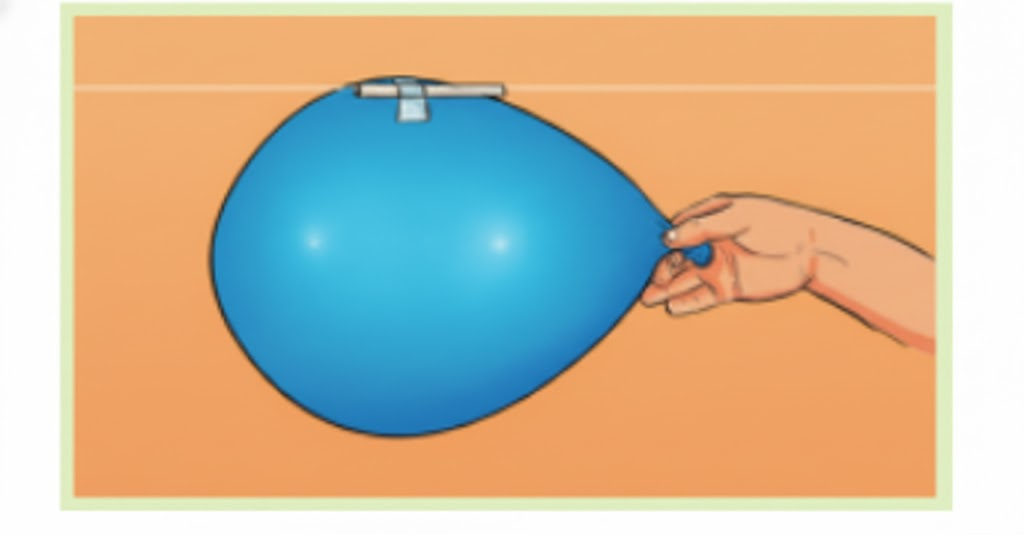
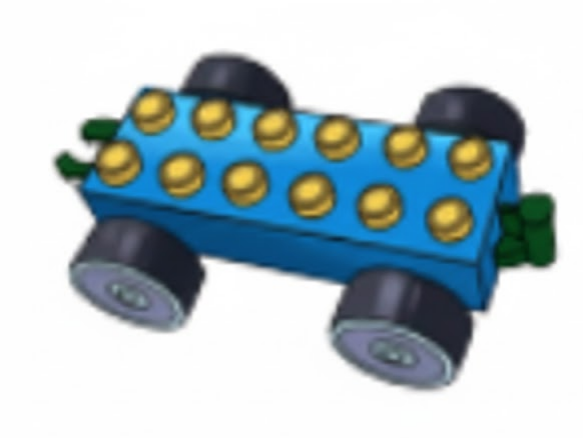
Balloon Air Rocket
Students should do it by themselves.
Think (Page 116)
Question.
What would you change in the activity to make the toy move faster or slower?
Answer:
To make the toy move quickly, I would use a larger balloon filled with more air and place it on a smooth, tightly stretched string so it can glide easily.
To slow the toy down, I would use a smaller balloon with less air and a rough or loosely held string, which would reduce its speed.
Activity 2 (Page 117)
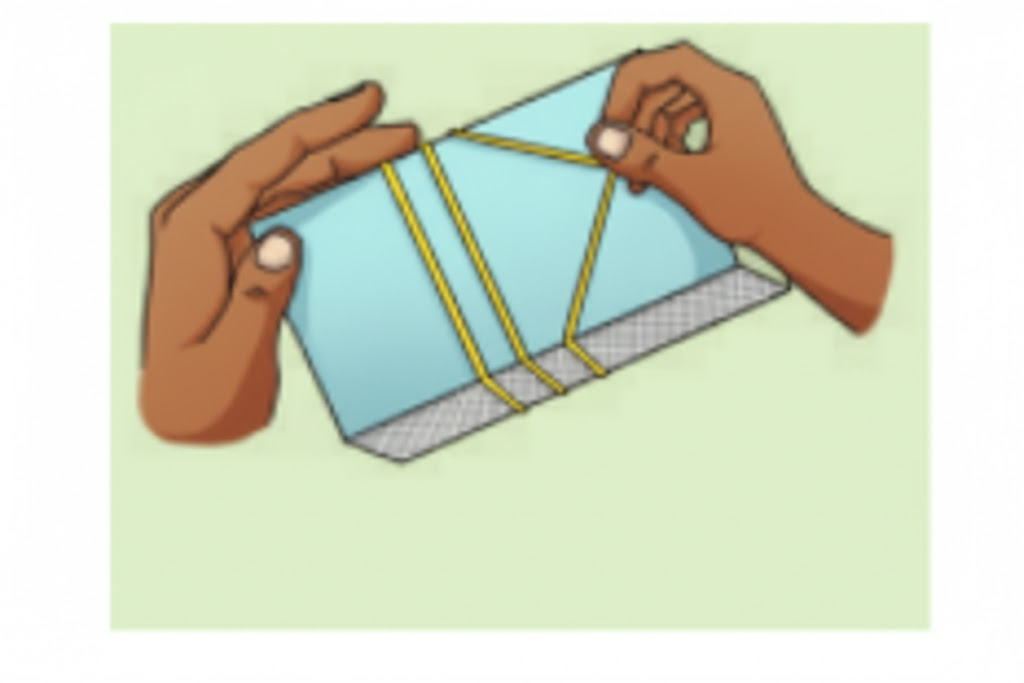
Rubber Band Guitar
Students should do it by themselves.
Think (Page 117)
Question.
What happens if you use thinner or thicker rubber bands? Do they sound different?
Answer:
Yes, thinner rubber bands vibrate quickly when plucked and create a higher-pitched sound, whereas thicker rubber bands vibrate more slowly and produce a deeper sound.
Activity 3 (Page 117)
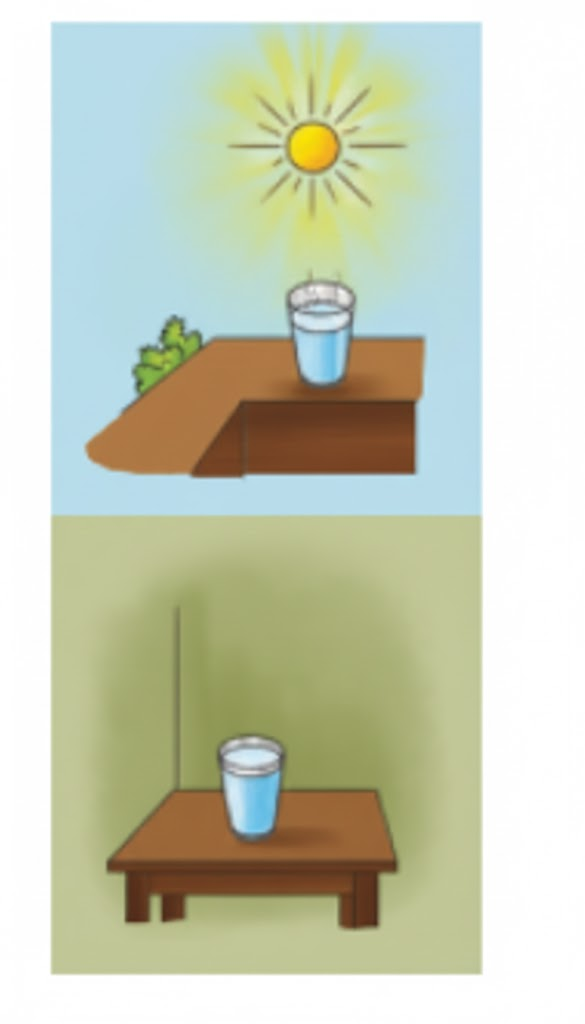
Sun-powered Water Warmer
Students should do it by themselves.
Think (Page 119)
Question.
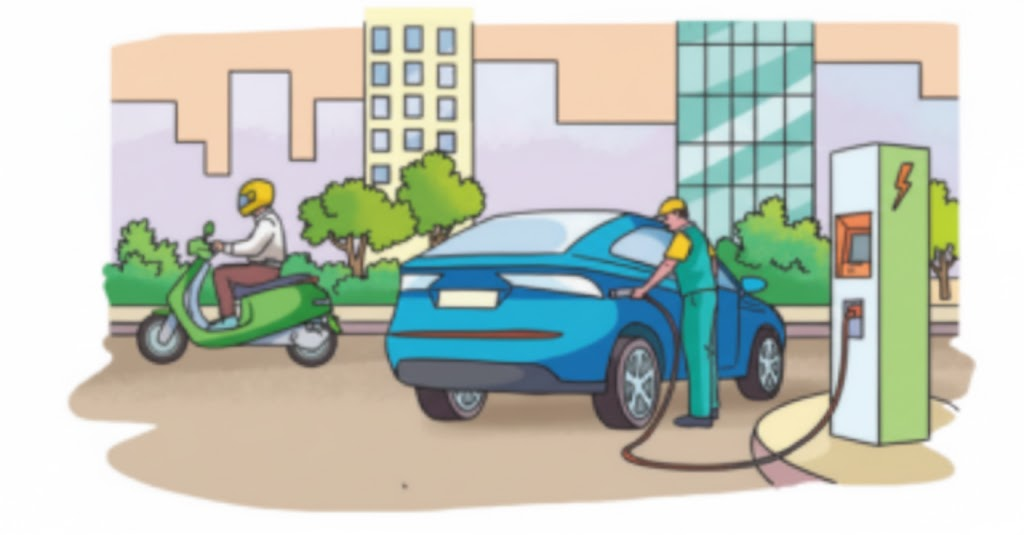
What do cars and scooters need to keep running?
Answer:
Cars and scooters require fuels such as petrol or diesel to operate.
Write (Page 119)
Question.
How is food cooked in your house?
Answer:
At my home, food is prepared using cooking gas, while in some areas, people still use wood or coal for cooking.
Discuss (Page 120)
Question 1.
What kind of fuel do you use at home for cooking?
Answer: Burning large amounts of wood or coal creates smoke and leads to air pollution, which is harmful to both our health and the environment.
Activity 4 (Page 120)
Understanding How Fuel Works
1. Place two diyas (lamps) on a flat surface.
2. In Diya 1 – place a cotton wick without any oil, and in Diya 2 place a cotton wick and pour some oil around it.
3. Light the wicks in both the diyas under adult supervision.
4. Observe what happens to the diyas.
(a) Which diya burns longer? Why?
(b) What is acting as a fuel here?
Answer:
(a) Diya 2 stays lit for a longer time because it contains oil, which keeps the wick burning.
(b) The oil is serving as the fuel.
Intext (Page 121)
Question.
What are the things in your home that need electricity to work?
Answer:
Appliances such as fans, lights, televisions, air conditioners, refrigerators, and mixers operate using electricity.
Activity 5 (Page 121)
Question.
Walk around your home or classroom. Identify five things that run on electricity. Fill in the following table.
Answer:
Yes, these examples show that electricity can be used to create movement (fan, mixer), produce light (bulb, TV), generate sound (TV, mixer), provide heat (iron), and cool things (fridge).
Think (Page 122)
Question.
What would your day be like if there was no electricity at all?
Answer:
Electricity makes our daily life comfortable at home, in school, and in workplaces. Without it, devices like fans, lights, televisions, and many other machines would stop working, making life much harder.
Think (Page 123)
Question.
Place a small damp cloth in the Sun. Keep another damp cloth in the shade. Which one do you think will dry first? Why?
Answer:
The cloth kept in the Sun dries faster because the Sun provides heat, which helps the wet fabric lose moisture quickly.
Activity 6 (Pages 123-124)
Pinwheel
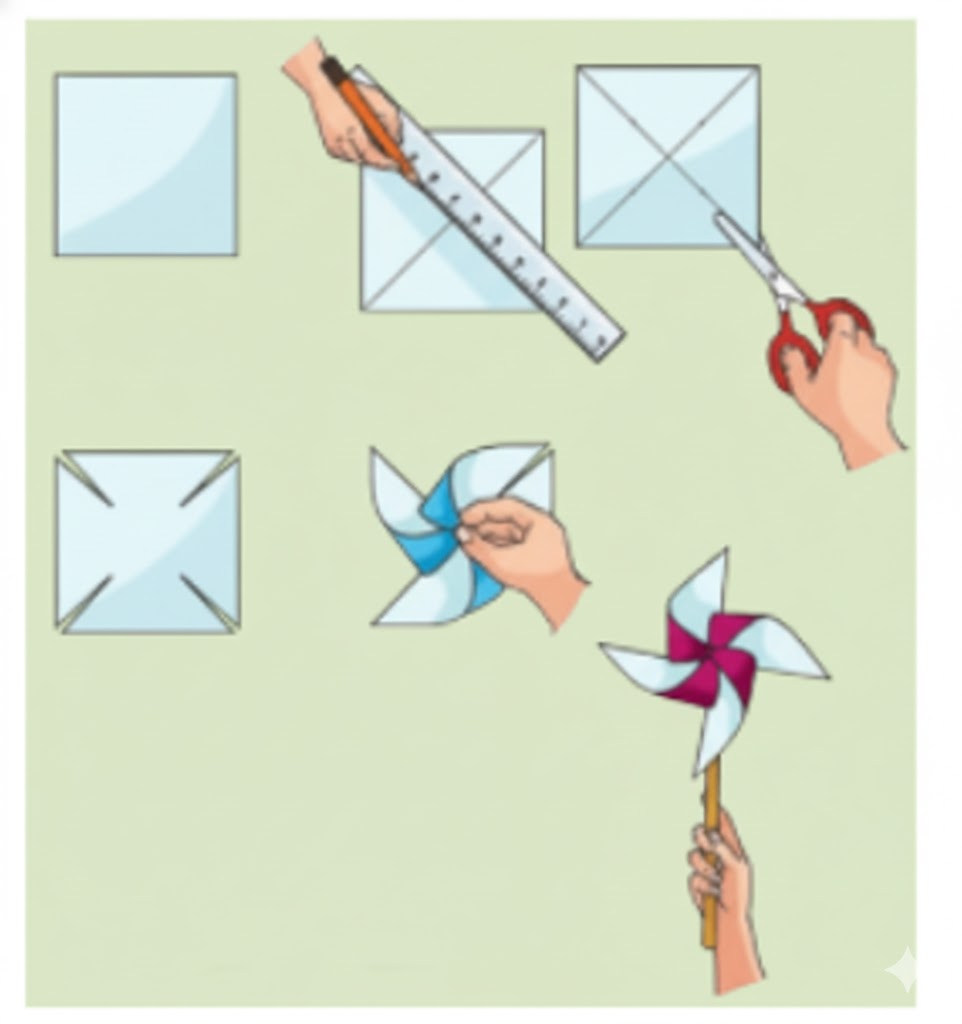
1. Take a square piece of paper.
2. Draw its two diagonals with the help of a ruler.
3. Now, you have four equal parts.
4. Cut halfway along each of the four lines.
5. Fold each corner and pin it to the stick as shown in the image.
6. Now, hold your pinwheel in the wind. If there is no wind, hold it up and run with it.
What happens to your pinwheel?
Answer:
The pinwheel spins when the wind blows against it. If there is no wind, it turns when we run because the air moving past it makes it rotate.
Activity 7 (Page 124)
Sunlight in Focus
1. Take a piece of paper and a magnifying glass.
2. Place the paper in direct sunlight and use the magnifying glass to focus the light on it.
Tip: The activity has to be done under adult supervision.
Question 3.
What happens to your paper?
Answer: The paper catches fire because the magnifying glass concentrates the sunlight onto one spot, and the intense heat causes it to burn.
Activity 8 (Page 124)
Water Wheel
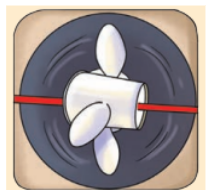
1. Take an empty paper cup and five spoons.
2. Make five holes around the cup and insert the spoons.
3. Then, insert a pencil or straw through the bottom of the cup.
4. Observe that the cup moves around the pencil like a wheel.
5. Balance your wheel on a container as shown in the image.
6. Now, pour water onto your wheel.
7. Does the water make the wheel move?
Answer:
Yes, the wheel turns because the flowing water pushes against it with force, causing it to spin.
Think (Page 125)
Question. Have you ever seen papads being dried in the sunlight and clothes hung out to dry?
Answer:
Yes, the heat from the Sun helps them dry more quickly.
Write (Page 125)
Question.
Can you think of more examples where we use the Sun, the wind or the flowing water?
Answer:
We use sunlight for drying clothes, helping crops grow, providing warmth, cooking food in solar cookers, and producing electricity through solar panels.
Wind is useful for sailing boats, flying kites, drying grains, and generating electricity with windmills. Flowing water helps turn water wheels, produce hydroelectric power, and even move toy boats in a stream.
Intext (Page 127)
Question.
Did you know that even our vehicles can run on electricity?
Answer:
Yes, certain vehicles such as cars, buses, and scooters operate on electricity. They run on rechargeable batteries and produce much less pollution compared to petrol or diesel vehicles.
Write (Page 127)
Energy All Around Us
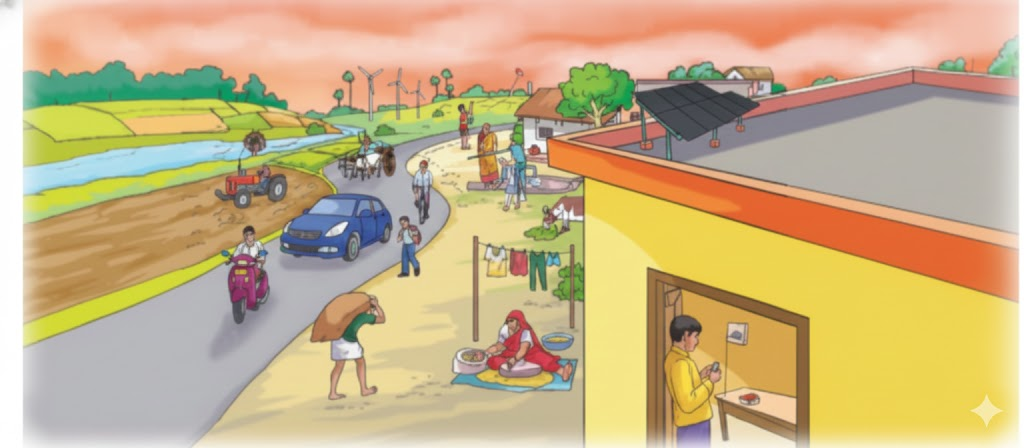
List actions that you see in the picture above and fill in the following table.
Answer:
Activity 9 (Page 128)
Energy Flow Game
Students should do it by themselves.
Let Us Reflect (Page 130)
Question 1.
What will happen if there is no electricity in your house for a day?
Answer:
If electricity is unavailable in my home for an entire day, devices like fans, lights, the television, and the refrigerator will not function. Managing daily tasks would become quite challenging without electrical power.
Question 2.
Why is it better to use solar or wind energy instead of coal?
Answer:
Using solar and wind energy is a better choice because they are clean, renewable sources that do not create pollution.
Question 3.
Give two examples where you have seen energy being stored.
Answer: Energy can be stored in batteries and in our bodies in the form of food.
Question 4.
What is the one thing you can do at home to save energy?
Answer: I can conserve energy by turning off lights and fans when they are not needed.
Question 5.
Find out how many kilometres a vehicle travels per litre of petrol or diesel. Ask about different vehicles. How will you compare them?
Answer:
(Answer may differ)
Different vehicles can travel different distances using one litre of petrol or diesel. For example:
A scooter can go roughly 40 to 70 km on one litre.
A car usually covers about 10 to 20 km per litre.
A bus can travel around 3 to 6 km per litre.
(Note: The exact distance depends on the vehicle’s model and condition.)
Question 6.
Look around your home or classroom. List any three objects that use energy and mention their source of energy. For example:
Object: Fan → Energy Source: Electricity
Answer:
Question 7.
Create and share:
(a) Draw or make a simple plan of a ‘clean energy home’ that uses solar, wind or any such source of energy.
(b) Make ‘my energy diary’ for one day, record the number of times you have used the electricity fuel and so on.
Answer:
(a) A clean and eco-friendly home powered by solar energy.
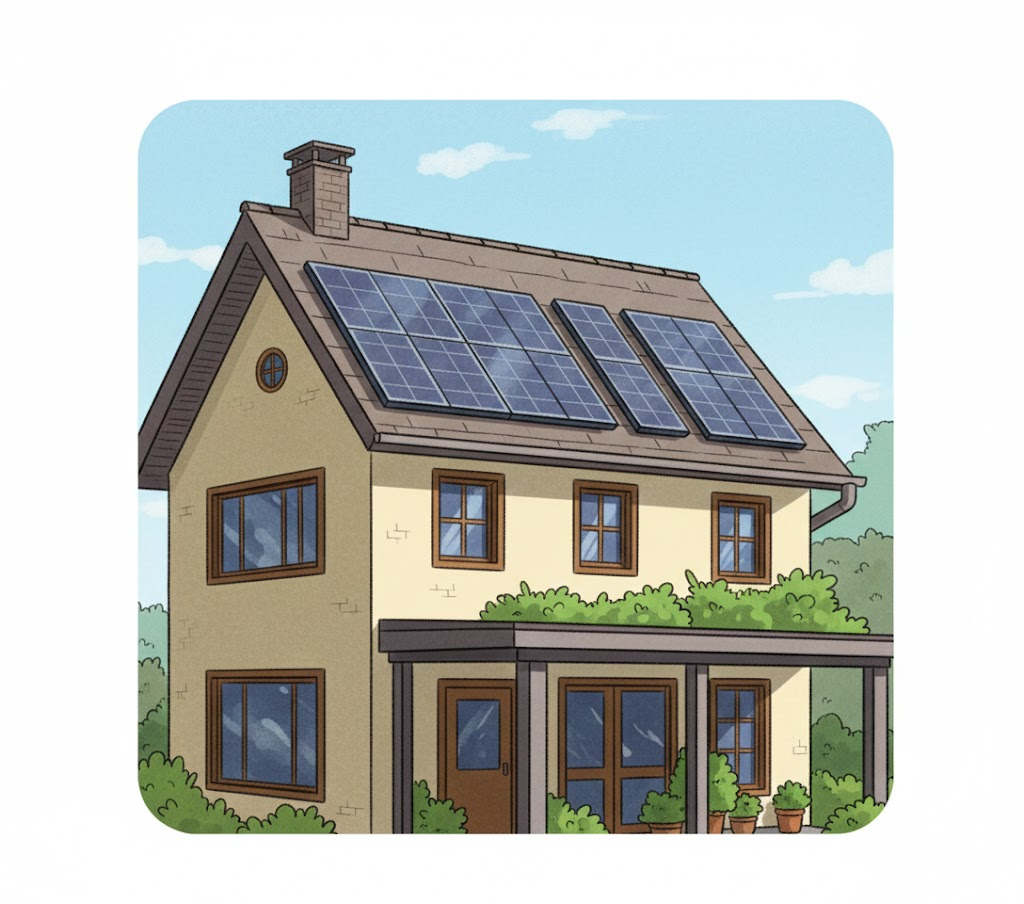
Install solar panels on the rooftop.
These panels absorb sunlight and convert it into electricity.
The electricity produced can power lights, fans, televisions, refrigerators, and other household appliances.
Using solar panels helps reduce pollution because sunlight is a clean and renewable source of energy.
(b) (Answer may vary)
Understanding Energy—How Things Work in Our World
Mastering the concept of energy and its sources is essential for students in Class 5 EVS. This chapter explains how energy enables movement, heat, and light in our daily lives, helping students make real-life connections.
Exploring sun, wind, and water as clean sources of energy encourages sustainable habits. Learning about these energies supports students to make eco-friendly choices and boosts understanding for future science topics.
To score well in exams, regularly review each section on energy use and conservation. Practicing exercises boosts exam confidence and improves your ability to answer real-world application questions effectively.
FAQs on NCERT Solutions For Class 5 Our Wonderous World Chapter 7 Energy-How Things Work - 2026-27 Free PDF Download (Login Required)
1. What are the main sources of energy in chapter 7 EVS?
The main sources of energy explained in Class 5 Our Wondrous World Chapter 7 Energy—How Things Work are:
- Sunlight (solar energy)
- Wind energy
- Water energy (hydroelectric power)
- Fuels like coal, petrol, diesel, and LPG
- Food (for living beings)
2. How to answer long questions in class 5 EVS?
For long answer questions in Class 5 EVS Chapter 7, follow a structured and detailed format:
- Begin with an introduction sentence using relevant keywords.
- Explain the concept or process clearly in 2–3 steps.
- Use bullets or numbering for points/facts.
- Include definitions and diagrams wherever required.
- End with a conclusion if needed.
3. Are diagrams or definitions mandatory in answers?
Including diagrams and definitions in Class 5 EVS Chapter 7 answers is important to gain full marks:
- Definitions help in scoring for keyword-based questions.
- Diagrams (like sources of energy) are essential when the question asks for them or when they enhance clarity.
- Label diagrams neatly for extra marks.
4. Where can I download the chapter’s solutions PDF?
You can download the Class 5 Our Wondrous World Chapter 7 Energy—How Things Work NCERT Solutions PDF from trusted educational sites. Look for a free PDF download button on the solutions page for easy offline study and revision.
5. Are NCERT Solutions enough for Class 5 EVS exams?
NCERT Solutions for Class 5 EVS provide complete coverage for school exams as they follow the latest CBSE syllabus:
- All intext and back exercise questions are solved stepwise.
- They help you understand key concepts and definitions.
- Practicing these ensures stronger exam confidence and revision.
6. What are the most important topics from this chapter?
The most important topics in Class 5 Our Wondrous World Chapter 7 Energy—How Things Work are:
- Different sources of energy and their uses
- How energy helps things work (daily life examples)
- Conservation of energy and saving energy
- Key definitions and diagrams
7. How to present long answers to match CBSE marking?
To match CBSE marking scheme for long answers in EVS Class 5 Chapter 7:
- Start with a clear definition or introduction.
- Write in stepwise points or ordered steps.
- Highlight keywords and write neatly.
- Add diagrams or examples when asked.
- Stick to the question’s requirements and avoid extra detail.
8. How does this chapter explain energy concepts with real-world examples?
Our Wondrous World Chapter 7 explains energy concepts using real-world situations:
- Shows how energy from food helps humans and animals do work.
- Explains how we use wind, solar, and water energy in daily life (like running fans, lighting bulbs, moving buses, etc.).
- Includes examples and pictures to make learning easy for students.
9. How to learn diagrams and maps for this chapter?
To master diagrams in Class 5 EVS Chapter 7 Energy—How Things Work:
- Practice drawing sources of energy like the sun, windmill, water dam, etc.
- Label all parts neatly using correct terms.
- Follow NCERT textbook diagrams as a model.
- Revise daily and use color for clarity if allowed.
10. Do examiners award partial marks for correct steps even if the final answer is wrong?
Yes, in CBSE evaluation for Class 5 EVS, examiners often give partial marks if correct steps or key points are mentioned even if the final answer is partially incorrect.
- Write all steps clearly and include relevant keywords.
- Attempt every part of the question for best results.
