



How Computers Transform Gaming Animation Music And Digital Media
Computers have transformed the way people enjoy movies, music, games, and creative arts. The Use Of Computers In Entertainment has become an essential part of modern life, enabling digital content creation, editing, storage, and distribution. From watching films and playing high quality video games to composing music and creating digital art, computers provide powerful tools that enhance creativity and user experience. In computer science, entertainment technologies involve software, hardware, graphics processing, multimedia systems, and networking. Understanding how computers are used in entertainment helps students appreciate the role of technology in media, communication, and interactive experiences.
Definition and Meaning
Use Of Computers In Entertainment definition refers to the application of computer systems, software, and digital technologies to create, edit, store, and deliver entertainment content such as movies, music, games, animations, and digital art.
- Multimedia - Combination of text, audio, video, graphics, and animation.
- Digital Media - Content stored in digital format that can be processed by computers.
- Graphics Processing Unit - GPU - Hardware that enhances video and gaming performance.
- Streaming - Playing audio or video directly from the internet without downloading.
How It Works - Working Principle
The Use Of Computers In Entertainment working is based on digital processing, multimedia software, and high performance hardware components. Computers convert audio, video, and images into digital signals that can be edited, enhanced, and displayed.
- Content is created using software such as video editors, music production tools, or game engines.
- The computer processes data using the CPU and GPU.
- The output is stored in digital formats like MP4, MP3, or PNG.
- Content is displayed on monitors, speakers, or shared online through streaming platforms.
Advanced technologies such as 3D graphics, virtual reality, and artificial intelligence further enhance entertainment experiences.
Types and Classification
The Use Of Computers In Entertainment types can be classified based on the nature of entertainment.
- Video Entertainment - Watching movies, TV shows, and online videos.
- Music and Audio Production - Recording, mixing, and editing music digitally.
- Gaming - Playing interactive video games on computers.
- Digital Art and Animation - Creating graphics, illustrations, and animations.
- Educational Entertainment - Learning through interactive computer based tools.
Examples of Use Of Computers In Entertainment
Watching a Movie on the Computer

Use of Computer for Music

Use of Computer for Art

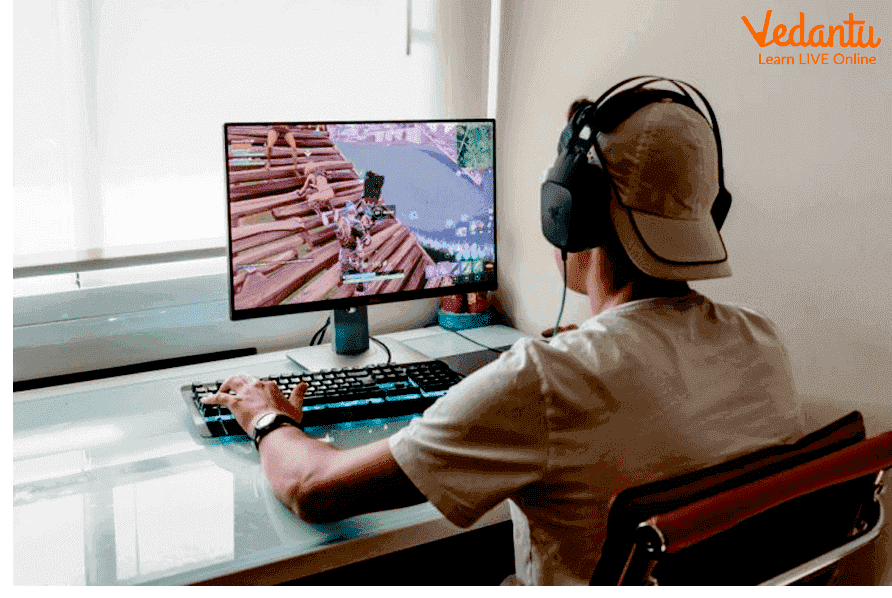
Use of Computer for Gaming
Computer Aided Teaching

Features and Characteristics
- High Quality Graphics with realistic visuals and animations.
- Interactive Experience in games and virtual environments.
- Digital Editing Tools for audio and video enhancement.
- Large Storage Capacity for multimedia files.
- Internet Connectivity for streaming and online gaming.
Advantages
- Provides unlimited access to movies, music, and games.
- Encourages creativity through digital art and music production.
- Improves learning with interactive educational tools.
- Supports global content sharing via the internet.
Disadvantages / Limitations
- Excessive screen time may affect health.
- Risk of addiction to games and online content.
- High performance systems can be expensive.
- Cybersecurity risks in online entertainment platforms.
Applications and Use Cases
- Film Industry - Video editing, animation, and special effects.
- Music Industry - Digital sound recording and mixing.
- Gaming Industry - Development of 2D and 3D games.
- Digital Marketing - Creating multimedia advertisements.
- Education - Interactive learning platforms and simulations.
Quick Facts About Use Of Computers In Entertainment
| Category | Details | Examples |
|---|---|---|
| Type | Multimedia Application | Movies, Music, Games |
| Key Hardware | CPU, GPU, Sound Card | Gaming PC |
| Used For | Content Creation and Consumption | Streaming Platforms |
These quick facts highlight how computers serve as powerful multimedia systems in the entertainment sector.
Interesting Facts About Use Of Computers In Entertainment
- Modern animated movies are created entirely using computer generated imagery.
- High end video games use real time rendering technology.
- Digital music production has replaced traditional recording methods in many studios.
- Virtual reality provides immersive entertainment experiences.
- Streaming platforms rely on cloud computing and content delivery networks.
- Artificial intelligence is used to recommend movies and songs.
Conclusion
The Use Of Computers In Entertainment plays a vital role in shaping modern digital experiences. From movies and music to gaming and animation, computers provide powerful tools for both creators and users. Understanding this topic in computer science helps students recognize how multimedia systems, hardware, and software work together to deliver engaging content. As technology continues to advance, the scope and impact of computers in entertainment will continue to expand across industries.
FAQs on Use Of Computers In Entertainment Applications And Impact
1. What is the use of computers in entertainment?
Computers in entertainment refer to the use of computer systems, software, and digital technologies to create, process, and deliver audio, video, games, and interactive media content.
- Used for gaming, movies, music, animation, and streaming
- Involves multimedia software, graphics processing, and networking
- Supports both online and offline digital entertainment platforms
2. How do computers work in the gaming industry?
In the gaming industry, computers process graphics, sound, and user input using specialized hardware and software to create interactive experiences.
- Use of game engines like Unity and Unreal Engine
- Graphics handled by GPU (Graphics Processing Unit)
- Real-time processing using algorithms, AI, and physics engines
3. What are the main types of entertainment applications developed using computers?
Computers are used to develop various entertainment applications based on multimedia and interactive technologies.
- Video games (PC, console, mobile)
- Streaming platforms (video and music)
- Animation and VFX software
- Virtual Reality (VR) and Augmented Reality (AR) applications
4. Which programming languages are used in entertainment software development?
Entertainment software is developed using programming languages that support graphics, interactivity, and multimedia processing.
- C++ for game development and high-performance applications
- C# with Unity game engine
- Python for scripting and animation tools
- JavaScript for web-based games and streaming platforms
5. What hardware components are important for entertainment computing?
Entertainment computing requires powerful hardware components to handle graphics, sound, and large multimedia files efficiently.
- CPU for processing instructions
- GPU for rendering graphics and 3D models
- RAM for smooth performance
- Sound cards and storage devices for audio and media files
6. What are the advantages of using computers in entertainment?
The use of computers in entertainment offers high-quality digital experiences, interactivity, and global accessibility.
- High-resolution graphics and sound quality
- Interactive and immersive experiences using AI and VR
- Easy distribution through internet and cloud computing
- Supports content creation and editing tools
7. What are the disadvantages or challenges of computers in entertainment?
Despite many benefits, computers in entertainment also present technical and social challenges.
- High cost of hardware and software development
- Risk of cybersecurity threats and piracy
- Possible addiction and health issues
- Requires regular updates and maintenance
8. How are artificial intelligence and machine learning used in entertainment?
In entertainment, Artificial Intelligence (AI) and Machine Learning (ML) enhance personalization, realism, and automation.
- Smart non-player characters (NPCs) in games
- Content recommendation systems on streaming platforms
- Automated video editing and animation tools
9. What is the role of multimedia and graphics in entertainment computing?
Multimedia and computer graphics are core components of entertainment computing, combining text, audio, video, and animation.
- Use of 2D and 3D graphics rendering techniques
- Integration of audio processing and visual effects (VFX)
- Managed through multimedia software and graphics algorithms
10. Why is the use of computers in entertainment important for exams and interviews?
Understanding the use of computers in entertainment is important for Computer Science exams and interviews because it connects theoretical concepts with real-world applications.
- Demonstrates knowledge of software development and hardware components
- Relates to topics like AI, graphics, operating systems, and networking
- Frequently asked in school exams, competitive exams, and technical interviews
