



How Computers Are Used In Civil Mechanical And Electrical Engineering
Computers have become an essential part of modern engineering, transforming the way structures, machines, and electrical systems are designed and built. From designing bridges and vehicles to controlling power systems and simulations, the Uses Of Computers In Engineering cover a wide range of activities. In computer science, this topic explains how computational tools, software, and hardware systems assist engineers in solving complex problems efficiently and accurately. Understanding the role of computers in engineering helps students appreciate how technology drives innovation, safety, and productivity across different engineering fields.
Definition and Meaning
Uses Of Computers In Engineering definition refers to the application of computer systems, software, and digital tools to design, analyze, simulate, test, and manage engineering projects. Computers assist engineers in performing calculations, creating models, and automating processes.
- Computer Aided Design (CAD) - Software used to create detailed 2D and 3D designs.
- Computer Aided Manufacturing (CAM) - Use of computers to control machine tools and manufacturing processes.
- Simulation - Testing and analyzing systems virtually before real implementation.
- Automation - Using computer systems to control engineering operations automatically.
How It Works / Working Principle
The Uses Of Computers In Engineering working is based on data processing, modeling, simulation, and automation. Computers process input data, apply mathematical algorithms, and generate outputs such as designs, reports, or control signals.
- Input Collection - Engineers enter design parameters, measurements, or system requirements into software.
- Processing and Calculation - The computer applies mathematical models and algorithms to analyze data.
- Modeling and Simulation - Virtual models are created to test performance under different conditions.
- Output Generation - The system produces drawings, reports, control instructions, or optimized designs.
- Implementation and Monitoring - Computers may control machines or monitor systems in real time.
Types and Classification
The Uses Of Computers In Engineering types can be classified based on engineering disciplines and functions.
Types of Uses Of Computers In Engineering
| Type | Engineering Field | Examples |
|---|---|---|
| Design and Drafting | Civil, Mechanical | CAD drawings, 3D models |
| Simulation and Analysis | Structural, Aerospace | Stress analysis, airflow simulation |
| Control Systems | Electrical, Electronics | PLC programming, automation |
| Manufacturing | Mechanical, Industrial | CNC machines, CAM systems |
These categories show how computers support various engineering tasks from design to production and system control.
Components and Structure
The use of computers in engineering involves several hardware and software components working together.
- Hardware - High performance computers, servers, sensors, and controllers.
- Software Tools - CAD, CAM, CAE, simulation software, programming environments.
- Input Devices - Keyboard, mouse, scanners, measurement devices.
- Output Devices - Printers, plotters, monitors, CNC machines.
- Networking Systems - For collaboration and data sharing.
Features and Characteristics
- High Accuracy in complex calculations.
- Speed in data processing and design generation.
- Visualization through 2D and 3D modeling.
- Automation Capability for repetitive engineering tasks.
- Real time Monitoring of engineering systems.
- Data Storage for project documentation and analysis.
Advantages
- Reduces human error in calculations and design.
- Saves time in project development.
- Improves design accuracy and safety.
- Enables virtual testing before physical construction.
- Enhances productivity in manufacturing and automation.
Disadvantages / Limitations
- High initial cost of software and hardware.
- Requires skilled professionals to operate systems.
- Dependence on electricity and network systems.
- Risk of data loss or cyber threats.
Applications and Use Cases
1. Civil Engineering

Computers are used for designing bridges, buildings, and infrastructure using CAD and simulation tools. They help in structural analysis and project planning.
2. Mechanical Engineering
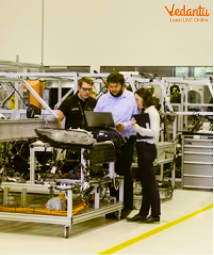
Used for machine design, thermal analysis, robotics, and manufacturing automation. Engineers use simulation software to test mechanical components.
3. Electrical Engineering

Computers help in circuit design, power system analysis, embedded systems programming, and automation using control systems.
- Aerospace engineering simulations.
- Industrial automation using PLC and SCADA systems.
- Environmental engineering data analysis.
- Project management and documentation.
Quick Facts About Uses Of Computers In Engineering
| Aspect | Details |
|---|---|
| Category | Applied Computer Science |
| Main Tools | CAD, CAM, CAE, Simulation Software |
| Used For | Design, Analysis, Automation |
| Common Industries | Civil, Mechanical, Electrical, Aerospace |
These quick facts summarize the scope and importance of computers in engineering disciplines.
Interesting Facts About Uses Of Computers In Engineering
- Modern skyscrapers are designed using advanced computer simulations before construction begins.
- Aircraft designs are tested virtually thousands of times using computer models.
- CNC machines use computer programs to manufacture precise components.
- Robotics in industries rely heavily on computer controlled systems.
- Smart grids in electrical engineering use computers for efficient power distribution.
- 3D printing technology is powered by computer generated models.
- Engineering students learn programming to solve technical problems using computers.
Conclusion
The Uses Of Computers In Engineering highlight the vital role of computer science in modern technological development. From designing structures and machines to automating industries and simulating real world conditions, computers improve accuracy, efficiency, and safety. Understanding this topic helps students connect computer science concepts with practical engineering applications, making it an essential area of study in today’s technology driven world.
FAQs on Uses Of Computers In Engineering for Study and Career Growth
1. What are the uses of computers in engineering?
Computers in engineering are used for design, analysis, simulation, programming, automation, and data processing across various engineering domains.
- Computer-Aided Design (CAD) for creating technical drawings and 3D models
- Simulation and modeling using engineering software
- Programming and embedded systems development
- Data analysis using algorithms and software tools
- Project management and documentation
2. How are computers used in Computer-Aided Design (CAD)?
Computers are used in Computer-Aided Design (CAD) to create, modify, and optimize 2D and 3D engineering designs digitally.
- Designing mechanical parts, circuits, and buildings
- Performing virtual testing and structural analysis
- Reducing design errors through simulation
- Popular tools include AutoCAD, SolidWorks, and CATIA
3. What is the role of computers in engineering simulations?
Computers perform engineering simulations to test real-world conditions virtually using mathematical models and algorithms.
- Finite Element Analysis (FEA) for stress and structural testing
- Computational Fluid Dynamics (CFD) for fluid flow analysis
- Thermal and electrical system simulations
- Reduces cost and risk of physical prototypes
4. How do computers help in civil engineering?
In civil engineering, computers assist in designing, planning, analysis, and project management of infrastructure projects.
- Structural analysis using engineering software
- Building Information Modeling (BIM)
- Survey data processing and mapping with GIS
- Construction planning using project management tools
5. What are the applications of computers in mechanical engineering?
Computers in mechanical engineering are used for design, manufacturing, automation, and thermal analysis.
- CAD/CAM for product design and manufacturing
- Robotics and automation programming
- Machine simulation and stress testing
- Control systems development using software tools
6. How are computers used in electrical and electronics engineering?
Computers support electrical and electronics engineering through circuit design, simulation, programming, and signal processing.
- Circuit simulation using tools like MATLAB and Multisim
- PCB design using EDA software
- Embedded system programming using C or Python
- Power system analysis and load calculations
7. What is the importance of programming in engineering?
Programming enables engineers to develop software, automate tasks, analyze data, and control hardware systems.
- Writing algorithms for simulations and calculations
- Developing embedded and IoT systems
- Using languages like C, Python, and Java
- Important for technical interviews and competitive exams
8. What are the advantages of using computers in engineering?
The main advantages of computers in engineering include accuracy, speed, automation, and efficient data management.
- High precision in calculations and modeling
- Faster processing compared to manual methods
- Improved productivity through automation
- Easy storage and retrieval of engineering data
9. Are there any disadvantages of computers in engineering?
While computers improve efficiency, they also have some limitations such as high cost, dependency, and cybersecurity risks.
- Expensive software and hardware requirements
- Need for technical training and skills
- Risk of system failure or data loss
- Cybersecurity threats in networked systems
10. How are emerging technologies like AI and cloud computing used in engineering?
Emerging technologies such as Artificial Intelligence (AI), Machine Learning, and Cloud Computing enhance modern engineering processes.
- Predictive maintenance using machine learning algorithms
- Cloud-based collaboration and data storage
- Smart manufacturing and Industry 4.0 systems
- Big data analytics for performance optimization
