



How computers are used in defence for surveillance security and weapon systems
Computers play a vital role in strengthening modern defence systems across the world. From surveillance and communication to missile guidance and cybersecurity, the use of computers has transformed military operations into highly advanced and technology-driven processes. Using Computers In Defence involves the application of computer systems, software, and networks to improve national security, intelligence gathering, and strategic planning. In computer science, this topic highlights how hardware, software, artificial intelligence, and networking technologies are integrated to build secure, fast, and reliable defence solutions.
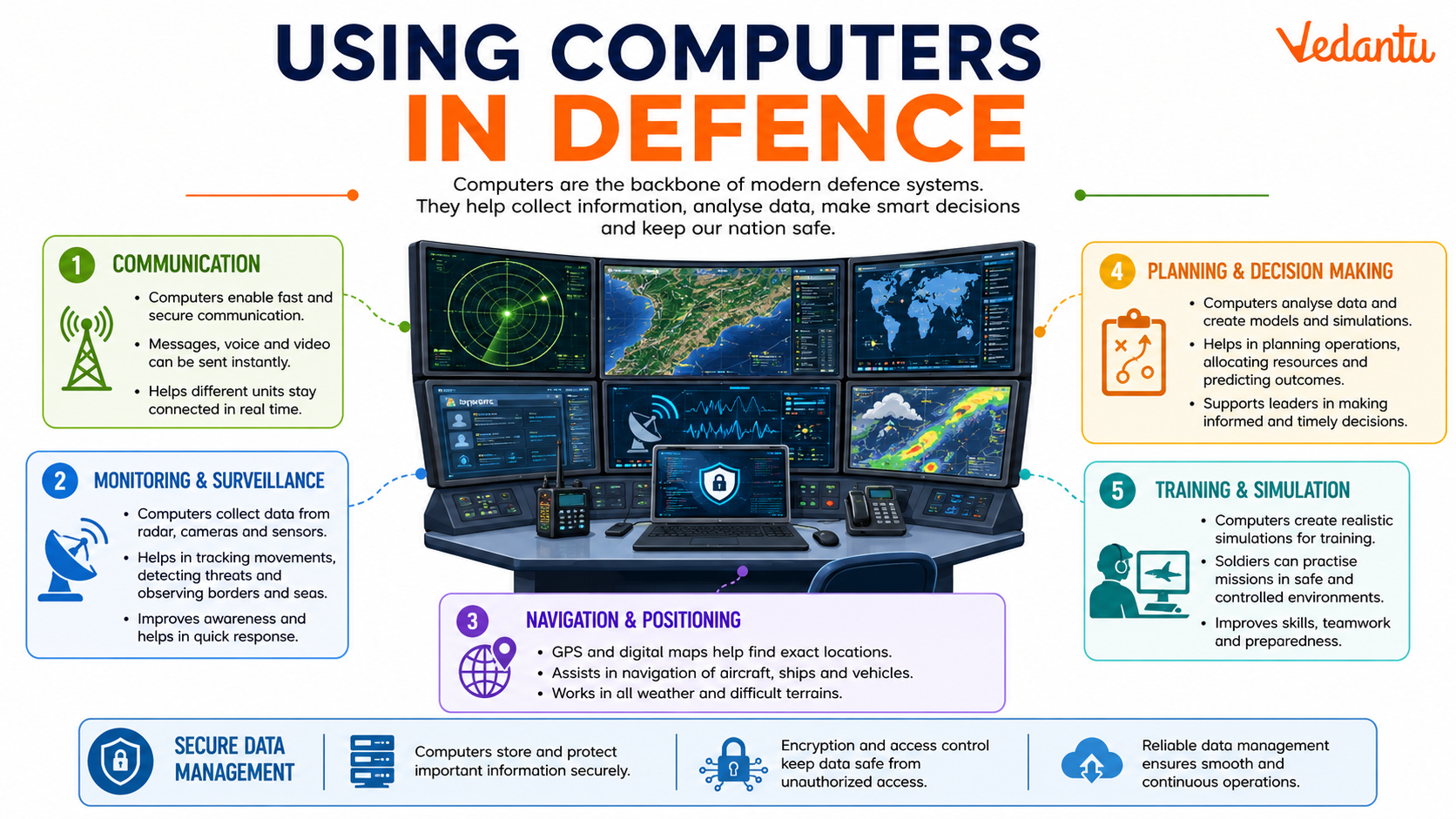
Definition and Meaning
Using Computers In Defence definition refers to the application of computer technology in military and national security systems to support operations, communication, monitoring, and decision-making.
- Defence Systems - Military equipment and technologies used to protect a nation.
- Command and Control Systems - Computer-based systems that manage military operations.
- Surveillance Systems - Computer-controlled monitoring tools like radar and satellites.
- Cybersecurity - Protection of defence networks from cyber attacks.
In simple words, computers in defence help armed forces monitor threats, communicate securely, analyze data, and operate advanced weapons efficiently.
How It Works - Working Principle
The Using Computers In Defence working principle is based on data collection, processing, analysis, and secure communication. Computer systems gather information from various sensors and devices, process it using advanced algorithms, and assist in making strategic decisions.
- Data Collection - Sensors, radars, satellites, and drones collect real-time data.
- Data Processing - High-performance computers analyze the collected information.
- Decision Support - Software systems generate reports and predictions.
- Command Execution - Automated systems control defence equipment like missiles or drones.
- Secure Communication - Encrypted networks transmit confidential information.
This integration of hardware, software, and networking ensures accurate and rapid military operations.
Types and Classification
There are several Using Computers In Defence types based on their application areas.
Types of Computer Applications in Defence
| Type | Description | Examples |
|---|---|---|
| Surveillance Systems | Monitor air, land, and sea activities | Radar systems, satellites |
| Weapon Control Systems | Control and guide weapons | Missile guidance systems |
| Cyber Defence Systems | Protect military networks | Firewalls, intrusion detection |
| Simulation and Training | Provide virtual training | Flight simulators |
Each type plays a crucial role in strengthening defence capabilities and ensuring operational efficiency.
Components and Structure
Computer-based defence systems consist of several integrated components.
- Hardware - High-performance computers, sensors, servers, and communication devices.
- Software - Control systems, AI algorithms, and simulation programs.
- Networking Infrastructure - Secure communication channels and satellite links.
- Databases - Storage systems for intelligence and operational data.
All these components work together to ensure accurate monitoring, rapid response, and secure coordination.
Features and Characteristics
- High Speed Processing for real-time decision making.
- Automation of weapon and surveillance systems.
- Advanced Encryption for secure communication.
- Artificial Intelligence Integration for predictive analysis.
- Reliability and Redundancy to avoid system failure.
Advantages
- Improves accuracy in targeting and monitoring.
- Enhances communication between defence units.
- Reduces human error through automation.
- Supports real-time data analysis.
- Provides efficient training through simulations.
Disadvantages / Limitations
- High cost of development and maintenance.
- Risk of cyber attacks and hacking.
- Dependence on technology may reduce manual skills.
- System failures can cause serious consequences.
Applications and Use Cases
There are numerous Using Computers In Defence applications in modern military systems.
- Missile Guidance Systems for accurate targeting.
- Drone Operations for surveillance and combat missions.
- Cybersecurity Monitoring to protect sensitive data.
- Battlefield Management Systems for coordination.
- Satellite Communication for global connectivity.
- Virtual Reality Training for soldiers and pilots.
Quick Facts About Using Computers In Defence
| Category | Details |
|---|---|
| Type | Application of Computer Technology |
| Used For | Security, surveillance, communication, weapon control |
| Key Technologies | AI, Networking, Cybersecurity, Embedded Systems |
| Industry | Military and National Security |
These quick facts highlight the technical scope and importance of computers in modern defence systems.
Interesting Facts About Using Computers In Defence
- Modern fighter jets rely heavily on computer-based flight control systems.
- Supercomputers are used to simulate nuclear and defence scenarios.
- Many internet technologies were initially developed for defence purposes.
- AI-powered drones can operate autonomously.
- Encrypted communication prevents unauthorized access to military data.
- Virtual simulations reduce the risk during pilot training.
Conclusion
Using Computers In Defence is a crucial application of computer science that enhances national security and military efficiency. From surveillance and communication to weapon control and cybersecurity, computer systems provide speed, accuracy, and reliability. Understanding this topic helps students appreciate how computing technologies contribute to real-world defence operations. As technology continues to evolve, computers will play an even more significant role in shaping the future of global security systems.
FAQs on Using Computers in Defence Systems and Modern Warfare
1. What is the role of computers in defence?
Computers in defence are used to support military operations through data processing, communication, surveillance, and cybersecurity systems.
- Command and control systems
- Missile guidance and radar systems
- Secure communication networks
- Cybersecurity and intelligence analysis
2. How do computers help in modern warfare?
In modern warfare, computers enable real-time decision-making, automated weapon systems, and digital battlefield management.
- Artificial Intelligence for target recognition
- GPS and satellite-based navigation
- Drones and unmanned systems control
- Simulation and training software
3. What are the main applications of computers in defence systems?
The main applications of computers in defence include surveillance, weapon control, logistics management, and cyber defence operations.
- Radar and sonar data processing
- Missile guidance systems
- Military database and information systems
- Secure cloud computing infrastructure
4. How is Artificial Intelligence used in defence?
Artificial Intelligence (AI) in defence is used for predictive analysis, autonomous systems, and threat detection.
- Machine learning for pattern recognition
- Autonomous drones and robots
- Cyber threat detection algorithms
- Facial recognition and surveillance systems
5. What types of computer systems are used in defence?
Defence organizations use specialized computer systems designed for high performance, security, and reliability.
- Supercomputers for simulations
- Embedded systems in missiles and aircraft
- Real-time operating systems (RTOS)
- Secure military networks and servers
6. What is the importance of cybersecurity in defence computing?
Cybersecurity is critical in defence to protect military networks, databases, and communication systems from cyber attacks.
- Encryption and secure communication protocols
- Firewalls and intrusion detection systems
- Ethical hacking and penetration testing
- Protection against malware and cyber warfare
7. What are the advantages of using computers in defence?
Using computers in defence improves accuracy, speed, automation, and strategic planning capabilities.
- Fast data processing and analysis
- Reduced human error in targeting systems
- Efficient resource and logistics management
- Advanced simulation for training
8. What are the disadvantages or risks of computer-based defence systems?
Computer-based defence systems carry risks such as cyber attacks, system failures, and high development costs.
- Vulnerability to hacking and cyber warfare
- Dependence on network connectivity
- High maintenance and infrastructure cost
- Ethical concerns in autonomous weapons
9. How are simulations and supercomputers used in defence research?
Supercomputers and simulation software are used in defence research to model weapons, climate effects, and battlefield scenarios.
- Nuclear and ballistic simulations
- Flight and combat simulators
- Cryptography and algorithm testing
- Performance testing of defence hardware
10. Why is studying computers in defence important for exams and careers?
Studying computers in defence is important for competitive exams, defence technology careers, and cybersecurity roles.
- Common topic in Computer Science exams
- Relevant for defence services technical entries
- Career opportunities in AI, cybersecurity, and embedded systems
- Interview questions on real-world applications of computing
