



Step by Step Working of Nephron in Urine Formation
A nephron is the basic structural and functional unit of the kidney responsible for filtering blood, removing waste, and forming urine. Each kidney contains around 1 million nephrons, which help maintain water balance, electrolyte levels, and overall body homeostasis.
Nephron Diagram and Kidney Labelled Diagram
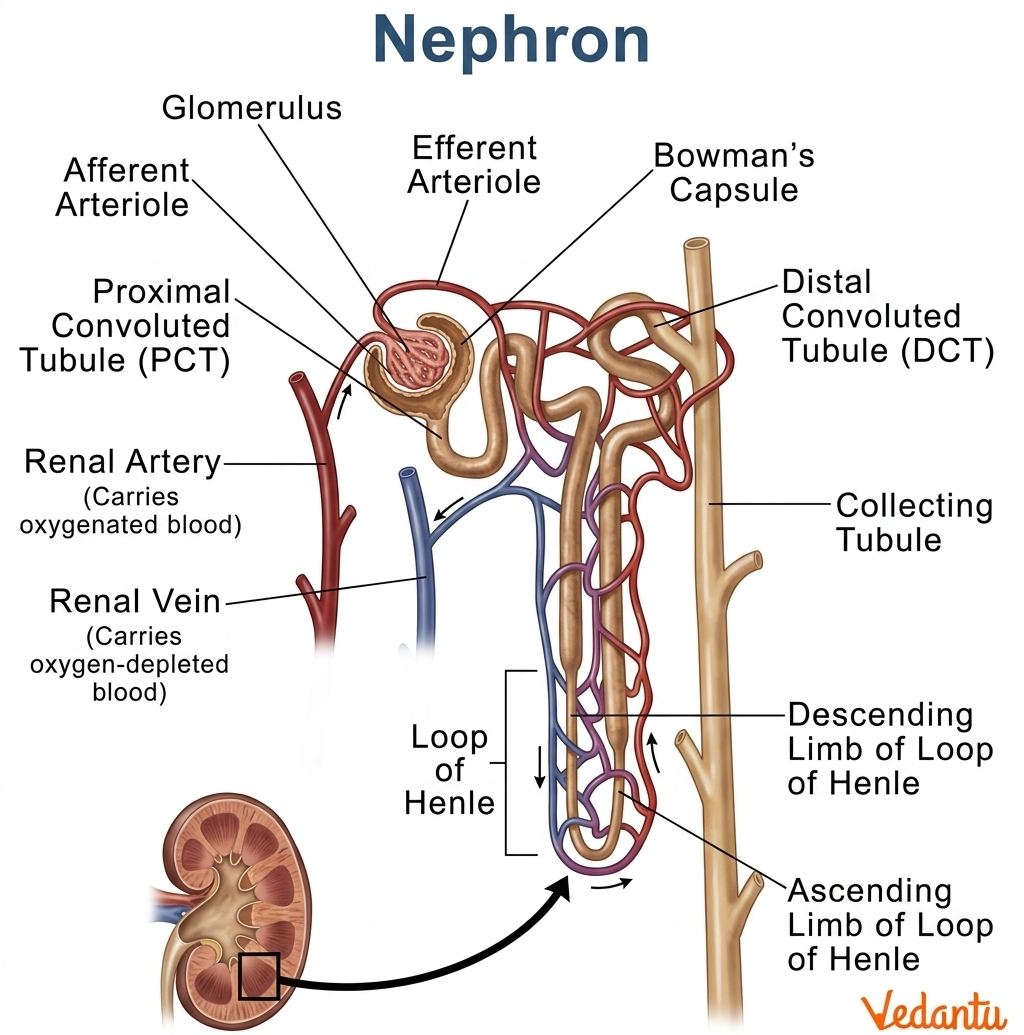
Structure of Nephron (Detailed Explanation)
The structure of nephron diagram can be divided into two main parts:
1. Renal Corpuscle (Filtration Unit)
Located in the kidney cortex
Composed of:
Glomerulus: A network of capillaries where filtration begins
Bowman’s Capsule: A cup-shaped structure that collects filtrate
The glomerulus filters blood, allowing water, glucose, ions, and small molecules to pass, while blocking large proteins and blood cells.
As described in detailed nephron studies , about 10–20% of plasma is filtered here, forming the initial filtrate.
2. Renal Tubule (Modification Unit)
This is a long tubular structure that converts filtrate into urine.
Parts of Nephron and Their Functions
1. Proximal Convoluted Tubule (PCT)
Located in the cortex
Highly coiled and lined with microvilli
Major site of reabsorption
Reabsorbs:
Glucose
Amino acids
Sodium ions
Water
Contains many mitochondria for active transport
2. Loop of Henle
A U-shaped structure extending into the medulla
Descending Limb:
Permeable to water
Water moves out → filtrate becomes concentrated
Ascending Limb:
Impermeable to water
Ions move out → filtrate becomes dilute
Helps in concentration of urine and water balance
3. Distal Convoluted Tubule (DCT)
Located in cortex
Involved in selective secretion and absorption
Regulates:
pH balance
Electrolytes
Blood pressure
Controlled by hormones like aldosterone and ADH
4. Collecting Duct
Collects filtrate from multiple nephrons
Final site of urine formation
Functions:
Reabsorbs water (under ADH control)
Concentrates urine
Presence of aquaporins allows water movement
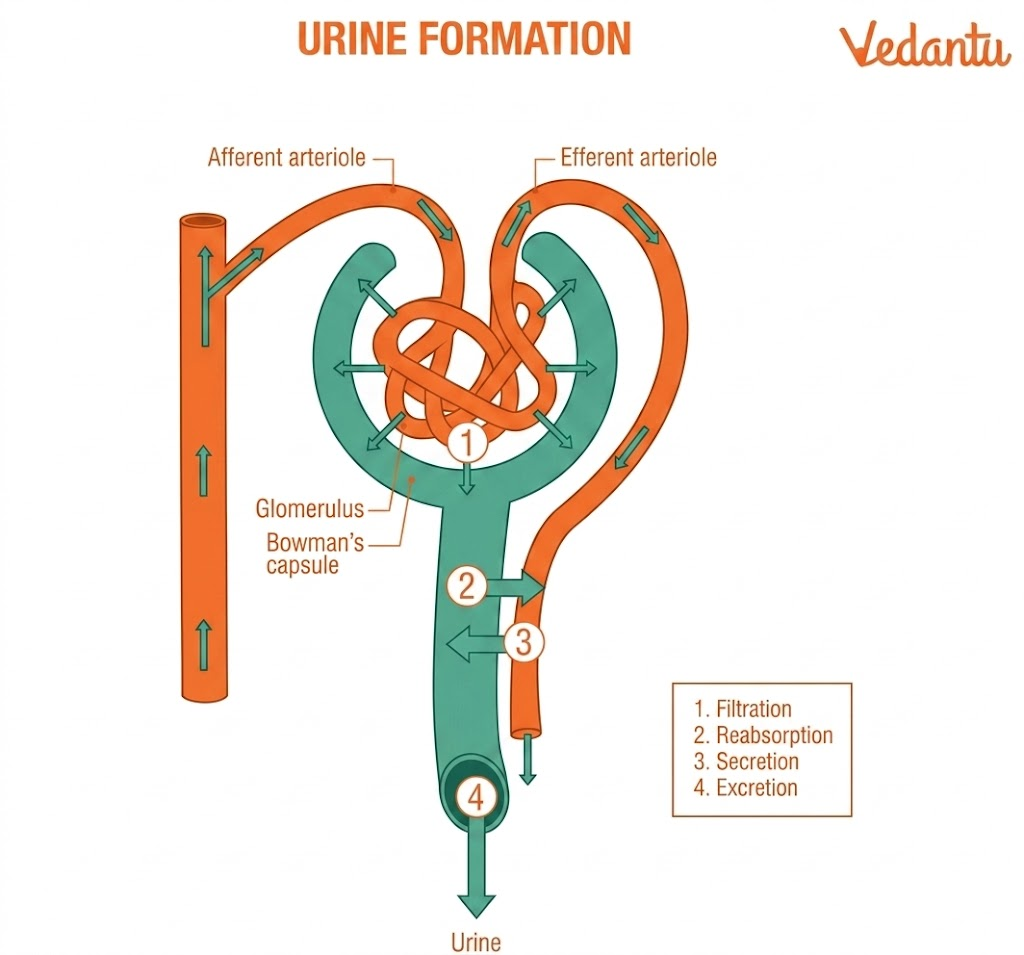
Blood Supply of Nephron (Important for Exams)
Each nephron has a unique blood supply system:
1. Afferent Arteriole
Brings blood into glomerulus
2. Glomerulus
Site of filtration
Contains fenestrated capillaries
Allows small molecules to pass but blocks proteins and RBCs
2. Efferent Arteriole
Carries blood away from glomerulus
Forms:
3. Peritubular Capillaries & Vasa Recta
Surround tubules
Help in reabsorption and secretion
This forms a portal system, unique in kidneys
Functions of Nephron (Core Concept)
The nephron performs three major processes:
1. Filtration
Occurs in glomerulus
Blood → filtrate
2. Reabsorption
Useful substances reabsorbed into blood
3. Secretion
Waste substances added to filtrate
These processes maintain:
Water balance
Ion concentration
Blood pressure
Additional Functions of Nephron
Nephrons also help in:
Regulation of blood pressure (Renin release)
Production of red blood cells (via EPO)
Activation of Vitamin D (calcitriol)
These are critical for overall body regulation
Kidney Diagram with Parts (Concept Clarity)
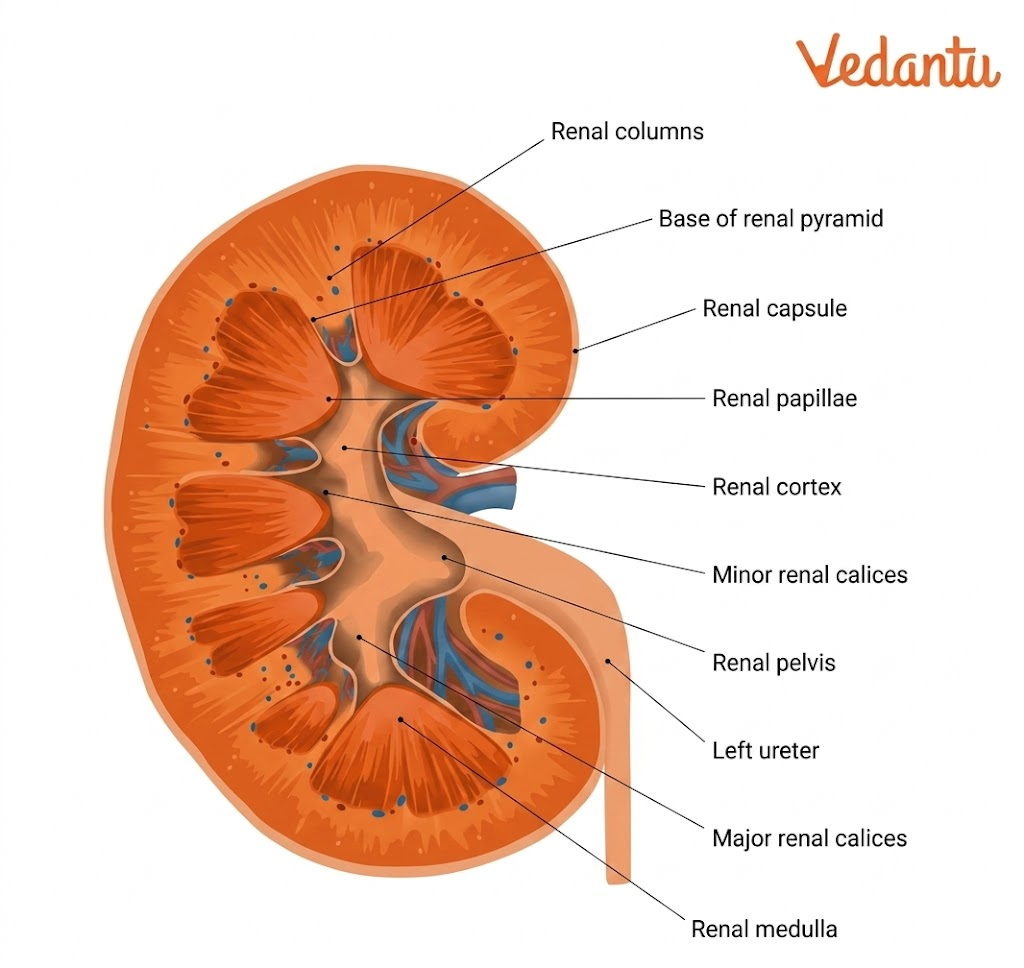
Key parts visible in a kidney diagram with parts:
Cortex
Medulla
Renal pyramids
Collecting ducts
Ureter
Why is this Topic Important?
Frequently asked in NEET and board exams
Helps understand kidney disorders and urine formation
Forms the base for topics like:
Osmoregulation
Excretion
Hormonal control
FAQs on Structure of Nephron with Labelled Diagram and Functions
1. What is the function of the nephron?
The nephron filters blood and forms urine. It removes waste, reabsorbs useful substances like water and glucose, and maintains fluid, salt, and pH balance in the body.
2. What are the 4 parts of the nephron?
The nephron has four main parts:
Renal corpuscle (glomerulus + Bowman’s capsule)
Proximal convoluted tubule (PCT)
Loop of Henle
Distal convoluted tubule (DCT)
3. What organ removes waste?
The kidneys remove waste and extra fluid from the blood and maintain the body’s internal balance.
4. What causes nephron damage?
Nephron damage is mainly caused by diabetes, high blood pressure, infections, injuries, certain medicines, and genetic conditions.
5. Do nephrons produce urine?
Yes, nephrons produce urine through filtration, reabsorption, and secretion of substances from the blood.
6. What are the two types of nephrons?
The two types are:
Cortical nephrons (short loops, mainly for filtration)
Juxtamedullary nephrons (long loops, help concentrate urine)
7. What are common kidney diseases?
Common kidney diseases include chronic kidney disease, kidney stones, glomerulonephritis, polycystic kidney disease, and urinary tract infections.
8. How is urine formed?
Urine is formed in three steps:
Filtration: Blood is filtered in the glomerulus
Reabsorption: Useful substances are taken back into the blood
Secretion: Extra waste is added to the filtrate
9. What are the seven golden rules of kidney health?
Maintain kidney health by:
Drinking enough water
Eating a balanced diet
Reducing salt and sugar intake
Exercising regularly
Maintaining a healthy weight
Using medicines carefully
Getting regular health checkups
